As the prices of AAA gaming titles continue to soar in 2026, gamers around the world are constantly looking for ways to save money. That’s why third-party marketplaces offering exclusive discounts have surged in popularity. Among these platforms, Kinguin stands out as one of the oldest and most well-known destinations for cheap game keys, software licenses, and gift cards. However, when you see a brand-new game listed for 40% off its retail price, a natural skepticism arises: Is Kinguin legit? Is it safe to buy cheap keys from Kinguin?
In this comprehensive review, we will dive into the inner workings of Kinguin, analyzing its business model, safety protocols, and real customer feedback. We will also explore the potential risks of purchasing from a grey market reseller and how you can protect your online safety.
You may also like: Is SteamRip safe?
What Is Kinguin?
Kinguin is a popular online marketplace that sells digital game keys, software licenses, and in-game items at discounted prices. Operating as a third-party reseller, it connects buyers and sellers worldwide, allowing users to purchase codes for platforms like Steam, Xbox, and PlayStation. Unlike traditional authorized retailers, Kinguin does not distribute these digital products itself. Instead, it operates similarly to eBay or Amazon Marketplace, but exclusively for digital activation codes.
Despite its mainstream visibility, Kinguin’s classification as a “grey market” platform has kept it in a constant state of controversy. Authorized retailers have direct agreements with publishers, ensuring that every cut of a sale goes to the developers. Kinguin, on the other hand, allows independent merchants to list their digital inventory for sale. This decentralized approach is exactly what allows for such competitive pricing, but it is also the root cause of the platform’s inconsistent user experience. By acting purely as a middleman, Kinguin takes a commission on every sale rather than the direct transition between the buyer and the seller. Understanding this fundamental structure is crucial when evaluating the legitimacy and safety of Kinguin.
How Does Kinguin Work?
When you search for a game on Kinguin, you will often see multiple sellers offering the same title at slightly different prices. You can view each seller’s rating, the number of successful sales they have completed, and their customer feedback before making a decision.
But where do these sellers get their keys in the first place? This is the core mechanic of the grey market. There are several primary methods sellers use to acquire inventory cheaply enough to sell at a discount while still making a profit:
1. Regional Pricing Exploitation
Game publishers often adjust the price of their games based on the local economy of different countries. For example, a game that costs $60 in the United States might only cost the equivalent of $20 in countries with lower average incomes. Enterprising sellers purchase keys in bulk from these cheaper regions and resell them on Kinguin to buyers in wealthier countries. While the keys are technically legitimate, publishers strongly dislike this practice because it bypasses their intended revenue models.
2. Retail Game Sales and Clearances
Sometimes, physical retail stores heavily discount physical copies of PC games to clear out inventory. Sellers will buy these physical copies, open the boxes, extract the activation codes printed inside, and sell the digital codes on Kinguin.
3. Bundle Splitting
Websites like Humble Bundle often sell packages of multiple games at a very low price to raise money for charity. A seller might buy a bundle and keep the one game they want first, then sell the remaining keys on Kinguin to generate a profit.
4. Wholesale and Overstock
Some large-scale sellers have direct connections with distributors and buy massive quantities of activation codes at wholesale prices. Then they will pass some of the savings onto the Kinguin buyers.
These are the primary methods sellers use to acquire game keys. While the methods listed above are legal, there is a darker side to the grey market. Occasionally, malicious actors use stolen credit card information to purchase thousands of digital game keys directly from developers. They then launder these keys by selling them quickly on Kinguin for cash. When the actual credit card owner issues a chargeback, the game developer loses the money and often revokes the stolen keys, leaving the Kinguin buyer with a deactivated game. This is the primary reason why grey markets carry inherent risks.
Is Kinguin Legit?
Yes, Kinguin is widely considered a legitimate company rather than a scam site. However, Kinguin does not verify the origin of every single key listed by its sellers; the legitimacy of your individual purchase relies heavily on the ethics of the third-party merchant you select. To get a clear picture of the current landscape in 2026, we have analyzed real customer experiences from reputable review sites and trustworthy community forums.
The Positive Experiences
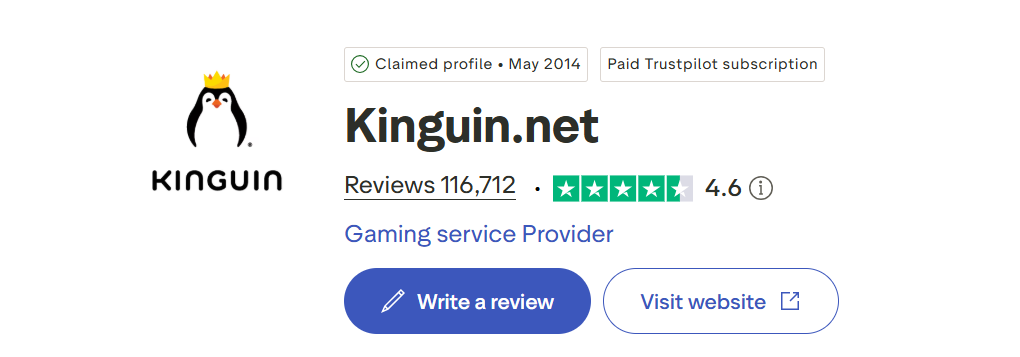
On Trustpilot, Kinguin holds more than 110,000 reviews and an average rating of 4.6 stars, with many users praising the platform for its affordability and instant delivery.
A verified user named Ous. Al Rach. recently wrote:
“Honestly, I was doubtful about the website at the beginning. I thought it was a scam! But I said it won’t be a problem to risk a small amount for such a great deal. Once paid, i followed the link in the email. The customer support contacted me right away.
It didn’t even take more than 5-10 min.”
Another Trustpilot reviewer highlighted the reliability of the software, stating:
“I have bought a couple of games and game cosméticos through Kinguin. I’ve never had any problem redeeming the products. Overall I recommend buying from this store.”
For many gamers, Kinguin is a go-to site that has saved them hundreds of dollars over the years without a single hitch.
The Negative Experiences
However, the negative reviews reveal the harsh realities of the grey market. When things go wrong, they tend to go very wrong. A common complaint on Reddit and Trustindex involves the purchase of “Accounts” rather than “Keys.” One frustrated buyer shared:
“I bought two PS5 games on Kinguin expecting normal PSN download codes… Instead, I was given logins to existing PSN accounts… In my understanding, this clearly violates the PlayStation Network Terms of Service… you risk losing your entire profile.” – From Reviews.io
Customer support is another major sticking point. A Reddit user on the r/Steam subreddit detailed a nightmare scenario:
“I purchased Mafia II from their website… and they sent me a duplicate key that was already used. I opened a support ticket… and after 5 conversations with their support agents over a 2 week period they refused to give me a replacement key or a refund. They instead asked for my Steam account username/password or to give them remote control over my PC.” – From
Verdict: Kinguin’s legitimacy is a double-edged sword. It is a real platform that delivers genuine discounts, but it is plagued by inconsistent seller quality and a customer support system that often puts the burden of proof entirely on the buyer when a transaction issue occurs.
Is It Safe to Buy from Kinguin?
Buying from Kinguin is generally safe, provided you understand the environment and know how to navigate the purchasing process. Statistically, the majority of users buy a key, activate it successfully, and never have to interact with the platform again. However, it doesn’t mean that Kinguin is 100% risk-free.
The Buying Process
Purchasing a game on Kinguin is straightforward. You search for your desired product and browse the list of available sellers. Each seller profile displays their rating and the number of sales they have completed. Once you select a seller, you add the item to your cart and proceed to checkout.
During checkout, you will encounter various payment options, including credit cards, PayPal, and even cryptocurrencies. Historically, Kinguin offered a paid “Buyer Protection” program, where users had to pay an extra fee to guarantee a refund if the key was invalid. While they have modified their policies over time to integrate protection more standardly, you still need to be hyper-aware of what you are agreeing to at checkout, as hidden service fees and taxes can sometimes inflate the advertised price by up to 30%. Once payment is confirmed, the activation key is delivered to your Kinguin account dashboard and email.
Potential Risks to Consider
1. Duplicate or Invalid Keys: Because sellers acquire keys from various sources, you might occasionally receive a key that has already been redeemed or is region-locked to a country you do not reside in. Getting a refund for this requires navigating Kinguin’s support system, which often demands extensive screenshot evidence.
2. Game Revocations: If a seller bought keys using stolen financial information, the publisher may eventually track down those keys and deactivate them. You could be playing a game for weeks, only to wake up one day and find it removed from your Steam library.
3. Account Purchasing Bans: A dangerous trend in 2026 is sellers offering “Steam Accounts” or “PSN Accounts” pre-loaded with a specific game, rather than selling the game key itself. Buying, selling, or sharing accounts is a direct violation of almost every gaming platform’s Terms of Service. If caught, the platform will ban the account permanently, and you will lose access to the game you paid for.
4. Customer Support Friction: If you encounter a problem, Kinguin’s support acts as a mediator between you and the seller. They are notorious for slow response times and demanding excessive proof (such as unedited screen recordings of you trying to activate the key) before issuing a refund.
Buyer Guides on Kinguin 2026
If you are worried about the risks and decide to take advantage of the steep discounts, you need to shop smartly. Here are the most essential buyer guides to ensure your transactions on Kinguin in 2026 are as secure and successful as possible.
1. Use VPN for Anonymous Browsing and Secure Transactions
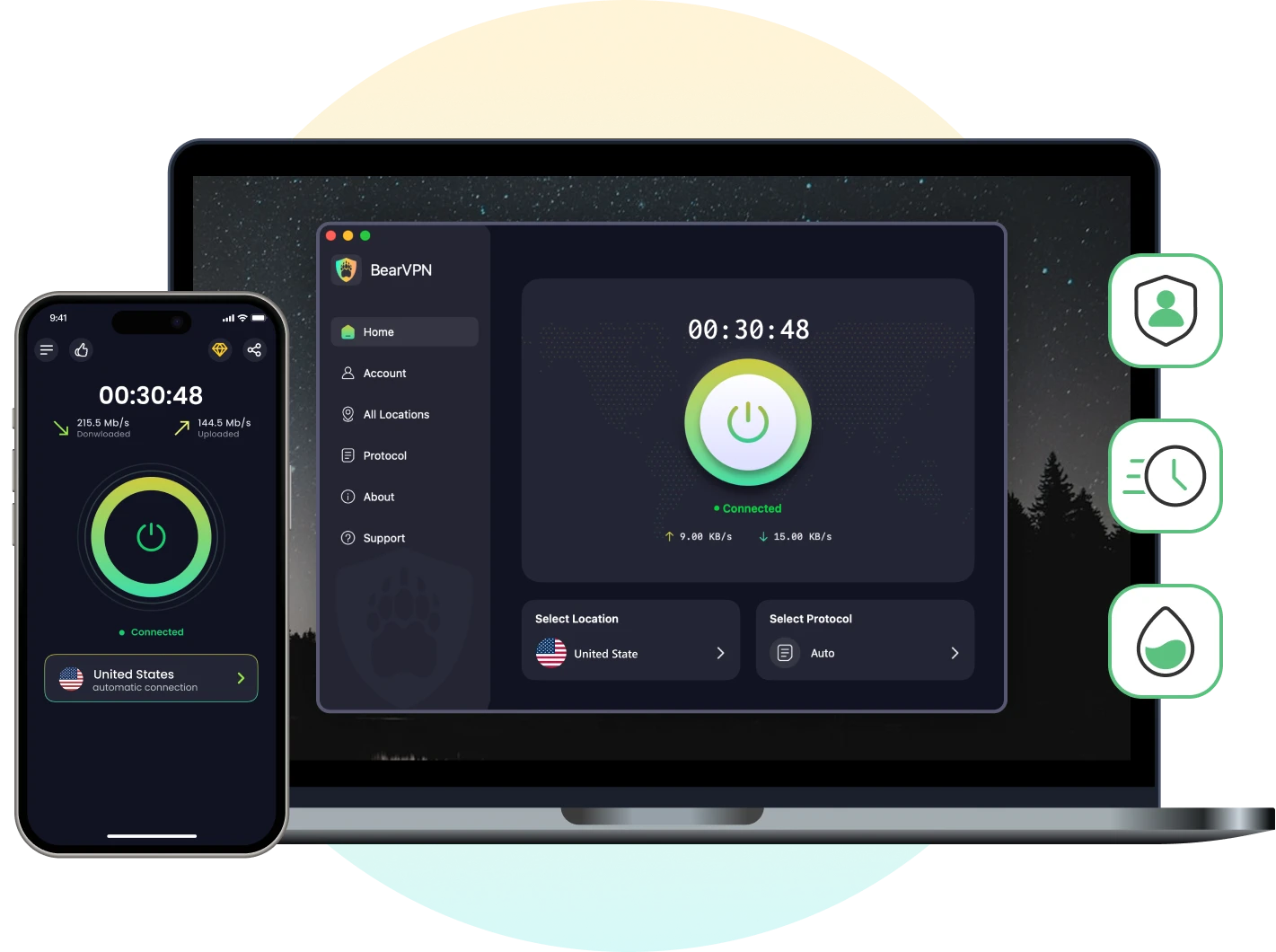
The most essential tip to buy from Kinguin is to encrypt your data before purchasing. When dealing with alternative digital marketplaces, your privacy and security should be a top priority. We highly recommend using BearVPN while browsing and purchasing on Kinguin.
As one of the best VPN for gamers, BearVPN encrypts your internet connection, ensuring that your financial data and personal information remain secure from potential interceptors, especially if you are buying on public Wi-Fi. Furthermore, BearVPN allows for anonymous browsing, preventing third-party trackers from profiling your shopping habits. In the grey market, maintaining your anonymity with a reliable VPN is an essential layer of modern cybersecurity. By encrypting your traffic with BearVPN, you prevent third-party trackers and potentially malicious grey-market sellers from profiling your real location and financial footprints.
- RAM-only Diskless Servers
- DNS Leak Protection
- Double VPN
- AES-256 Encryption
2. Stick to Highly Rated Sellers
Like many other e-commerce platforms, Kinguin provides the ratings of its merchants to help buyers choose. Never buy from a seller with a low completion rate or zero feedback, no matter how low their price is. Look for merchants who have tens of thousands of completed transactions and a positive rating of 95% or higher. These are usually established businesses utilizing wholesale methods, rather than individuals trying to offload questionable codes. Besides, remember to read the recent reviews on the seller’s profile; if multiple people have recently complained about duplicate keys from that specific merchant, try to avoid it.
3. Use PayPal for Guaranteed Buyer Protection
When you pay on Kinguin, we suggest not entering your credit or debit card information directly into a grey market website. Always use a secure, third-party payment gateway like PayPal. If a seller scams you, provides a broken key, and Kinguin’s customer support refuses to help, you can open a dispute directly with PayPal. It is famous for siding with buyers in disputes over digital goods, serving as your ultimate safety net against fraud.
4. Avoid the “Accounts” Product
To attract users with extremely low prices, users often list products as “Account”, such as “Steam Account” or “PS5 Account,” rather than a key. Purchasing an account means the seller gives you a username and password to log in. This is highly unsafe, violates Terms of Service, and can lead to permanent bans. Always ensure the product format explicitly states “CD Key” or “Activation Code.” Furthermore, check the region tags to ensure the key can actually be activated in your country.
Final Words
So, is Kinguin legit? Yes, Kinguin is a legitimate grey market platform that successfully connects millions of gamers with deeply discounted game keys and software licenses. While the allure of saving money is strong, it is vital to acknowledge the inherent risks, such as encountering duplicate codes, dealing with slow customer support, risking account bans, and navigating hidden checkout fees. By treating Kinguin with cautious optimism—using BearVPN for anonymous browsing, buying only from top-rated sellers, avoiding account purchases, using PayPal for financial protection—you can safely take advantage of their massive discounts without compromising your digital security.
FAQs: Is Kinguin Legit?
Yes, it is generally safe if you buy from highly-rated sellers and use secure payment methods like PayPal to protect yourself against potential fraud or invalid keys.
Keys on Kinguin are cheap because third-party sellers acquire them through regional pricing differences, bulk wholesale discounts, or by splitting up promotional charity bundles for resale.
Yes, Kinguin is a legal business. However, it operates in the grey market, meaning it sells keys acquired outside of publisher-authorized retail channels, which developers heavily dislike.
The main risks include encountering malicious tracking, receiving already-redeemed keys, having games revoked by publishers if originally bought with stolen funds, and violating terms by purchasing pre-loaded accounts.
While Kinguin uses standard encryption, it is always safer to use PayPal rather than entering your credit card details directly on grey market sites. You can also use BearVPN to hide your IP address when browsing on Kinguin.
Yes, you can apply for a refund if the product fails to work. You must provide extensive proof, such as screenshots and videos showing the key was invalid at the exact time of purchase.