There are currently no states where porn is banned in the broad sense of a statewide prohibition on lawful adult content for adults. What has changed is access: a growing number of states require certain websites with a substantial amount of material harmful to minors to verify a visitor’s age. Some platforms comply with an age-verification process; others elect not to serve users they identify as being in those states.
That is why the search term can produce a confusing mix of block notices, legal headlines, and claims that “porn is illegal” in a particular state. A site being unavailable does not, by itself, establish a general criminal ban on adults. The legal question is usually whether the website has duties to protect minors, what verification it offers, and whether the platform has decided to remain available.
This guide explains the U.S. state landscape as checked on July 30, 2026. It is general information for adults, not legal advice. It does not encourage false age statements, identity misuse, use of mirrors, or bypassing age verification, website restrictions, or local law.
The key distinction: what people mean by “banned”
Three different situations are often called a “porn ban,” even though they are legally and practically distinct.

This distinction is more than semantics. Age-verification statutes primarily regulate businesses that publish covered material. Their thresholds, permitted verification methods, enforcement mechanisms, and exemptions vary by state. A local block can be the company’s risk or privacy decision rather than a direct government block.
The Congressional Research Service has explained that state online age-verification laws do not use a single uniform definition or method. Some target websites providing material harmful to minors; others cover social-media or youth-directed services. A headline about a social-media rule should not be used as evidence that a state has banned adult content.
Which States Have Adult Website Age-Verification Rules in Effect?
The legal landscape changes frequently, so a nationwide list should always be checked against official state statutes, court decisions, and platform notices.
As of July 2026, multiple U.S. states have enacted or implemented adult-website age-verification requirements. These laws do not create a blanket ban on lawful adult content for adults. Instead, they generally require certain covered websites to verify that users are 18 or older.
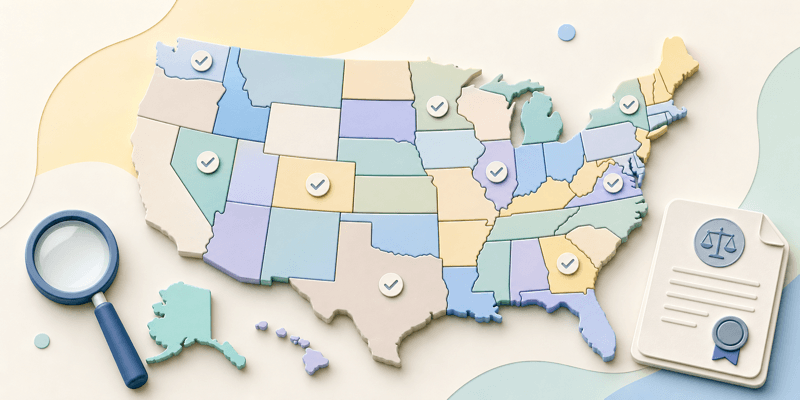
Based on current legal trackers and state-level sources, states with adult-website age-verification requirements include:
This list identifies states with adult-site age-verification requirements. It does not identify states where lawful adult content is completely prohibited for adults.
Because laws, court decisions, and enforcement approaches change, always confirm the current statute and platform policy before making a state-specific conclusion.
Industry trackers such as the Free Speech Coalition’s database can help monitor changes, but they should be treated as secondary sources rather than substitutes for official legal materials.
The details differ significantly between states. Many of these laws use a content threshold based on the percentage of material considered harmful to minors, but the exact wording, verification methods, enforcement mechanisms, and legal exceptions vary.
For example, Kansas uses different threshold language than many other states, while some states have different approaches to enforcement or statutory definitions. A threshold may also be interpreted differently by courts or platforms over time.
For a practical example, Texas’s current Chapter 129B requires reasonable age verification from a covered commercial website where more than one-third of the material is sexual material harmful to minors. Florida’s §501.1737 applies a similar more-than-one-third threshold, but requires covered services to offer both anonymous and standard age verification. Those are comparable policy goals with different statutory language, options, and remedies.
Why adult sites can be inaccessible even when content is not “banned”
Age-verification requirements can mean that a platform needs to choose, build, operate, and audit a verification system. That involves legal review, vendor relationships, security controls, and handling of sensitive personal information. A platform can decide that it does not want to take on those costs or risks in a particular state and restrict access instead.
That choice can produce a state-level message or an unavailable page. It should be described accurately as a platform access restriction, unless an official source demonstrates a different cause. It is misleading to convert “Company X does not serve visitors in State Y” into “porn is banned in State Y.”
The Texas example illustrates the difference. In *Free Speech Coalition, Inc. v. Paxton*, decided June 27, 2025, the U.S. Supreme Court upheld Texas’s challenged age-verification requirement under intermediate scrutiny. The Court recognized that adults have a First Amendment right to access at least some of the covered speech, while holding that the verification requirement was a permissible method for Texas to protect minors. The ruling did not convert the state’s age gate into a universal ban on adult expression.
For the same reason, do not treat a temporary outage, a parental-control setting, school or workplace network filtering, an account status issue, or an ISP/DNS configuration as proof of state law. Check the website’s official notice and the statute that actually applies.
What age verification may involve—and why privacy still matters
Verification laws are written differently, but common approaches include checking a government-issued ID, using a digitized ID, or asking a third-party provider to make an age determination from public or private transactional data. The method can involve a website, a verifier, and sometimes a payment or identity-data ecosystem. That makes privacy due diligence essential for adults who are considering an official, lawful verification flow.
Before providing any data, ask these questions:
- Am I on the official website? Check the spelling and certificate details, and do not rely on links from messages, pop-ups, ads, or “unblock” tools.
- Who performs the verification? Read the platform’s and verification vendor’s current privacy notices. Know which company receives the data.
- What is collected and for how long? Look for a direct statement on data categories, retention, deletion, security, and sharing—not just a generic claim that the process is secure.
- Is the requested information proportionate and expected? A sudden request to install software, upload information through email, or pay an unfamiliar fee is a warning sign, not an ordinary verification step.
- What other records exist? A chat account, browser cookies, device identifiers, analytics, payment details, and site logs can create separate links to activity even when an age-verification service is involved.
Federal policy also reflects the importance of data minimization. In a 2026 policy statement, the Federal Trade Commission said qualifying age-verification information should be used only to determine age, retained no longer than necessary, deleted promptly, shared only with capable third parties, and protected with reasonable safeguards. That policy statement concerns COPPA enforcement and is not a universal guarantee about every state process or website. It does, however, provide sensible standards to look for in a provider’s practices.
Why a VPN is not an answer to an age-verification law
Online discussions sometimes describe VPNs as a way around state-level restrictions. That is not the purpose of a privacy tool. A VPN does not make it lawful to evade age verification, misrepresent location, violate platform rules, or access unlawful material.
For lawful browsing, a VPN can help protect the network privacy layer. BearVPN provides several privacy-focused features:
- AES-256 encryption helps protect traffic between your device and the VPN server.
- IP address masking helps reduce exposure of your original IP address to websites and online services.
- DNS leak protection helps keep DNS requests within the VPN connection.
- Kill Switch helps reduce accidental exposure if the VPN connection drops unexpectedly.
- No-logs policy states that BearVPN does not collect browsing-history, traffic-destination, data-content, DNS-query, IP-address, or connection-timestamp logs as activity or connection logs.
- RAM-only servers and bare-metal servers support a privacy-focused infrastructure approach.
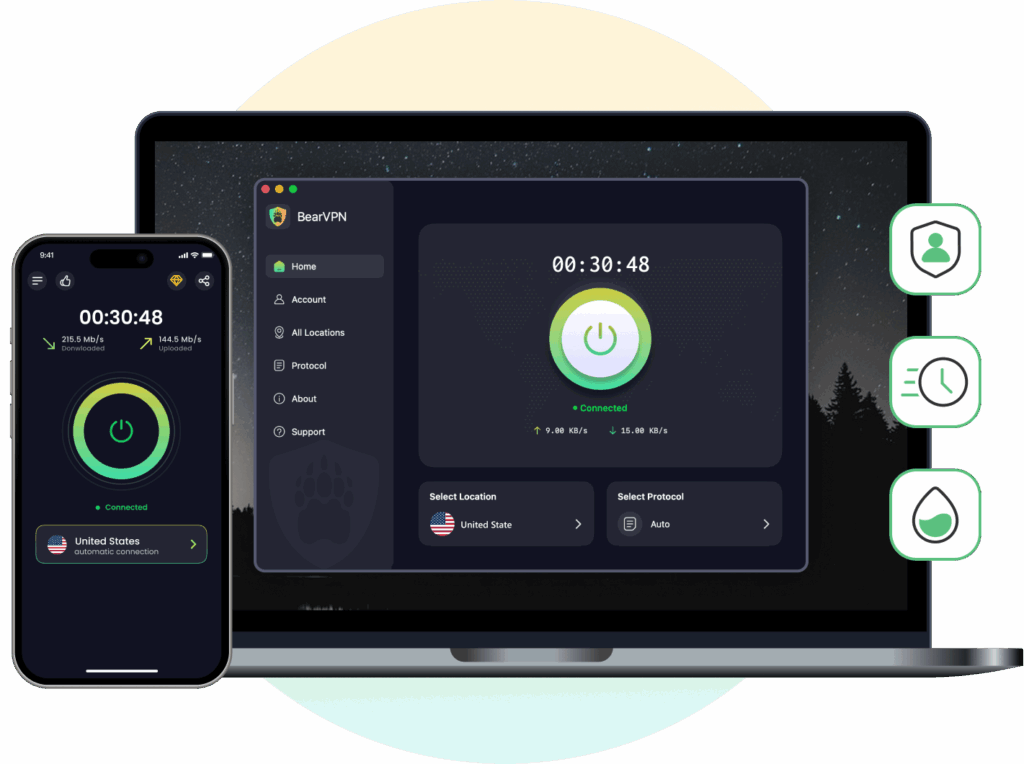
These protections can be useful on public Wi-Fi or shared networks where users want to reduce network-level exposure.
However, BearVPN only protects the connection layer. It cannot hide a logged-in account, remove cookies, erase verification records, prevent websites from processing information users submit, or make age-verification requirements disappear.
Use BearVPN as one part of a broader privacy strategy—not as a workaround for legal requirements or platform safeguards.
A responsible way to respond to a block notice
If a site says it is unavailable in your state, do not immediately search for a workaround. Start by reading the notice carefully. Does it identify an age-verification law? Does it offer a lawful, official verification path? Is the page actually from the real service? The answers may tell you whether this is a policy decision, a technical problem, or something else.
If an official verification process is offered, review its privacy practices before deciding whether to proceed. You can choose not to share information with a provider whose practices are unclear or do not meet your privacy expectations. That is a different decision from trying to defeat the protection.
Keep your general security posture sound as well: update the device and browser, use a unique password for every account, turn on multi-factor authentication where offered, and decline suspicious downloads or extensions. Use BearVPN on shared networks if connection privacy is useful, but keep the product boundary clear—privacy tools are not legal exemptions.
How to check a state’s rule without relying on viral posts
Legal status can change through legislation, litigation, agency guidance, and platform policies. Follow this order when you need a current answer:
- Read the state legislature’s official code or enacted bill.
- Search the state attorney general’s official website for enforcement or guidance.
- Check recent court orders or reputable legal reporting that identifies the exact statute.
- Read the individual platform’s official status notice.
- Note the date. A state may have passed a bill that has not taken effect, or a court order may limit enforcement.
This avoids two common errors: treating a proposed law as current law and treating a company’s voluntary withdrawal as a government prohibition. It also prevents false confidence from a national list that has not caught up with a new amendment or court order.
Conclusion
There are no U.S. states that have broadly banned lawful adult content for adults. The more accurate picture is a patchwork of laws requiring age verification from certain commercial websites, combined with different platform responses. As of July 2026, 27 states were listed by an industry tracker as having adult-site verification rules in effect, but each state’s scope, enforcement method, exceptions, and current litigation must be checked separately.
If you encounter a block or age gate, distinguish an official legal requirement from a platform choice, protect your personal data, and avoid unlawful or unsafe workarounds. For network privacy on public Wi-Fi, download BearVPN and use encryption and the Kill Switch where available—but do not mistake a VPN for a means to bypass age protections or legal obligations.
FAQ
No U.S. state has a blanket ban on lawful adult content for adults. States may prohibit specific unlawful material and many now require age verification for certain adult websites to protect minors.
Some platforms choose not to serve users in states with age-verification requirements. This is generally a company’s access or compliance decision, not proof that the state has prohibited all lawful adult content for adults.
No. The states differ in covered content thresholds, verification methods, enforcement, exemptions, and whether rules are currently affected by litigation. Check the official statute for the state involved.
Several U.S. states have enacted age-verification requirements for certain adult websites, but the details vary by state. Requirements can differ in covered platforms, verification methods, enforcement, and current legal status.
Always check the official state statute and the platform’s current notice for the most accurate information.
A VPN does not change the law or a platform’s rules. It should not be used to evade age gates, geographical restrictions, or other safety measures. Its appropriate role is protecting a lawful internet connection.
No. Review the platform’s and verifier’s current privacy notices, including their retention, security, and sharing terms. Use only official verification workflows and never submit identity documents through unsolicited links or unknown services.
For adults only. This article is not legal advice and does not encourage falsifying age, using another person’s identity, evading age verification or geographic restrictions, accessing unlawful content, or infringing copyright.