People searching for Pornhub alternatives may be responding to a block notice, concerns about privacy, a desire to support creators more directly, or uncertainty about a platform’s moderation policies. The sensible answer is not a list of sites promising unrestricted access. Those lists often steer people toward mirror domains, scraped material, scams, or platforms with unclear consent and copyright practices.
Instead, compare services through the information that affects an adult user’s safety and privacy: who operates the platform, whether it has a current privacy policy, what an account reveals, how payments are handled, how it verifies age and consent, and whether it gives people a credible way to report or remove content. A platform that is available is not automatically safer, and one that is unavailable in a state is not automatically illegal.
This guide is for adults and covers lawful, privacy-conscious comparison. It does not recommend leaked-content sites, unofficial mirrors, subscription workarounds, downloaded copies, or methods for bypassing age verification or regional restrictions.
Start with the reason you are looking for an alternative
“Alternative” can mean several things. Clarifying the actual problem will prevent an unsafe choice.
For connection privacy, BearVPN can be one helpful layer when using adult platforms or other sensitive online services.
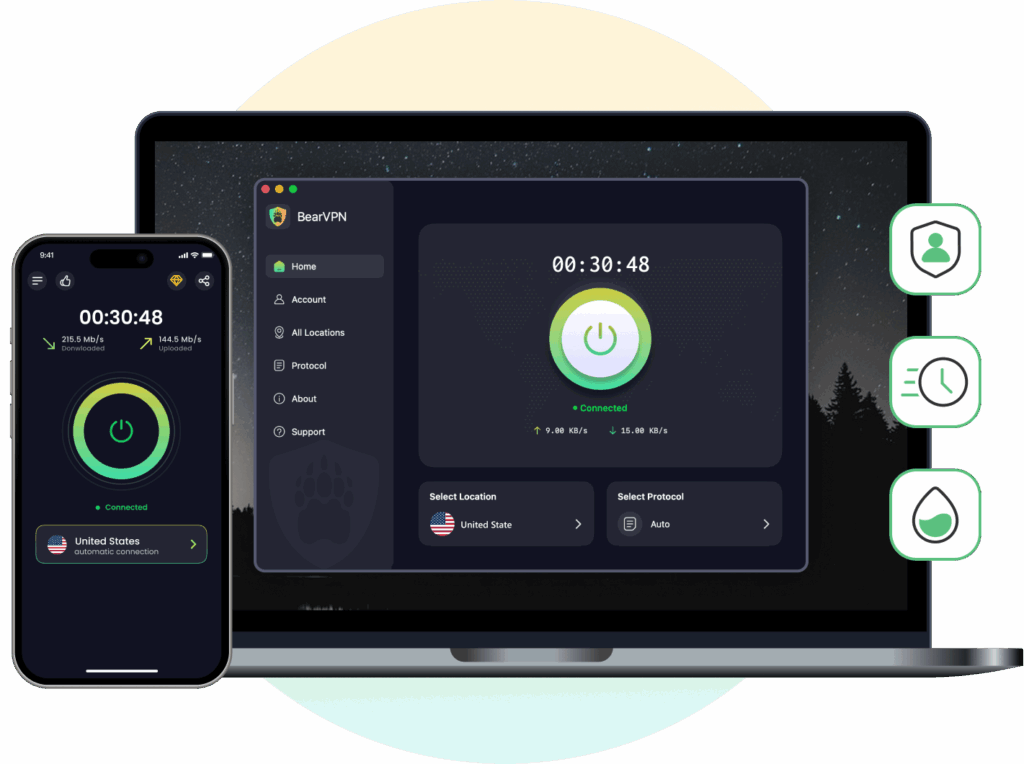
BearVPN provides several privacy-focused features:
- AES-256 encryption helps protect traffic between your device and the VPN server.
- IP address masking helps reduce exposure of your original IP address to websites.
- DNS leak protection helps keep DNS requests within the VPN connection.
- Kill Switch helps reduce accidental exposure if the VPN connection drops.
- No-logs policy states that BearVPN does not collect browsing-history, traffic-destination, data-content, DNS-query, IP-address, or connection-timestamp logs as activity or connection logs.
- RAM-only and bare-metal servers support a privacy-focused infrastructure approach.
These features can help reduce network-level exposure on public or shared Wi-Fi.
However, BearVPN does not verify platform legitimacy, confirm consent practices, hide account identity, remove cookies, or make age verification and platform rules optional.
Quick Comparison of Pornhub Alternatives

Pornhub Alternatives Compared by Platform Model
The following are comparison paths, not rankings or endorsements. Public policies can change, and no policy page by itself proves that a platform’s practices are secure or that every piece of content is authorized. Check the current documents before creating an account or submitting payment or identity data.
1. OnlyFans and Other Creator Subscription Platforms
Services such as OnlyFans are often considered by people looking for Pornhub alternatives because the account relationship is generally centered on individual creators rather than an open, general-access catalogue. The privacy decision is therefore more account- and payment-focused: a user may have a profile, transaction history, subscription records, messages, and payment-processor relationship in addition to normal device and cookie data.
The right questions are practical. Can you see the provider’s current privacy policy and payment terms before you subscribe? Does the creator link to the same official account from a verified public channel? What are the account-deletion and refund terms? And what data may be shared with payment and fraud-prevention providers? Australia’s eSafety Commissioner guide to OnlyFans points users to the service’s privacy policy and financial-information practices; use the platform’s own live policy as the primary source for a final decision.
This model may make it easier to identify an official creator channel, but it does not remove privacy risk. A payment record, account login, and voluntary messages can still link activity to a person. Do not share sensitive personal details, workplace information, passwords, financial credentials, or anyone else’s private material.
2. Fansly and Creator Platforms With Verification Policies
Fansly is another creator-platform model worth comparing through its published operational information. Its public help center says that, in certain regions and U.S. states, it uses Ondato for age verification and that Fansly receives an age-verification confirmation rather than a selfie or ID. Its help materials also say that creator applications require identity and age documentation and describe a process for complaints, consent, and copyright reports.
These disclosures are useful signals because they tell a user what to investigate: the age-verification provider, the different treatment of viewer and creator data, the billing flow, and the content-reporting route. They are not an independent security audit. In fact, Fansly’s older public privacy policy lists a wide range of personal information that may be collected, including identification, payment, network, and biometric information. When help-center updates and an older privacy-policy text appear to have different emphasis, ask the service for clarification or minimize what you share until the current terms are clear.
For a user, the comparison should focus on whether the official age-verification, privacy, and removal processes are understandable in your jurisdiction. Never attempt to bypass an age check or use someone else’s identity. For creators, robust identity and consent requirements are an important governance consideration, but they also mean that creator participation necessarily involves sensitive information.
3. Marketplace Platforms Like ManyVids and Clips4Sale
Platforms such as ManyVids and Clips4Sale are examples of marketplace-style services that users may encounter while searching for alternatives. Do not assume that two marketplace platforms use the same account rules, payment processors, creator-verification process, or content-removal policy. Their terms and policies must be evaluated separately.
Before relying on a marketplace, locate its official privacy policy, terms of service, reporting channel, and copyright or nonconsensual-content removal process. For example, Clips4Sale’s creator support documentation links users to its privacy/GDPR policy. That is a starting point, not proof of a particular data-security outcome.
Marketplace structure can be helpful when it gives creators a formal payment and reporting system, but it can also create more third-party relationships: platform, creator, payment processor, verification provider, analytics services, and support tools. Read the documents that apply to your role—viewer, purchaser, or creator—because they may not be identical.
4. Official Direct Creator Websites
Sometimes the most straightforward alternative is an official website, storefront, or verified public channel operated by the creator or studio itself. This can reduce the number of intermediaries, but it does not make the arrangement automatically safer. A direct site still needs a clear identity, HTTPS, reputable payment handling, a privacy notice, a way to contact support, and a process for reporting misuse.
Use direct channels only when you can independently verify that they are official. Check links from a creator’s established, verified public profiles; compare domain spelling; and be cautious of lookalike accounts. Do not treat social-media reposts, anonymous link lists, or messages promising “exclusive free access” as proof of authorization.
What to look for in a platform’s privacy and safety information
Rather than looking for a single “safe” label, use this compact audit before registering.
Ownership and contact details
A legitimate service should identify the operator in its terms or privacy policy and provide a route for privacy, support, or legal requests. An unclear operator does not prove misconduct, but it makes it harder to understand who is accountable for your data and how to seek help.
Age and consent governance
Review whether the platform explains who can use the service, how it handles age verification where required, and how it receives reports about content that may be unauthorized, nonconsensual, or infringing. The Canadian privacy regulator’s 2024 Aylo investigation is a useful reminder that verified-upload and consent controls require ongoing scrutiny. It evaluated earlier practices; it should not be presented as a definitive statement about a platform’s current implementation.
Look for a visible reporting route and a clear explanation of what a complainant needs to provide. Fansly’s complaints form is an example of a public process that asks about consent and copyright status. The presence of a form alone does not establish response quality, but the absence of any meaningful process is a warning sign.
Payment and account separation
Payments and accounts are often more identifying than a browser visit. Read billing descriptions, refund terms, processor disclosures, subscription-renewal settings, and the deletion policy before you pay. Avoid sending payment through private messages, cryptocurrency addresses provided by strangers, gift cards, or peer-to-peer transfers outside the platform’s official workflow. These methods make fraud disputes and unauthorized-content reports harder to resolve.
Use a unique password, enable multi-factor authentication if it is offered, and do not reuse the password from email, financial accounts, or social networks. A separate browser profile can also reduce accidental cross-site sign-ins and make it easier to review or clear cookies. Incognito/private mode mainly limits traces on the local device; it does not prevent a website, payment processor, or verification provider from receiving information.
Regulation and availability
Adult platforms may ask for age verification or restrict access in some locations because of local laws. This is not a cue to search for ways around the rule. The platform might be responding to a law, a regulator, a pending case, or its own compliance policy. For instance, the European Commission announced in March 2026 preliminary findings concerning age-verification measures at several large adult platforms under the Digital Services Act. Regulatory attention is not a platform safety score; it is a reason to read the current policies and location-specific notices carefully.
Red flags that are not legitimate Pornhub alternatives
Avoid a site or service that offers leaked subscriptions, copied accounts, pirated uploads, “premium for free,” a mirror domain, or a download tool to get around a legitimate platform’s rules. The risks go beyond copyright: these offers frequently expose people to malware, credential theft, payment fraud, and nonconsensual content.

Also leave any page that asks for an identity document through an email attachment, urges you to install an unknown app or extension, uses a mismatched domain, or claims that a VPN will make age verification unnecessary. A VPN does not grant permission to bypass safeguards, and no provider can promise complete anonymity.
Choose a platform by your risk tolerance, not a “best site” label
The best decision may be not to create an account until you can answer basic questions about privacy, payment, and consent. If direct creator support is your objective, an official creator channel with clear policies may fit better than an open marketplace. If you want a platform account, compare the account and verification disclosures before you pay. If a service’s terms are vague or its reporting route is hard to find, treat that as a reason to step back.
For public-Wi-Fi protection, download BearVPN and use encryption and the Kill Switch where available. Pair that with a unique password, careful control of what you disclose, and only official platforms. These actions can reduce avoidable privacy exposure, but they cannot guarantee that a website is safe or erase records created by an account, payment, or verification process.
FAQ
No platform is automatically safest. Compare official privacy and terms documents, verification practices, payment handling, reporting tools, and content-governance information. Avoid unauthorized mirrors, leaks, and “free premium” services.
Not necessarily. They can involve more direct account, payment, message, and subscription data. The relevant comparison is each service’s current data practices and the amount of personal information you choose to provide.
The platform may have chosen to restrict access in response to local age-verification requirements or other compliance considerations. That is not necessarily a statement that all adult content is illegal there. Check the service’s official notice and local requirements.
This guide does not provide ways to bypass age gates or regional restrictions. A VPN does not make evasion lawful. Its appropriate role is protecting a lawful connection, especially on public or shared Wi-Fi.
Check for links from the creator’s established public profiles, confirm the exact domain, and use the platform’s official payment flow. Do not trust anonymous reposts, unexpected direct messages, or links offering copied or free paid content.
No. A VPN can protect the network connection and mask an IP address, but it cannot hide account information, payment records, cookies, or information voluntarily submitted to a platform.
For adults only. This article does not recommend adult content, piracy, leaks, copied accounts, unofficial mirrors, or bypassing age verification, payment controls, geographic restrictions, or copyright protections.