No—porn is not banned in Florida in the broad sense often suggested by search results or a blocked website notice. Florida law does not prohibit all adults from viewing lawful adult content. Instead, it focuses on preventing minors from accessing material defined as harmful to minors and creates requirements for certain commercial platforms.
The practical experience can still feel restrictive. Since Florida’s age-verification law took effect on January 1, 2025, some platforms have introduced verification requirements, while others have chosen to limit access from Florida. A platform’s decision to restrict access is not the same as a statewide ban on adult content.
This guide explains what Florida’s age-verification law requires, why some websites may be unavailable, how verification can affect privacy, and what adults should consider when protecting personal information. This article provides general information only and is not legal advice.
What Florida’s Age Verification Law Actually Covers
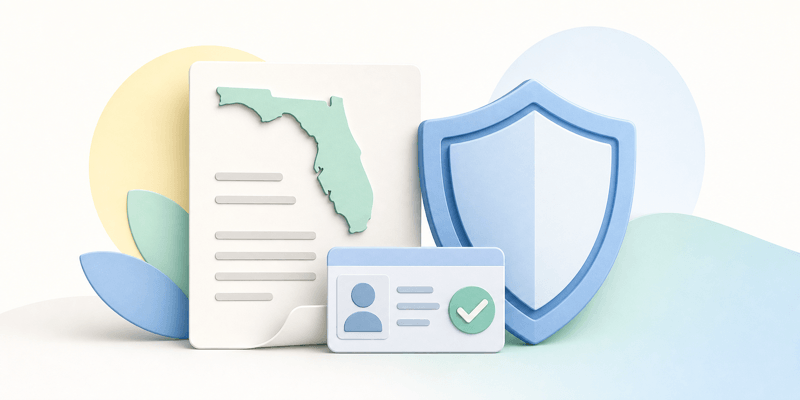
Florida has long had laws addressing obscenity, material harmful to minors, and the exploitation of children. These rules are separate from the state’s online age-verification requirements.
The relevant measure is Florida Statutes §501.1737, titled “Age verification for online access to materials harmful to minors.”
The statute applies to certain commercial entities that knowingly and intentionally publish or distribute material harmful to minors when a website or app contains a “substantial portion” of that material. The law defines a substantial portion as more than 33.3% of the total material.
For covered platforms, the requirement is focused on verifying that users accessing the material are adults and preventing access by people under 18. It does not create a general statewide prohibition preventing all adults from viewing lawful adult content.
The most accurate answer is therefore conditional: adults are not subject to a blanket content ban, but access to an individual platform may depend on that platform’s compliance approach, business decisions, and current availability.
What Florida’s Age Verification Requirements Mean for Platforms
Florida’s current text requires covered commercial entities to provide both anonymous age verification and standard age verification options.
The purpose is to verify that a person accessing covered material is at least 18 and to prevent access by minors.
The law also includes exemptions for certain public-interest content and limits liability for services such as internet service providers, search engines, and cloud providers that provide access or infrastructure without creating the content themselves.
Here is the practical breakdown:
The state may treat violations as unfair and deceptive trade practices. Section 501.1737 allows enforcement actions and civil penalties against covered entities that fail to comply.
Florida has acted on this authority. In 2025, the Florida Attorney General announced complaints against multiple online pornography websites for allegedly failing to require age verification after the law took effect on January 1, 2025. The Attorney General’s announcement reflects enforcement activity, but it does not mean every website or every adult user has the same legal situation.
Why a Website May Be Unavailable in Florida
A message saying “this site is blocked in Florida” does not automatically mean that Florida has banned all adult content.
Several different situations can create the same result:
- A platform may choose not to implement age-verification requirements.
- A website may restrict Florida access as a compliance decision.
- A service may experience an outage or account issue.
- A browser, DNS, or network setting may affect availability.
A platform may decide that operating in Florida requires additional verification systems that it does not want to maintain. Another platform may continue operating with age-verification options.
One high-profile example is Pornhub’s January 2025 decision to stop serving Florida users after the law came into force. Contemporary reporting described this as a platform response to Florida’s age-verification requirement, not a declaration that adult content had become universally illegal in the state. Associated Press reporting also discussed Florida’s law alongside similar state-level requirements.
The appropriate response is to check the official platform notice and current legal information—not to look for unofficial mirrors, leaked content, or methods to defeat age verification. Those options can introduce copyright, malware, fraud, and privacy risks, and a VPN does not make prohibited activity lawful.
Anonymous Age Verification: Privacy Protections and Limitations
Florida’s law includes requirements for an “anonymous age verification” option. Under §501.1738, qualifying third-party verification providers have restrictions on retaining, using, or sharing identifying information collected for age verification.

These requirements are intended to reduce unnecessary handling of sensitive information. However, “anonymous” does not mean that every part of an online interaction becomes completely invisible.
A website visit may still involve:
- account information;
- payment records;
- cookies;
- device signals;
- analytics data;
- information voluntarily provided by the user.
Before submitting sensitive information, adults should verify the domain, review the privacy notice, identify the verification provider, and confirm that the request is part of the official website process.
Never send identity documents through unsolicited links, unexpected pop-ups, emails, or unfamiliar browser extensions. Be cautious of pages requesting unusual downloads or additional payments for verification.
What BearVPN Can—and Cannot—Do for Privacy in Florida
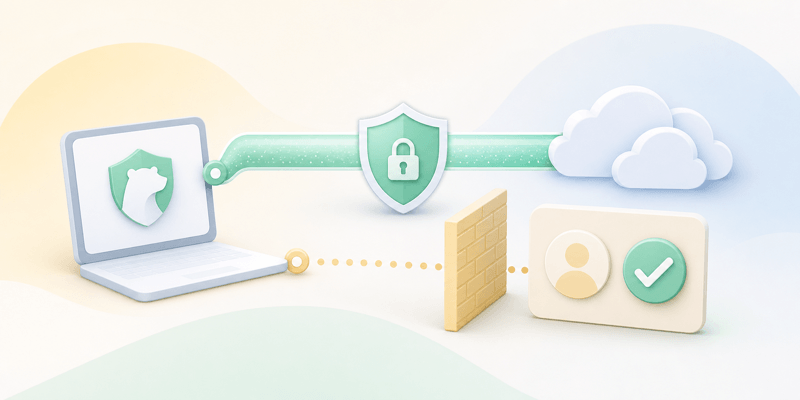
A VPN does not change Florida law, remove age-verification requirements, or create an exception to platform rules. It is a network privacy tool that can help protect the connection layer when adults are using lawful online services.
For lawful browsing, BearVPN can help reduce network-level exposure through several privacy-focused features.
How BearVPN Helps Protect the Connection Layer
BearVPN provides:
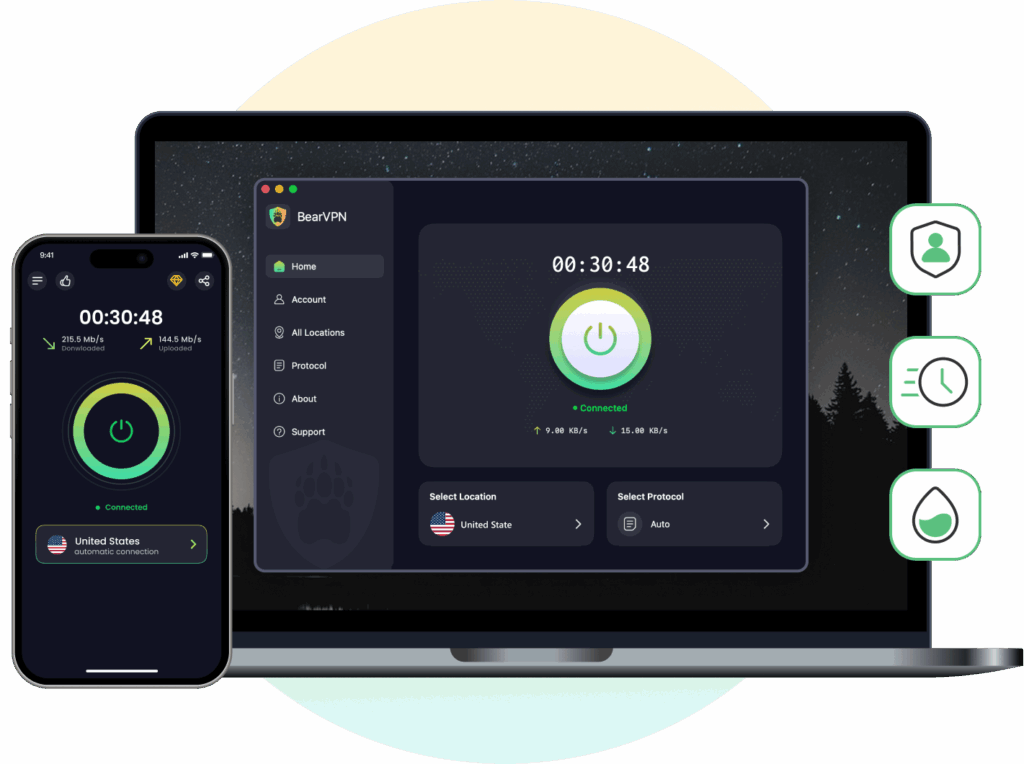
- AES-256 encryption to help protect traffic between your device and the VPN server.
- IP address masking to replace the original IP address presented to websites with the VPN server’s IP address.
- DNS leak protection to help keep DNS requests within the VPN connection instead of exposing them outside the encrypted tunnel.
- Kill Switch to help reduce accidental exposure if the VPN connection drops unexpectedly.
- No-logs policy that states BearVPN does not collect browsing history, traffic destination, data content, DNS queries, IP addresses, or connection timestamps as activity/connection logs.
- RAM-only servers and bare-metal servers as part of a privacy-focused infrastructure approach, reducing reliance on persistent storage and shared virtual environments.
For users connecting through public Wi-Fi or shared networks, these protections can help reduce what local network operators or other observers may see about connection activity.
BearVPN also supports additional privacy features such as Double VPN and strong obfuscation for users who need more control over their connection environment, including situations where VPN traffic may face additional monitoring or restrictions.
However, these protections apply only to the network layer.
What BearVPN Cannot Do
BearVPN cannot:
- verify a user’s age;
- remove a website’s age-verification requirements;
- hide a logged-in account;
- erase cookies or browser fingerprints;
- conceal information submitted directly to a website or verification provider;
- guarantee complete anonymity;
- make unlawful access legal.
A VPN protects the path between your device and the VPN server. It does not change the information you voluntarily provide to websites, platforms, or third-party services.
Use BearVPN as one part of a broader privacy approach that also includes careful account decisions, secure passwords, and responsible sharing of personal information.
BearVPN can provide additional connection privacy for adults who want stronger protection on public or shared networks.
How Adults Can Handle the Privacy Side Responsibly
If a lawful service offers age verification, decisions should be based on official information rather than online claims about a “ban.”
These steps focus on privacy and account safety. They are not methods to bypass laws, verification requirements, or platform protections.
- Check official information first. Review the current statute, the platform’s notice, and the verification provider’s privacy information before making decisions.
- Use only official websites. Be cautious of copycat domains, unofficial apps, browser extensions, “unblock” pages, and download prompts.
- Understand verification requests before submitting information. If a platform requires verification, review what information is collected and how the provider explains its handling practices.
- Secure your accounts. Use unique passwords, enable available security features, and avoid sharing accounts or verification information.
- Protect your network privacy. Encrypted connections can reduce exposure on shared networks. Consider BearVPN when using public Wi-Fi or networks where additional connection privacy is useful—not as a way to avoid legal requirements.
- Do not use someone else’s information. Never use another person’s identity documents, payment information, or account details. Do not provide false age information.
What to Watch for as Florida’s Rules Evolve
Online age-verification requirements continue to change as lawmakers, regulators, courts, and platforms respond to new privacy and safety concerns.
The statute may be amended, enforcement approaches may change, platforms may update their policies, and court decisions may affect how requirements are applied.
A headline about another Florida online-safety measure, or another state’s law, may not answer the specific question of adult-content access under Florida’s age-verification requirements.
For updates, rely on primary sources first:
- Florida Senate’s published statutes
- Florida Attorney General announcements
- Court documents
- Reliable legal reporting
Always confirm that a source relates specifically to adult-material access requirements rather than unrelated online-safety rules.
Conclusion
Florida has not imposed a blanket ban on lawful adult content for adults.
Instead, its online age-verification requirements place obligations on certain commercial platforms that provide material considered harmful to minors. A website becoming unavailable in Florida may reflect a platform compliance decision rather than a statewide prohibition.
The most practical approach is to understand current requirements, protect personal information, and avoid unsafe or unlawful workarounds.
For adults who want additional connection privacy while using lawful online services, BearVPN can help encrypt network traffic and mask an IP address. However, a VPN should be viewed as one privacy layer—not a replacement for age verification, account security, or responsible online choices.
FAQ
Not as a blanket rule.
Florida’s online age-verification requirements focus on preventing minors from accessing covered material and place compliance obligations on certain commercial platforms. Other laws may apply to obscenity, exploitation, nonconsensual content, or other unlawful material.
A platform may choose to restrict Florida access because of compliance requirements, including age-verification obligations.
However, availability issues may also result from:
service outages;
account restrictions;
parental-control settings;
browser problems;
network configuration issues.
Check the official platform notice before assuming the reason is legal.
The statute requires covered platforms to provide age-verification methods, including anonymous and standard options.
It does not establish one single universal credential that every platform must use. Users should review the specific verification process and privacy notice before submitting information.
No.
A VPN does not change Florida law or a platform’s requirements. It can protect the network connection and mask an IP address, but it does not provide a legal exception or remove age-verification obligations.
Not necessarily.
Florida law places restrictions on qualifying anonymous verification providers, including limits on retaining and using identifying information collected for verification.
However, other information may still exist through:
website accounts;
payment records;
cookies;
device information;
information voluntarily submitted by users.
Review the provider’s privacy policy before sharing sensitive information.