Is 4chan safe? If you are researching this in 2026, the straightforward answer is no. 4chan is generally considered highly unsafe for the average internet user, and entirely inappropriate for minors.
Launched in 2003 by Christopher Poole, 4chan operates as an English-language imageboard with a unique premise: it is completely anonymous, requires no user accounts, and threads are entirely temporary. While this absolute freedom of speech has spawned countless internet memes and viral movements, it has also turned the platform into a digital Wild West.
Because anyone can post anything without a lasting digital identity, users regularly encounter explicit NSFW content, extreme ideologies, and targeted harassment. But beyond the controversial content, 4chan poses severe cybersecurity risks. From IP-grabbing attacks hidden in comment threads to malicious external links, the technical dangers of browsing the site are very real.
If you are wondering how to navigate these threats, this guide breaks down the true risks of 4chan in 2026 and exactly how to protect your digital identity.
This guide is for informational purposes only. We do not endorse or encourage engagement with illegal or extremist content. Always follow local laws and protect your connection when browsing unmoderated platforms.
The 2026 Reality: Is 4chan Safe to Browse?
When users ask, is 4chan safe to browse, they are usually asking whether simply visiting the website will get them into trouble or expose them to disturbing material. The reality is that browsing 4chan guarantees exposure to unfiltered, unmoderated internet culture.
Technically, the platform is divided into two separate domains to organize its content:
- 4chan.org: The main site, known for hosting completely unmoderated and NSFW (Not Safe For Work) boards.
- 4channel.org: A supposedly “work-safe” version created to enforce stricter content policies and attract advertisers.
However, despite this division, the borders are incredibly porous. Highly graphic and offensive material frequently spills over into the work-safe boards before volunteer moderators (called “janitors”) can delete it.
Unmoderated Boards and Explicit Content
The primary reason 4chan is unsafe to browse is its virtually non-existent content filtering. While the site has a list of official rules prohibiting illegal material, the sheer volume of anonymous posts makes proactive moderation impossible.
- The Wild West of /b/ and /pol/: The
/b/(random) board is notorious for having minimal rules, allowing a constant stream of highly offensive, graphic, and disturbing posts. Similarly, the/pol/(politically incorrect) board is widely recognized by internet safety experts as a breeding ground for far-right extremism, white supremacy, and radicalized ideologies. - Zero Real Age Verification: Officially, 4chan states that users must be 18 or older to access the site. However, in practice, there is absolutely zero age verification. Users merely have to click an “I Agree” pop-up, making the platform easily accessible to children and teens who are entirely unequipped to handle its toxic environment.
The Dangers of “Anonymous” Toxic Culture
The architecture of 4chan gives users a false sense of invincibility. Because you do not need to register an email address or create a username, people feel empowered to discard basic social norms. This lack of accountability creates a highly toxic culture that often results in real-world consequences.
- Cyberbullying and Harassment Campaigns: 4chan has a long history of organizing targeted harassment campaigns (such as Gamergate) against specific individuals, journalists, and marginalized groups.
- Doxxing and Swatting: If you accidentally reveal even a tiny detail about your personal life on 4chan, you are at risk of being “doxxed”—the public exposure of your real name, address, and employer. In extreme cases, this leads to “swatting,” where malicious users send armed police to a victim’s home.
While the culture of 4chan aggressively promotes the idea that everyone is “Anonymous,” the technical reality is very different. Your identity is incredibly vulnerable, which leads directly to the most critical security risks on the platform: viruses and IP tracking.
Security Analysis: Does 4chan Have Viruses?
One of the most persistent concerns among internet users is whether visiting the site will compromise their device’s security. If you are asking does 4chan have viruses or is 4chan safe from viruses, the answer requires separating the platform’s core code from the content posted by its anonymous users.
The 4chan platform itself is protected by enterprise-grade security layers like Cloudflare to mitigate Distributed Denial of Service (DDoS) attacks, and it strictly enforces HTTPS encryption to secure the connection between your browser and their servers. However, because the moderation is incredibly relaxed, the comment threads act as a playground for cybercriminals distributing malicious software.
Malicious Links and Phishing Redirects
The primary vector for malware on 4chan is unverified outbound links. Malicious users frequently post shortened URLs, disguised hyperlinks, or fake mirrors claiming to host leaked videos, rare video games, or exclusive software.
Clicking these links can instantly route you to:
- Drive-by Download Exploits: Highly sophisticated malicious scripts that attempt to exploit unpatched security vulnerabilities in your web browser to download adware or trojans without your active consent.
- Credential Harvesting Phishing Hubs: Highly realistic clone sites designed to trick you into entering your Discord, crypto wallet, or email login credentials.
Are Image Downloads Safe on 4chan?
As an imageboard, 4chan revolves around uploading and downloading files. This raises an immediate question: can you get a virus just by viewing or saving a picture?
Historically, 4chan has a documented track record of image-based vulnerabilities, which Zoe noted in the original article:
- Steganography Exploits: In 2010, cybercriminals hid malicious code inside standard PNG images, tricking users into renaming them with an
.htaextension to execute dangerous background scripts. - The 2015 Imgur Incident: Attackers used an exploit in a third-party image host to inject malicious JavaScript into users’ browsers, turning unsuspecting 4chan readers into an active botnet to launch a massive DDoS attack against other networks.
- Adobe Flash (SWF) Threats: For years, users reported malicious interactive Flash files automatically triggering downloads.
The 2026 Reality: Today, modern web browsers are highly sandboxed, meaning standard image formats like .jpg, .png, and .webp are almost entirely safe to view directly on the site. However, the risk skyrockets the moment you actively download unverified compressed archives (like .zip or .rar files), executable installers (.exe or .dmg), or interact with third-party image links posted in the comments.
Privacy Risks: Does 4chan Track You?
Many users mistakenly believe that because 4chan does not require a registration form or a profile picture, they are browsing with a total digital cloaking device. This is a highly dangerous assumption.
How 4chan Logs Your IP Address
While you are entirely anonymous to other forum participants, you are never anonymous to 4chan itself.
To comply with federal law enforcement requests and combat illegal content distribution, 4chan’s backend servers actively log and store the real residential IP address, browser fingerprint, and timestamp of every single visitor and poster. If a thread breaches local legal boundaries, 4chan will hand over these raw IP logs to law enforcement agencies without hesitation, which has historically resulted in high-profile arrests worldwide.
IP-Grabbing Attacks in Comment Threads
You don’t just have to worry about the site administrators tracking you—you have to worry about the other users. Highly sophisticated cyber-trolls frequently deploy “IP-grabbers” inside active threads.
By posting an image link hosted on a server they control, or dropping a tracking pixel into a reply, these malicious users can harvest the exact geographical location, Internet Service Provider (ISP), and residential IP address of anyone who interacts with or loads their specific post. Once an aggressive 4chan user captures your real IP address, they can easily launch targeted DDoS attacks to knock your home Wi-Fi offline or attempt to cross-reference your digital footprint to execute a full-scale doxxing attack.
Is 4chan Safe Without a VPN?
If you are wondering is 4chan safe without vpn, the consensus among cybersecurity professionals is a resounding no. Browsing an unmoderated imageboard without network-level protection is the digital equivalent of walking through a dangerous neighborhood with your home address printed on your shirt.
Why Your Real IP Address is in Danger
When you access 4chan on a standard connection, two major privacy vulnerabilities occur:
- ISP Monitoring: Your Internet Service Provider (ISP) can see that you are actively transferring data to and from a platform globally recognized for hosting extreme and controversial content. In some regions, frequenting such sites can flag your account or place you on a digital watchlist.
- IP Bans and Crossfire: Because 4chan relies heavily on IP-based bans to manage toxic users, innocent users frequently get caught in the crossfire. If you share a dynamic IP address with a malicious troll in your local area, you might find yourself permanently banned from the site despite never posting a single rule-breaking comment.
How to Protect Your Identity with BearVPN
To safely navigate 4chan in 2026, you must decouple your real-world identity from your browsing activity. This is exactly where BearVPN becomes an essential tool.
Unlike cheap, generic proxies that are immediately detected and blocked by 4chan’s anti-spam filters, BearVPN is built with a hardcore security architecture to keep you completely anonymous. Here is how BearVPN protects your identity on unmoderated boards:
- 2,000+ Bare-Metal Physical Servers: Experience ultra-fast, stable connections across 50 global locations without relying on vulnerable virtual servers.
- RAM-Only & Strict No-Logs: Your browsing activity is wiped every time a server reboots, guaranteeing your data is never stored, tracked, or handed over.
- Military-Grade AES-256 Encryption: Secures your data connection so your ISP cannot monitor or flag your visits to controversial sites.
- Advanced Obfuscation & IP Masking: Completely hides your real residential IP address, preventing toxic cyber-trolls and IP-grabbers from tracking your physical location.
- Double VPN & Split Tunneling: Route your traffic through two servers for twice the encryption, or encrypt only your 4chan browser while keeping your local apps on your standard network.
- Automatic Kill Switch: Instantly halts your internet traffic if your connection drops unexpectedly, ensuring your real identity never accidentally leaks.
- Dedicated IP Options: Easily bypass unfair crossfire IP bans and access the platform without dealing with shared, blacklisted IP addresses.
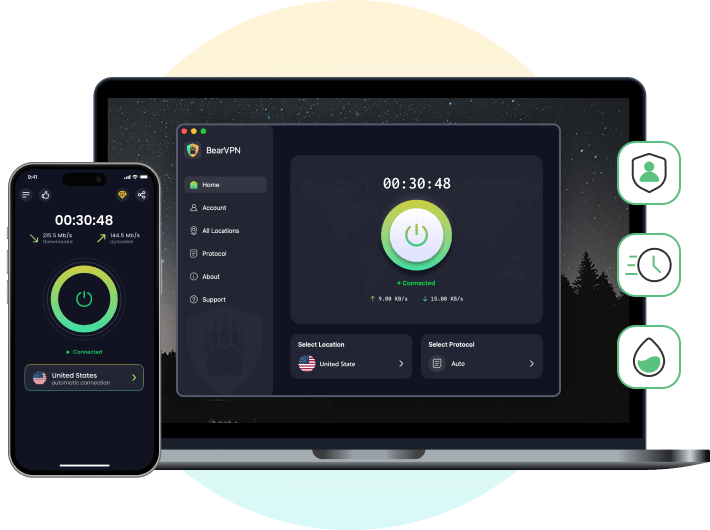
Don’t let toxic cyber-trolls harvest your real IP address. Encrypt your connection with AES-256, bypass unfair IP bans, and secure your digital privacy with advanced obfuscation.
Is 4chan Illegal?
Because of its dark reputation, a highly searched question is, is 4chan illegal? The short answer is no; the platform itself is completely legal.
Freedom of Speech vs. Illegal Content Hosting
Based in the United States, 4chan operates under strong protections of free speech. The platform is legally permitted to host controversial, highly offensive, and extremist discussions as long as they do not violate U.S. federal laws.
However, the legal danger lies in user-generated content. While posting offensive memes is legal, users frequently cross the line into federal crimes, such as distributing child sexual abuse material (CSAM), orchestrating targeted cyberattacks, or posting credible terrorist threats. When this happens, 4chan cooperates entirely with global law enforcement, handing over server logs that lead to real-world arrests. Furthermore, because of its association with real-world violence and mass shooter manifestos, entire countries—including Australia and New Zealand—have previously issued nationwide ISP blocks against 4chan.
Therefore, while browsing the site is legal, downloading, sharing, or engaging with certain materials found on the platform can result in severe legal prosecution.
Is 4chan Safe for Kids?
Absolutely not. 4chan is universally condemned by internet safety organizations and parent advocacy groups as one of the most dangerous platforms for minors.
Why the 18+ Rule is Completely Ineffective
As Zoe noted in previous safety audits, 4chan technically requires users to be 18 or older. However, there is zero identity verification or age-gating involved. Users merely click a pop-up button stating “I Agree” to enter.
Because the platform lacks native parental controls, a child browsing the internet can effortlessly stumble into graphic violence, hardcore adult content, and highly manipulative extremist rhetoric. If you are a parent, the only way to protect your children from 4chan is to block the domains (4chan.org and 4channel.org) directly at your home network’s router level or through dedicated parental control software.
Conclusion
Navigating 4chan in 2026 requires a high degree of digital literacy and cybersecurity awareness. The platform remains a highly volatile, unmoderated digital Wild West. The risks of doxxing, encountering malicious external links, and having your residential IP address grabbed by cyber-trolls are substantial.
If you decide to browse the platform, treat every link with extreme skepticism, never download unverified files, and never reveal personal information. Most importantly, never access unmoderated imageboards without the network-level encryption of a premium security tool like BearVPN to ensure your digital identity remains truly anonymous.
Is 4chan safe to use? If you’re wondering about the risks and safety of browsing 4chan, you’re in the right place. In this post, we’ll answer all your questions and give you the facts you need to make an informed decision about whether 4chan is right for you.
Disclaimer: This guide is for informational purposes only. 4Chan often contains explicit content, ads, and trackers. Using a VPN like BearVPN can help protect your identity and secure your connection. Always follow platform rules and local laws.
What Is 4Chan
4chan is an anonymous English-language imageboard launched in October 2003 by Christopher Poole (“moot”). Originally inspired by the Japanese forum 2chan (Futaba Channel), it started as a place for anime and manga discussions but quickly expanded to cover diverse topics, including politics, gaming, and technology.
Unlike traditional forums, 4chan does not require user accounts. Posts are typically anonymous, and threads are short-lived, disappearing once new content pushes them off the board. Over time, 4chan has played a key role in internet culture, spawning countless memes, activism movements, and controversies.
The platform is divided into two domains:
- 4chan.org – Includes both work-safe and NSFW content.
- 4channel.org – A work-safe version with stricter content policies.
Despite these divisions, explicit material can still appear unexpectedly on either site.

Is 4Chan Safe to Browse
Browsing 4chan is generally unsafe, especially for those under 18, due to its unfiltered content. The site hosts explicit adult material, graphic violence, hate speech (including racism, transphobia, and homophobia), and extremist ideologies. The “/b/” (random) board is particularly concerning, as it has minimal rules and allows highly offensive posts. While some boards have content restrictions, limited moderation means harmful material can still appear across the platform.
Despite its 18+ rating, 4chan has no real age verification or parental controls—users only need to accept the terms stating they are over 18, which is easy to bypass. This makes the platform accessible to minors, exposing them to potentially damaging content. 4chan has also been linked to controversies like harassment campaigns (e.g., Gamergate), cyberattacks, violent threats, and even the distribution of illegal content. Boards like “/pol/” are known for spreading far-right extremism, white supremacy, and incel ideology.
The site’s anonymity encourages users to post harmful or abusive messages without consequences, creating a toxic environment. With minimal moderation, social norms are often disregarded, making 4chan a breeding ground for radicalization. Its history of connections to real-world violence underscores the risks of engaging with its content.
Is 4Chan Safe from Viruses and Malware
Beyond its controversial content, 4chan also poses risks of viruses and malware. As a site with user-generated content and minimal moderation, it can be a hotspot for malicious software. Over the years, malware has spread through 4chan, including JavaScript worms that automatically repost themselves.
In 2015, cybercriminals exploited Imgur’s image-hosting service to launch a Distributed Denial of Service (DDoS) attack on 4chan and 8chan. They injected malicious JavaScript into users’ browsers, turning their computers into part of the attack network. Another technique, dating back to 2010, involved hiding malware in PNG images. Users were tricked into saving them as BMP files with an HTA extension, which then executed malicious scripts.
Users have also reported concerns about accidental downloads from 4chan, particularly with SWF (Adobe Flash) files, which may contain hidden malware. While standard image files are generally safe, caution is advised with other file types and links.
4chan has been a frequent target of DDoS attacks, prompting it to use services like Cloudflare for protection. However, the platform remains a potential risk due to its large user base and anonymity. While some security measures are in place, users should stay cautious and avoid downloading unverified files.
How Safe is It to Upload Content to 4Chan
Uploading content to 4chan comes with risks. While the site allows anonymous posting, administrators can access and store users’ IP addresses. If illegal activity is suspected, this information can be shared with law enforcement, leading to serious legal consequences.
Once you upload something to 4chan, you lose control over it. Even though threads eventually disappear, other users can download, share, and modify your content, spreading it across the internet. This makes it difficult, if not impossible, to remove once it’s out there.
There’s also a risk of accidentally revealing personal details in uploads, which could lead to doxxing—the public exposure of private information. While 4chan’s anonymity may seem like protection, it does not make users completely untraceable, especially in cases of illegal content.
Beyond security risks, contributing harmful or offensive material can add to the platform’s toxic environment. Before uploading, consider both the privacy risks and the ethical impact of sharing content on a site known for controversial discussions.
Is 4Chan Safe Without a VPN
Using a VPN while browsing 4chan is highly recommended for privacy and security. A VPN encrypts your internet traffic and hides your real IP address by routing it through a remote server. Since 4chan stores user IP addresses, a VPN makes it much harder to trace your activity back to you.
Another risk is that 4chan uses HTTP, which does not encrypt data between you and the site, making it vulnerable to interception. A VPN adds an extra layer of security by encrypting all your internet traffic, even on non-secure websites.
If your IP address has been banned from 4chan, a VPN can help bypass the restriction by assigning you a new IP. However, 4chan blocks some VPN-related IPs due to past abuse, so choosing a provider with a wide range of servers improves your chances of access.
When selecting a VPN for 4chan, look for strong encryption, a strict no-logs policy (meaning it doesn’t store your activity), and a kill switch to prevent data leaks if the VPN disconnects. While a VPN improves privacy, it’s not a perfect solution, as some VPN IPs may still be blocked. Nonetheless, using one like BearVPN enhances online security, especially on a platform with known risks.
Frequently Asked Questions
Is 4Chan legal
Yes, 4chan is legal in the United States, where it is based. The platform allows most types of content that do not violate U.S. laws, but this broad freedom has led to legal controversies. While illegal content, such as child sexual abuse material, is prohibited and removed when detected, past incidents have resulted in board deletions, such as the removal of the “/l/” (Lolikon) board.
Some countries, including Australia and New Zealand, have temporarily blocked 4chan due to its association with violent events and extremist content.
Law enforcement agencies also monitor the site and have arrested users involved in illegal activities like child pornography distribution and making credible threats. While hate speech and offensive content are generally allowed, legal consequences may arise if posts incite violence or contain direct threats.
Does 4Chan Have Accounts or Rules
4chan does not use a traditional account system. Users post anonymously by default, though they can use a “tripcode” for a consistent identity. Despite the lack of accounts, 4chan has site-wide rules and board-specific guidelines.
Most boards enforce certain rules, but the “/b/” (random) board is a well-known exception, allowing almost anything. However, illegal content, such as child pornography and organized harassment, is banned. While 4chan claims to restrict access to users under 18, this is not strictly enforced.
Moderation is carried out by volunteer moderators and “janitors” who can delete posts and ban users. However, enforcement is inconsistent, especially on loosely moderated boards like /b/. Users can report rule-breaking content, but moderation remains limited.
Does 4Chan Still Exist
Yes, 4chan is still active as of 2024, with millions of monthly visitors. Since its launch in 2003, the platform has evolved but continues to play a significant role in internet culture. It remains a popular space for anonymous discussions, often compared to Reddit in terms of influence.
Despite controversies and criticism, 4chan persists due to its appeal as an anonymous and relatively unmoderated forum.
6 Sites Like 4Chan
Several websites share similarities with 4chan, operating as anonymous imageboards with varying degrees of moderation.
One of the most direct predecessors and inspirations for 4chan is 2chan, also known as Futaba Channel, a Japanese anonymous BBS and imageboard system.
Another prominent similar site is 8chan, now known as 8kun or Infinitechan. Created as an alternative to 4chan by users who felt it had become too heavily moderated, 8kun generally has even fewer restrictions and has gained notoriety for hosting more extreme and harmful content, including manifestos from individuals involved in violent crimes and connections to hate groups. 16chan is another similar platform that reportedly exists on the dark web and is known for hosting unmoderated and potentially illegal content.
Other “chan” sites include 4channel, which is essentially a worksafe version of 4chan with more regular moderation. 420chan is an English-language imageboard focused on cannabis culture. Endchan has a /pol/ board known for its eclectic discussions.
And smaller platforms like 7chan and Dreamchan, which have active but smaller communities. Hispachan is a Spanish-language imageboard, while Indiachan was an Indian imageboard inspired by 4chan and 8chan but closed in 2024.
Karachan and Krautchan are German-language imageboards. Soyjak.party is primarily dedicated to the posting of soyjak images. While not strictly imageboards, platforms like Reddit also offer board-based discussions and allow for anonymous posting, sharing some functional similarities with 4chan.
The existence of numerous “chan” sites indicates a fragmented landscape of anonymous online communities with varying moderation philosophies. The progression to less moderated platforms like 8kun suggests a demand for minimal censorship. The emergence of dark web alternatives like 16chan represents an extreme end of this spectrum.
Comparison of 4chan and Similar Sites
Conclusion
4chan is a controversial platform with significant safety risks due to its anonymity, lack of moderation, and the nature of its user-generated content. The risks are especially concerning for minors, who can easily bypass age restrictions and encounter harmful, illegal, or extremist material.
To stay safe while browsing 4chan, here are some key recommendations:
- Be cautious: Users should be aware of the high likelihood of encountering disturbing or offensive content on 4chan.
- Avoid illegal content: Engaging with or sharing illegal content can lead to legal consequences, even with anonymity.
- Use a VPN: For added privacy and security, especially when posting, consider using a VPN to hide your IP address.
- Parental controls: Parents should discourage minors from using 4chan and set up parental controls to block access to the platform.
- Educate: Educators should raise awareness about the risks of anonymous platforms like 4chan, including exposure to harmful content and online radicalization.
- Evaluate critically: Users should approach all information on 4chan with skepticism, especially on sensitive topics like politics, where misinformation and extremist views are common.
- Understand the impact: It’s important to recognize that the ideas and interactions encountered on 4chan can lead to real-world consequences.
Ultimately, navigating the online landscape requires responsible behavior and a keen awareness of the risks associated with different platforms. 4chan, with its unique and often controversial nature, demands a particularly cautious and informed approach.