Are porn sites safe? Not completely.
Some established adult platforms invest in security, content moderation, encrypted connections, and fraud prevention. Others exist mainly to generate advertising clicks, collect personal information, redirect users to subscription scams, or distribute unwanted software.
The more useful question is not simply, “What porn sites are safe?” It is:
What makes one adult website safer than another, and what risks remain even on a legitimate platform?
A safer setup also depends on how you connect. Using BearVPN before opening an adult website can encrypt your internet connection and prevent the site from seeing your original IP address. However, a VPN cannot make an untrustworthy platform safe or replace careful browsing habits.
This guide explains how to assess adult websites without turning the answer into a directory of recommended porn sites.
This article is intended only for adults and provides general cybersecurity and privacy information. It does not recommend adult websites, provide legal advice, or encourage users to evade age requirements, copyright protections, or applicable laws.
What Are the Main Risks on Porn Websites?
Adult websites do not all present the same level of risk, but most concerns fall into six categories.
Google Safe Browsing categorizes phishing, deceptive pages, malware, and unwanted software as unsafe web resources. Google also notes that deceptive content can appear through embedded components such as advertisements, rather than only through the main website itself.
There Is No Completely Safe Porn Site
A website can be legitimate without being completely safe.
For example, an established platform may use HTTPS, maintain published policies, and avoid obvious malware. It may still collect IP addresses and device information, use advertising trackers, retain searches and account activity, expose users to third-party advertisements, or request sensitive age-verification information.
At the other end of the spectrum, an unknown adult site may imitate a popular brand, use deceptive download buttons, redirect visitors through several domains, or demand a small payment before revealing supposed premium content.
Kaspersky notes that users are generally less likely to encounter malware simply by browsing a large, established platform than by using copycat or unfamiliar adult sites. However, compromised advertising, fake payment offers, phishing pages, and malicious downloads remain important risks.
The correct conclusion is therefore not:
Famous porn sites are safe.
It is:
Established, verifiable websites may carry fewer obvious risks than anonymous or copied sites, but users still need to manage privacy, tracking, account, and advertising risks.
Even a legitimate website normally receives the IP address used to connect to it. BearVPN’s AES-256 encryption protects traffic between your device and the VPN server, while the destination website sees the VPN server’s IP instead of your home or mobile IP.
This protects the connection layer, but it does not prevent the website from using cookies, recognizing an account, or recording information you voluntarily provide.
How a VPN Fits Into a Safer Browsing Setup
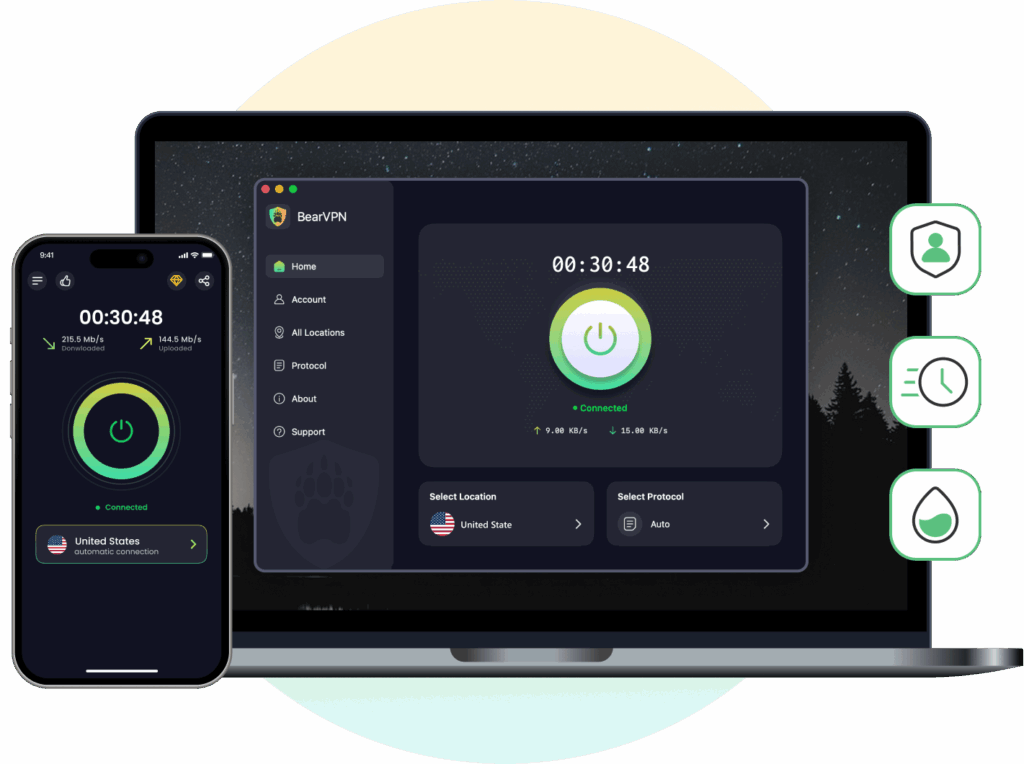
BearVPN helps with network privacy, not every form of website risk.
When connected, BearVPN routes internet traffic through an encrypted VPN tunnel. The adult website sees the VPN server’s IP address instead of the user’s original home or mobile IP.
Download BearVPN for your device.
Relevant BearVPN protections include:
- AES-256 encryption;
- a VPN Kill Switch that can block traffic if the VPN connection drops;
- a stated no-log policy;
- protection for connections on public and shared Wi-Fi;
- apps for Windows, macOS, Android, and iOS.
This can reduce exposure to an ISP, Wi-Fi operator, or website collecting the original IP address.
BearVPN cannot:
- remove website cookies;
- block every advertising tracker;
- detect every phishing domain;
- stop users from installing malware;
- hide an identity after account login;
- protect payment information entered into a fake page;
- guarantee complete anonymity;
- make unlawful activity legal.
A VPN should therefore be one layer of protection, not a substitute for browser security and careful judgment.
Who Can See Your Adult-Site Activity?
A “safe website” does not necessarily mean private browsing.
Different parties may observe different parts of a session:
This is why the question “What porn sites are safe?” cannot be separated from how the user connects, which browser controls are enabled, and whether an identifying account is used.
A Safer Adult Website Checklist
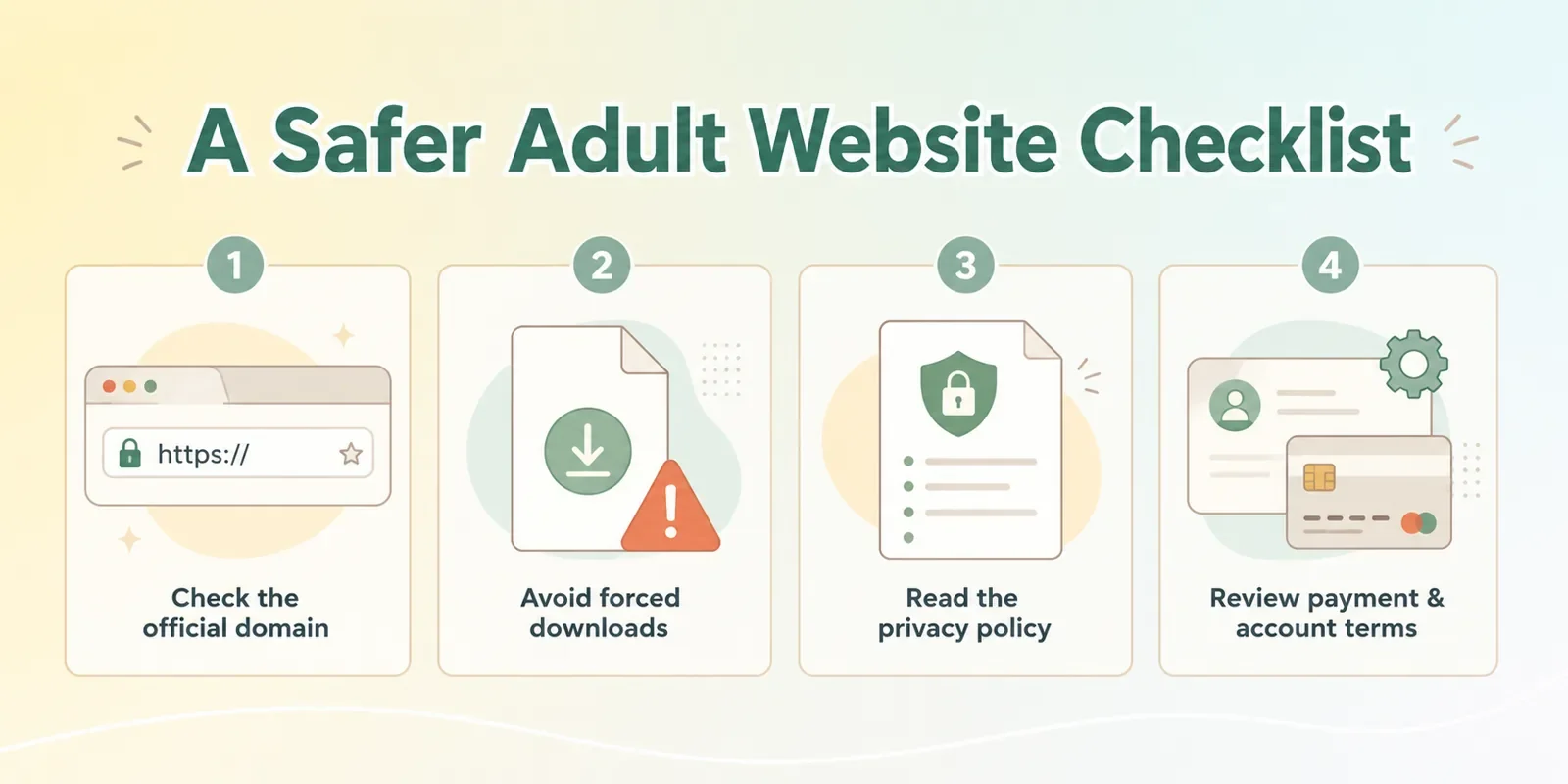
There is no reliable list of adult websites that will remain safe forever. Ownership, advertising partners, domains, and privacy practices can all change.
Instead of judging a site by its popularity or appearance, focus on a few basic signs.
Check who operates the site
A comparatively trustworthy platform should identify the company behind it and provide working terms, privacy information, and contact details.
An anonymous site gives users little recourse if it charges them incorrectly, mishandles personal data, refuses to remove an account, or suffers a breach. A visible company name does not guarantee good behavior, but it at least creates a degree of accountability.
Make sure you are on the real domain
Copycat adult sites often reuse the design, branding, and login pages of larger platforms. A fake domain may differ from the real one by only a letter, an extra word, or an unfamiliar extension.
Be especially careful after clicking a search ad, shortened URL, pop-up, or “working mirror” posted on a forum. HTTPS protects the connection to a domain, but it does not prove that the domain belongs to the company you intended to visit.
Avoid sites that force downloads or permissions
A normal browser-based video site should not require an unknown player, codec, extension, APK, or “security update.”
Notification requests are another warning sign. Once allowed, they can be used to send repeated ads, fake virus alerts, and scam messages even after you leave the site.
If the page will not work unless you install something or disable your browser protection, closing it is safer than continuing.
Read how the site handles personal data
A safer site should explain what it collects, why it collects it, and whether information is shared with advertisers or verification providers.
This becomes particularly important when the site asks for an account, payment method, selfie, or identity document. Before submitting anything sensitive, check whether the information is retained, how deletion works, and whether another company processes the data.
Clear policies do not eliminate risk, but missing or vague policies are a reason to leave.
Frequently Asked Questions
A free site is not automatically unsafe, but free services often depend on advertising, tracking, and external traffic partnerships. Evaluate the operator, domain, advertising behavior, privacy policy, and download prompts rather than judging safety only by price.
There is no adult website that BearVPN can guarantee is completely safe. Established platforms with identifiable operators and transparent policies may be less risky than unknown mirrors, but they can still track users, expose them to ads, or mishandle sensitive data.
Modern browsers make automatic infection less common than it once was, especially on updated systems. Risk increases when users open malicious ads, visit compromised pages, download files, grant browser permissions, or install unofficial software.
No. Incognito mode mainly reduces local browser history and temporary cookies after the session closes. It does not hide the IP address, block malware, stop website tracking, or conceal activity from an ISP or network administrator.
No. A VPN encrypts the network connection and hides the original IP address. It does not verify the website’s operator, block every scam, remove cookies, or prevent unsafe downloads.
Creating an account adds identity and security risks. When an account is necessary, use a separate email address, a unique password, and as little identifying information as possible. Review the platform’s data-deletion and security options first.
Laws differ by location, age, and content type. Some jurisdictions also impose age-verification obligations on adult websites. This article is general privacy and security information, not legal advice.
Final Answer: Are Porn Sites Safe?
Porn sites are not completely safe or private. Established platforms may be less risky than fake or unknown sites, but they can still track users, show deceptive ads, redirect visitors, and collect account or payment information.
To reduce the risks, use the official domain, avoid downloads and suspicious pop-ups, review privacy and billing terms, keep your browser updated, and separate sensitive browsing from everyday accounts. Connect to BearVPN before browsing to protect your connection and hide your original IP address.
No website list or privacy tool guarantees complete safety. A VPN protects the connection, but safe browsing still depends on the site you choose and the information you share.