A cracked VPN promises premium VPN access without a subscription, usually through a modified APK, patched Windows installer, shared account, or supposed activation key. The offer is attractive—but it removes the one thing a privacy tool needs most: trust.
A VPN can see important connection data because your traffic passes through its software and servers. If an unknown third party has modified the app, its interface and “Connected” status are no longer reliable evidence that your traffic is encrypted or routed where the app claims.
The short answer is clear: do not install a cracked VPN on a PC, phone, or any device containing personal accounts. Some cracks fail because premium access is checked by the provider’s servers; others may appear to work through stolen credentials or substituted infrastructure. Either way, you cannot safely verify what the software is doing.
Do Cracked VPNs Actually Work?
Some cracked VPN downloads do nothing. Others may open, display premium features, or even establish a connection. None of those outcomes proves that you have received a genuine premium VPN service.
Most modern paid VPNs depend on both the app and the provider’s online infrastructure. The provider can verify subscriptions, authorize accounts, issue connection credentials, manage servers, and revoke unauthorized access. Changing the local interface does not automatically grant legitimate access to that infrastructure.
A supposed VPN crack usually falls into one of these categories:
Server-side authentication makes many simple cracks ineffective, but it does not make every file labeled “VPN crack” mathematically impossible. A download may instead use stolen accounts, unofficial servers, or a counterfeit interface. That uncertainty is precisely why it should not be trusted with your traffic.
Why Is a Cracked VPN Dangerous?

A cracked VPN asks you to trust software modified by an unknown person, often downloaded from a forum, torrent, file-sharing page, or unofficial APK store. Because VPN software handles network traffic and may request broad device permissions, malicious changes can cause more damage than simply losing access to the VPN.
The main risks include:
- Malware or credential theft: A repackaged installer can carry an information stealer, spyware, ransomware, or another unwanted program. Saved browser sessions, passwords, and cryptocurrency-related data may be targeted.
- False or weakened encryption: The app may show “Connected” while failing to encrypt traffic correctly, using an unknown proxy, or sending data somewhere other than the advertised server.
- Missing security updates: Modified clients may not receive official patches. Updating them can also remove the modification or require another untrusted download.
- Excessive permissions: A cracked APK may request access to storage, accessibility services, messages, contacts, or other information that a VPN does not need.
- Account and payment scams: Some sellers distribute stolen VPN accounts, collect payment for nonworking credentials, or reuse passwords supplied by buyers.
- No reliable support or accountability: If the connection leaks, the app stops working, or an account is compromised, there may be no identifiable company responsible for resolving it.
Treat instructions to disable antivirus software, turn off Google Play Protect, install an unknown certificate, or grant unexplained administrator or accessibility permissions as immediate warning signs. Google recommends leaving Play Protect enabled because it checks apps from both Google Play and outside sources for harmful behavior. Google Play Help
Already Downloaded or Installed a VPN Crack?
If you downloaded the file but did not open it, delete it without running it and obtain the VPN only from the provider’s official website or verified app-store listing.
If you opened or installed it:
- Disconnect the affected device from the internet.
- Uninstall the cracked app and remove related installers, keygens, browser extensions, profiles, or certificates you do not recognize.
- Update your operating system and security software, then run a full malware scan.
- From a different, clean device, change passwords for email, banking, cloud storage, social media, and cryptocurrency accounts used on the affected device.
- Enable two-factor authentication and revoke unfamiliar sessions or connected devices.
- Monitor financial accounts. If unusual activity appears, contact the relevant bank or service immediately.
- If security tools are disabled, warnings continue, or accounts remain compromised, contact a qualified technician and consider resetting the device.
A clean antivirus result reduces uncertainty but cannot prove that a modified VPN is trustworthy. Do not reinstall it simply because one scanner reports no detection.
A Safer Alternative: Use a Legitimate Free VPN
An official free or paid VPN differs from a crack because the identifiable provider distributes the unmodified client, authorizes access to its own infrastructure, publishes service terms, and supplies updates through an official channel. You should not need to disable antivirus, Play Protect, or other device security to install it.
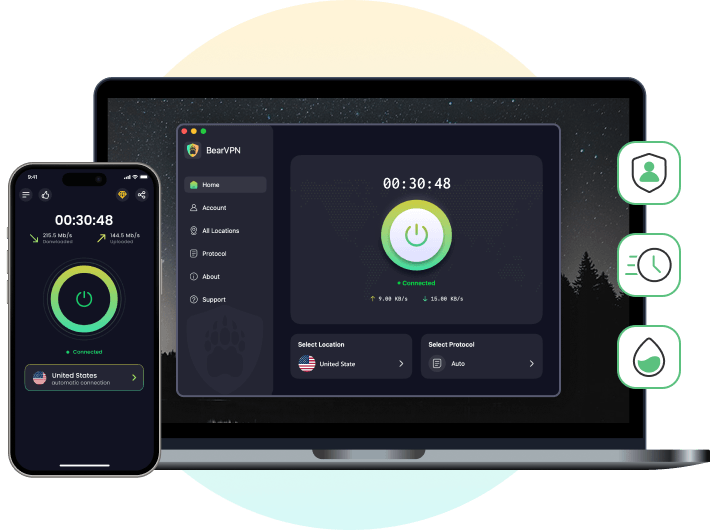
BearVPN is available through its official site and supported app stores. Check the current download or pricing page for the free and paid features offered on Android, iOS, Windows, and macOS rather than relying on an old price or feature claim.
- Download only from BearVPN’s official site or verified app-store listing.
- Keep antivirus, Play Protect, and operating-system security enabled.
- Receive official client updates while the installed version remains supported.
- Download from BearVPN’s official site or verified app-store listing.
- Receive legitimate client updates from the actual provider.
- Keep antivirus, Play Protect, and device security enabled.
Official BearVPN vs. a Cracked VPN
A cracked package may fail, steal credentials, weaken encryption, or appear to work through unauthorized access. These are risks, not proof that every file contains the same malware payload.
🔗 Deep Dive: Want to know exactly how a specific brand’s crack works? Read our technical breakdown here:
Related Article: ExpressVPN Crack: Why You Should Avoid It and Safer Free Alternatives
Conclusion: A Cracked VPN Is Not Worth the Risk
A cracked VPN may fail immediately, use unauthorized credentials, or appear to connect through software modified by an unknown party. The central problem is not simply whether it opens—it is that you cannot verify its code, encryption, updates, operator, or treatment of your traffic.
If you installed one, remove it and complete the recovery steps above before installing another privacy app. Obtain VPN software only from the provider’s official website or verified store listing, and review the current limits of any legitimate free plan.
Never disable antivirus, Play Protect, or operating-system security to make a VPN installer run. A privacy tool that requires you to remove your first line of protection has already failed its purpose.
FAQs About Cracked VPNs
Some modified apps may open or appear to connect, but that does not prove they provide genuine premium access or safe encryption. A download may use stolen credentials, outdated software, unofficial servers, or a counterfeit interface. Because its code and operator cannot be trusted, you should not use a cracked VPN on Windows, Android, or any other device.
Usually, changing the app alone cannot grant authorized access to servers controlled by the VPN provider. Premium server access may be checked through an online account or subscription system. Offers that appear to work may rely on stolen or shared accounts, which can be revoked and may expose you to the person distributing them.
No scan can guarantee that modified software is safe. New, concealed, or behavior-based threats may not be detected immediately, and a VPN can still misuse traffic or permissions without being labeled as conventional malware. Use the official version from the provider or choose a reputable free plan instead.
Disconnect the device, uninstall the app, remove related files or extensions, update the operating system and security software, and run a full scan. Change sensitive passwords from a clean device, enable two-factor authentication, and revoke unfamiliar sessions. Seek professional assistance if warnings, account compromises, or disabled security tools continue.
No. A legitimate free VPN is distributed by its actual provider and operates under published terms and a privacy policy. It may use ads or limit locations, speed, or features. A cracked VPN is an unauthorized or modified copy whose code, credentials, and operator may be unknown.
Cracked VPN software generally violates the provider’s license or terms and may involve copyright infringement or unauthorized account access. The precise legal consequences depend on the country and circumstances. This article provides general information, not legal advice.