Key Takeaways: The Current State of Digital Privacy
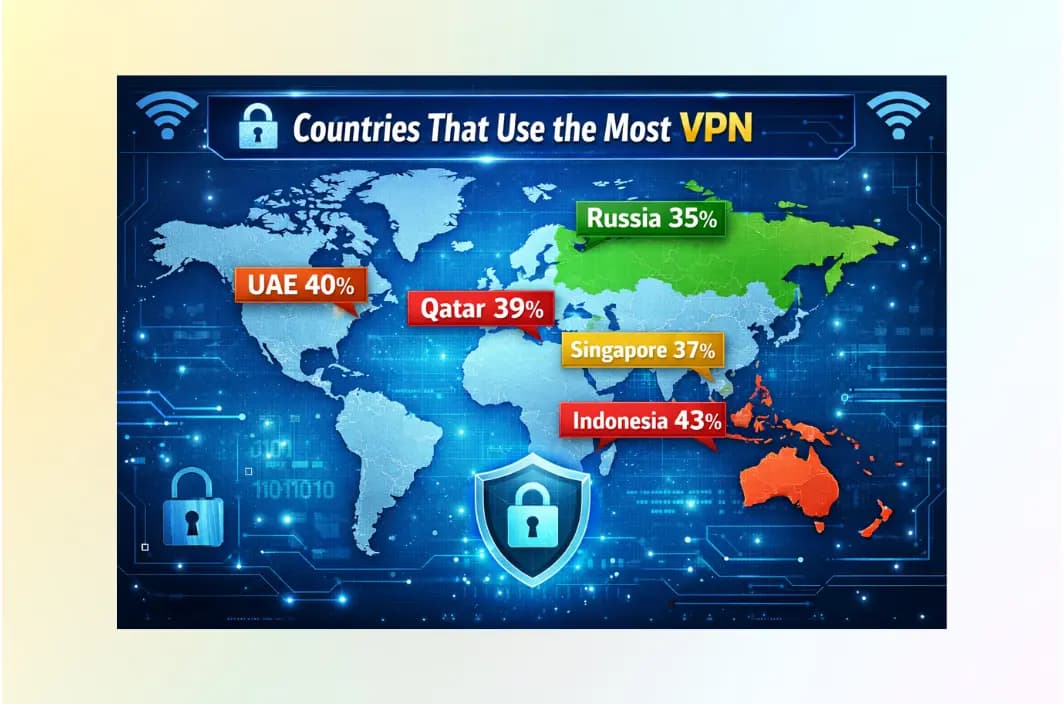
- Adoption Leader: According to multiple industry estimates, the UAE consistently ranks first globally in VPN adoption, with average usage rates commonly reported above 60%, driven primarily by VoIP restrictions and privacy needs.
- Volume Leader: The United States leads in raw download volume, recording over 63 million installs annually as users respond to increasing surveillance and state-level restrictions.
- Primary Drivers: Modern usage is primarily split between security and privacy (43%), streaming (26%), and bypassing censorship (9%) or accessing restricted VoIP services in the Middle East.
- Emerging Trend: Digital natives (Gen Z) now account for 39% of global VPN users, viewing digital privacy as a fundamental right.
- Market Growth: The global VPN market is projected to hit $77 billion by 2026, reflecting a shift from niche technical tools to essential internet infrastructure.
In just over a decade, virtual private networks (VPNs) have evolved from obscure tools used by cybersecurity professionals into mainstream consumer software installed on hundreds of millions of devices worldwide. What was once associated primarily with corporate remote access or highly technical users is now embedded in everyday digital life—from streaming a TV show abroad to sending a private message on public Wi-Fi. This rapid normalization signals a deeper structural shift in how people experience the modern internet.
A single motivation no longer drives VPN adoption. Instead, it reflects a convergence of pressures: expanding government surveillance, fragmented national regulations, platform-level geo-blocking, and growing awareness of data monetization by internet service providers and advertisers. At the same time, the internet itself has become less uniform. Digital borders—whether imposed through censorship, licensing, or compliance requirements—are increasingly common, prompting users to seek tools that restore continuity and control.
This report examines VPN adoption through a global lens, focusing on where usage is highest, why adoption differs so sharply between regions, and what these patterns reveal about the future of digital privacy. Understanding who uses VPNs, and under what conditions, offers a rare insight into how trust in the open internet is being renegotiated worldwide.
Top 10 Countries by VPN Adoption Rate (2025–2026 Data)
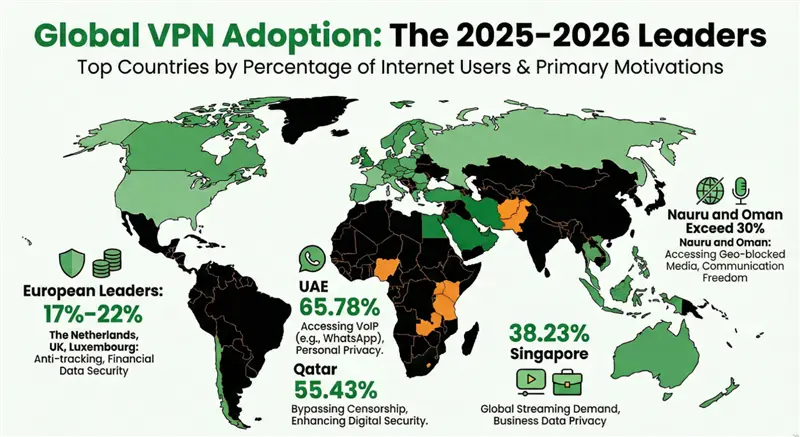
The following ranking reflects the “Adoption Rate”—the percentage of the internet-using population that actively downloads and uses VPN services.
| Rank | Country | Adoption Rate (Avg) | Core Motivation |
| 1 | UAE | 65.78% | VoIP access (WhatsApp/FaceTime) & Privacy |
| 2 | Qatar | 55.43% | Censorship bypass & Security |
| 3 | Singapore | 38.23% | Global streaming & Business privacy |
| 4 | Nauru | 35.49% | Accessing geo-blocked global media |
| 5 | Oman | 31.04% | Communication freedom & VoIP |
| 6 | Saudi Arabia | 28.93% | Social media access & Encryption |
| 7 | Netherlands | 21.77% | Anti-tracking & Advanced privacy laws |
| 8 | United Kingdom | 19.63% | ISP data retention & Age verification |
| 9 | Kuwait | 17.88% | Cultural content filtering bypass |
| 10 | Luxembourg | 17.30% | Financial data security & Cybersecurity |
Gulf States: Utility-Driven Adoption
Countries such as the United Arab Emirates, Qatar, Oman, Saudi Arabia, and Kuwait consistently rank among the highest globally in VPN adoption. In these markets, VPNs function less as optional privacy tools and more as daily utilities.
VoIP restrictions play a central role. State-regulated telecom environments often limit or monetize internet calling services, prompting residents—particularly expatriate populations—to rely on VPNs for personal and professional communication. Legal ambiguity further shapes behavior: while VPN use for privacy is typically legal, misuse carries severe penalties, encouraging discreet but widespread adoption.
Small Nations and Global Access
In countries like Nauru and Luxembourg, high adoption rates reflect different dynamics. Limited local media ecosystems, high international mobility, and strong financial or professional integration with global markets increase demand for consistent access to international services.
Western Democracies: Policy-Reactive Adoption
In the United Kingdom and the Netherlands, VPN usage is less about overt censorship and more about regulatory friction. Data retention laws, ISP monitoring, and age-verification requirements have triggered reactive adoption, particularly during periods of policy rollout or enforcement. Here, VPNs function as tools of resistance to perceived overreach rather than necessity.
Regional Analysis: Why the World is Plugging In
The “VoIP Gap” in the Middle East
In nations like the UAE and Qatar, VPNs are an essential daily utility rather than a luxury. These regions often filter content or restrict VoIP services like WhatsApp and FaceTime, making VPNs the only reliable way for expatriates and residents to maintain international connections. While personal use for data security is legal, the UAE remains a “Restricted” zone where using a VPN to commit or conceal a crime can lead to severe fines.
Privacy Advocacy in Europe and North America
In the UK and US, usage is increasingly reactive to government policy. The UK’s Online Safety Act and state-level age verification laws in the US have triggered massive spikes in installs—sometimes up to 20-fold—as users seek to protect their identity and bypass digital gates that require credit card or ID verification. In these regions, 37% of users primarily cite protecting themselves on public Wi-Fi as their top priority.
The “Crisis Effect” and Censorship
Geopolitical events continue to be the strongest catalyst for adoption. Following 2022, Russia’s adoption rate surged from 4.28% to over 42% as users sought uncensored news and international services. Similarly, countries like Iran and Myanmar have seen sudden surges in demand—often exceeding 2,800%—immediately following government-mandated social media blocks.
Global VPN Adoption Overview
Global VPN usage is driven by a convergence of motivations rather than a single dominant factor. At a broad level, three overlapping use cases account for most adoption: privacy and security protection, access to geo-restricted content, and circumvention of censorship or service limitations. While often discussed separately, these motivations frequently coexist within individual users.
Privacy and security concerns represent the most stable driver of long-term VPN adoption. In countries with relatively open internet access, users increasingly view VPNs as defensive tools—used to shield browsing activity from ISP data collection, targeted advertising, and exposure on public Wi-Fi networks. This form of adoption grows incrementally, reinforced by recurring data breaches and heightened awareness of personal data commodification.
Streaming and content access dominate adoption in high-income, low-censorship markets. Fragmented licensing regimes across borders have normalized VPN use as a workaround for accessing familiar platforms while traveling or living abroad. This group tends to be price- and performance-sensitive, contributing to higher churn but broader overall reach.
Censorship-driven adoption accounts for a smaller share of global users but produces the most dramatic spikes. In response to social media blocks, political unrest, or information controls, VPN demand can surge by orders of magnitude within days. These spikes are often uneven and temporary, shaped by legal risk, technical countermeasures, and service reliability.
Together, these patterns reveal that VPN adoption is not a monolithic trend. It is a composite response to an internet that is increasingly fragmented, regulated, and unevenly accessible.
How to Secure Your Connection with BearVPN (Step-by-Step)
Against this backdrop, providers like BearVPN illustrate how VPN services are adapting to a more hostile and regulated internet environment. Rather than relying on generic encryption alone, modern VPNs emphasize traffic obfuscation, flexible routing, and usability across diverse devices.
Features such as stealth protocols address the growing use of VPN detection, while split tunneling reflects the reality that users often need selective, not blanket, protection. Importantly, transparency around logging policies and encryption standards has become a differentiator as users grow more discerning.
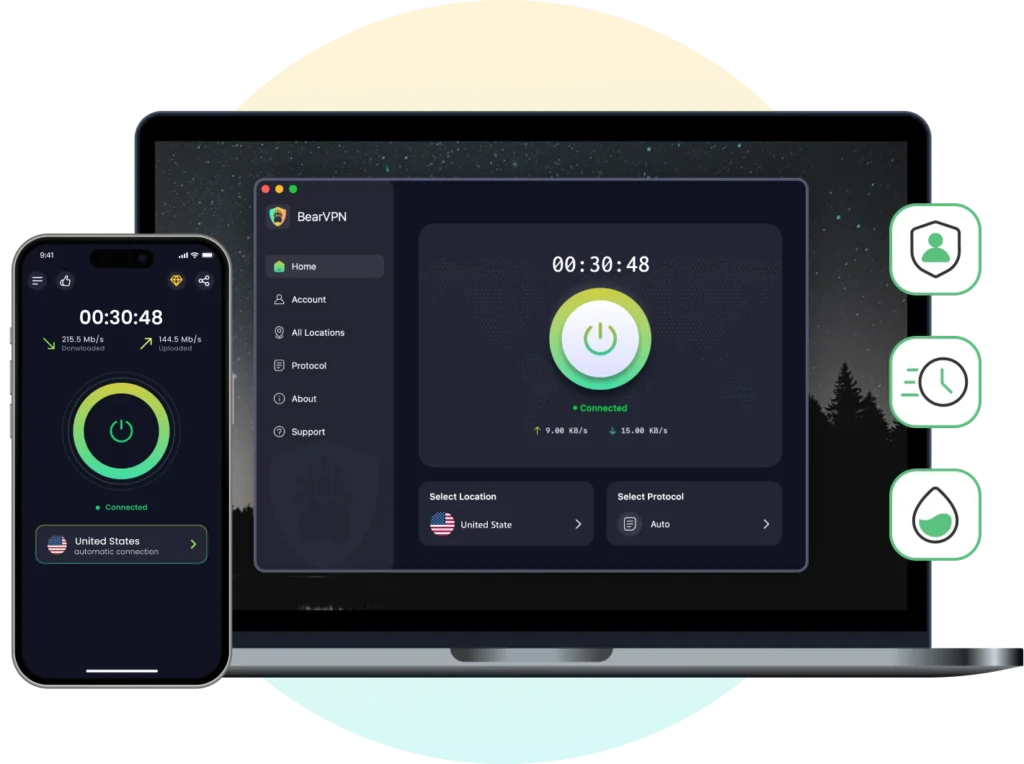
BearVPN serves here not as a universal solution, but as an example of how VPN design is evolving in response to real-world constraints.
- Global Server Network: Operates a distributed infrastructure of 2,000+ high-speed servers across 50+ regions, allowing users to switch IP addresses easily and maintain stable access to global content.
- Strong Privacy Protection: Uses industry-standard encryption protocols to secure data transmission and clearly states a no-logs policy, ensuring browsing activity and connection records are not stored.
- High-Speed & Smart Routing: Implements intelligent routing technology to automatically select optimal servers, helping reduce latency during streaming, downloads, and online gaming.
- Unlimited Bandwidth: Provides unrestricted data usage with no traffic caps, supporting long-duration streaming and high-volume transfers without throttling.
- One-Click Simplicity: Designed with a clean, user-friendly interface that enables quick connection with a single click, making it accessible even for users without technical expertise.
- Multi-Platform Compatibility: Fully supports Windows, macOS, iOS, and Android, allowing consistent protection across desktops, laptops, and mobile devices.
- Practical Use Cases: Suitable for bypassing geo-restrictions, securing public Wi-Fi connections, improving online privacy, and maintaining stable access in restrictive or high-monitoring network environments.
Follow the guide below to secure your connection with BearVPN
Step 1. Download and Install: Get BearVPN for your device. One account supports 10 simultaneous connections, covering everything from your smartphone to your home router.
Step 2. Connect to a High-Speed server: Select from 2,000+ servers globally. For the best experience, choose a location close to your physical region unless you are bypassing a specific geo-block.
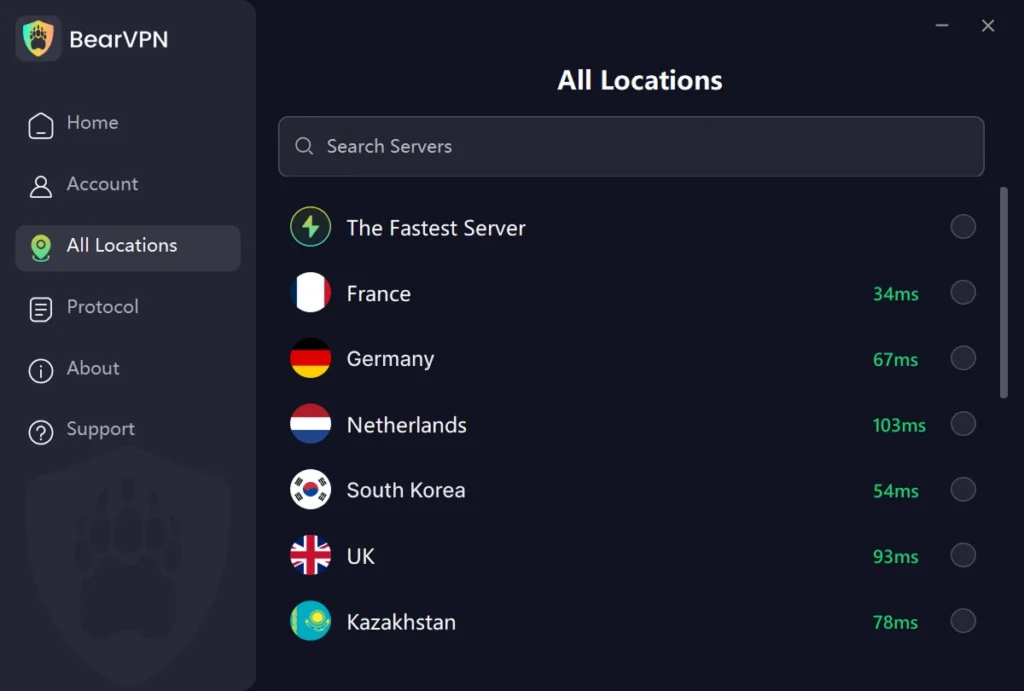
Step 3. Enable Stealth Features: In restricted regions, turn on our SCProxy or SLProxy protocols to hide your VPN traffic from Deep Packet Inspection (DPI).
Step 5. Configure Split Tunneling: Use our Split Tunneling feature to protect your web browser while allowing local apps (like banking) to run outside the VPN for maximum speed.
Step 6. Stream in 4K: Enjoy your favorite content on Netflix, Hulu, or HBO without the dreaded “Proxy Detected” error, thanks to our optimized 4K-ready bandwidth.
Troubleshooting: What to Do if Your Connection is Blocked
If you find yourself unable to access a specific site or service, follow these expert steps:
- Switch to Obfuscated Servers: Standard VPN traffic can sometimes be identified by advanced firewalls. Switching to a BearVPN server specifically designed for obfuscation can bypass these blocks.
- Change Protocol: If your ISP is throttling one protocol, toggle to a different one (e.g., from WireGuard to SLProxy) to find the most stable path.
- Clear Browser Cache: Streaming sites often store location data in your cookies. Clear your cache before connecting to a new VPN server to ensure old data aren’t tracking you.
- Check for DNS Leaks: Ensure your DNS/IP leak protection is active in the settings menu to prevent your real location from slipping through.
Conclusion
As national regulations, platform controls, and network surveillance continue to expand, VPNs are increasingly used not as optional enhancements but as practical tools for navigating a fragmented internet. For some users, they enable everyday communication or access to familiar services; for others, they provide an added layer of privacy in environments where data collection has become routine.
The growing normalization of VPN usage reflects a broader shift in how individuals relate to the internet—placing greater emphasis on autonomy, continuity, and risk management. Whether used temporarily while traveling or routinely as part of daily connectivity, VPNs have become a response to structural changes rather than exceptional circumstances. Understanding this shift is essential for assessing the future of digital access and online privacy in an increasingly regulated global network.
FAQs on Countries that Use the Most VPN
- Is it legal to use a VPN in the Middle East?
In countries like the UAE and Saudi Arabia, using a VPN for privacy, data security, or business is generally legal. However, using a VPN to commit a crime (such as fraud or bypassing specific government regulations) is strictly prohibited and can result in significant fines.
- Does a VPN slow down my gaming speed?
While encryption typically adds a small layer of latency, BearVPN’s smart routing and low-latency servers can often improve speeds by preventing ISP throttling and providing a more direct path to game servers.
- Why do I need a VPN if I have “nothing to hide”?
Privacy is not about hiding—it is about protection. Without a VPN, your ISP can log every site you visit and sell that data to advertisers. Furthermore, a VPN protects you from hackers on public Wi-Fi networks who may attempt to intercept your passwords or financial info.
- Can a VPN help with online shopping?
Yes. Many airlines and hotel booking sites use “dynamic pricing” based on your location. By masking your IP with BearVPN, you can often avoid localized price hikes and find better deals by appearing to be in a different region.
- Will a VPN drain my battery?
Modern protocols like WireGuard are highly efficient. While any background app uses some power, the impact of a high-quality VPN on your mobile battery is minimal compared to the security benefits it provides.