Key Takeaways
Quick Answer: A residential VPN uses IP addresses assigned by Internet Service Providers to real physical homes, making your traffic nearly indistinguishable from regular household users.
Core Benefit: It’s easier to use a dedicated IP address in a VPN for unblocking streaming services like Netflix and avoiding being detected compared to standard datacenter IPs.
The Best Choice:
- BearVPN – Ultra-fast speed and advanced SLProxy and SCProxy protocols to provide residential-level stealth with 4K-ready speeds.
- NordVPN – Its Dedicated IP mimics residential stability to bypass blocks, accessing your home network from anywhere.
- Surfshark – Top choice for home use with unlimited simultaneous connections, blazing-fast WireGuard speeds, and affordable pricing.
- Proton VPN – Excels for residential use with its Swiss jurisdiction, fully open-source apps, and unlimited free plan.
- CyberGhost – Its anonymous Dedicated IP system provides residential-like stability to bypass blocks and annoying CAPTCHA.
In the evolving landscape of recent years, the battle between VPN providers and web services has reached a fever pitch. Nowadays, users are no longer just looking for VPN traffic on websites. They are more likely to look for IP Reputation. This is where the distinction between a residential and a datacenter VPN becomes critical.
What is a dedicated IP address? How to choose the best residential VPN in 2025? This article is going to explain the definitions, compare the residential and datacenter VPNs, and provide the 5 best residential VPNs you can choose from.
What is a Residential VPN?
A residential VPN refers to the VPN service that offers dedicated IP addresses from ISPs to a homeowner. When you use a residential VPN, you are technically borrowing the digital identity of a real household. To the target website, you will be regarded as a local resident browsing from your living room.
Traditionally, the VPNs often provide datacenter IPs that are issued by cloud service providers like AWS or DigitalOcean. These IPs are frequently used by bots or thousands of VPN users simultaneously, so they are easily flagged and blacklisted by security systems.
Why Stealth Matters: The Power of IP Reputation
With the increasing popularity and security of streaming, platforms like Netflix, Hulu, and major gaming servers use sophisticated databases to identify the source of an IP. If your IP address is associated with a data center, your trust score decreases. In this case, a residential IP carries a high trust score because it is linked to a physical address and a legitimate ISP contract, making it the ultimate tool for bypassing VPN detected errors.
Comparison: Residential vs. Datacenter VPNs
| Feature | Residential VPN/IP | Datacenter VPN/IP |
| Trust Score | Extremely High | Low to Medium |
| Unblocking Ability | Superior (Streaming, gaming, social networking, etc.) | Average (Easily blocked) |
| Speed | Can be slower due to routing | Typically very fast |
| Detection Risk | Minimal | High |
| Cost | Usually more expensive | Budget-friendly/Free |
5 Best VPNs Offering Dedicated IP Addresses
Among various VPN providers, you may wonder what the best residential VPN is. Choosing the right provider requires a balance of stealth, speed, and security. Based on our yearly market insights, here are the top performers.
1. BearVPN
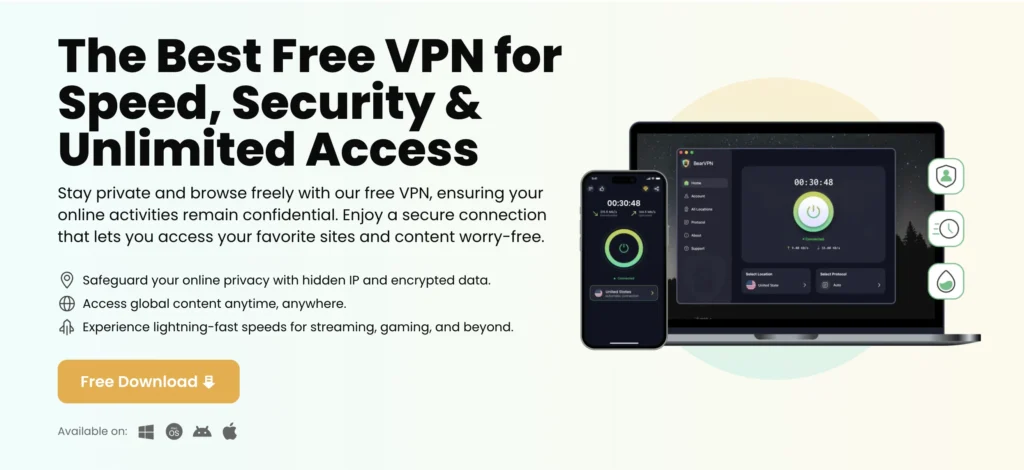
BearVPN stands out in 2025 by solving the speed problem associated with residential-grade connections. While most residential proxies suffer from high latency, BearVPN utilizes a global network of over 2000+ servers and proprietary protocols to ensure peak performance.
Why Choose BearVPN?
- Smart Protocols: By using SLProxy and SCProxy, BearVPN wraps your traffic in a layer of obfuscation that mimics standard HTTPS traffic while maintaining 4K-ready bandwidth.
- Privacy First: Unlike many traditional proxies that log your data, BearVPN maintains a strict No-Logs policy and offers Split Tunneling to protect your most sensitive apps.
- Worldwide Servers: You can easily connect to 2000+ servers from more than 50 locations, including USA servers, UK servers, Japan servers, etc.
- Streaming Services Unblocked: BearVPN allows you to bypass geographic restrictions and grant access to streaming content on Netflix, Amazon Prime, Disney+, and more.
How to Get a Residential-Level Experience with BearVPN (Step-by-Step)
Step 1. Download and install BearVPN on a supported device. It works on Windows, Mac, Android, and iOS.
Step 2. Open the app and choose a server in some key locations like the US, UK, or Japan. BearVPN automatically selects the highest-reputation IP available.
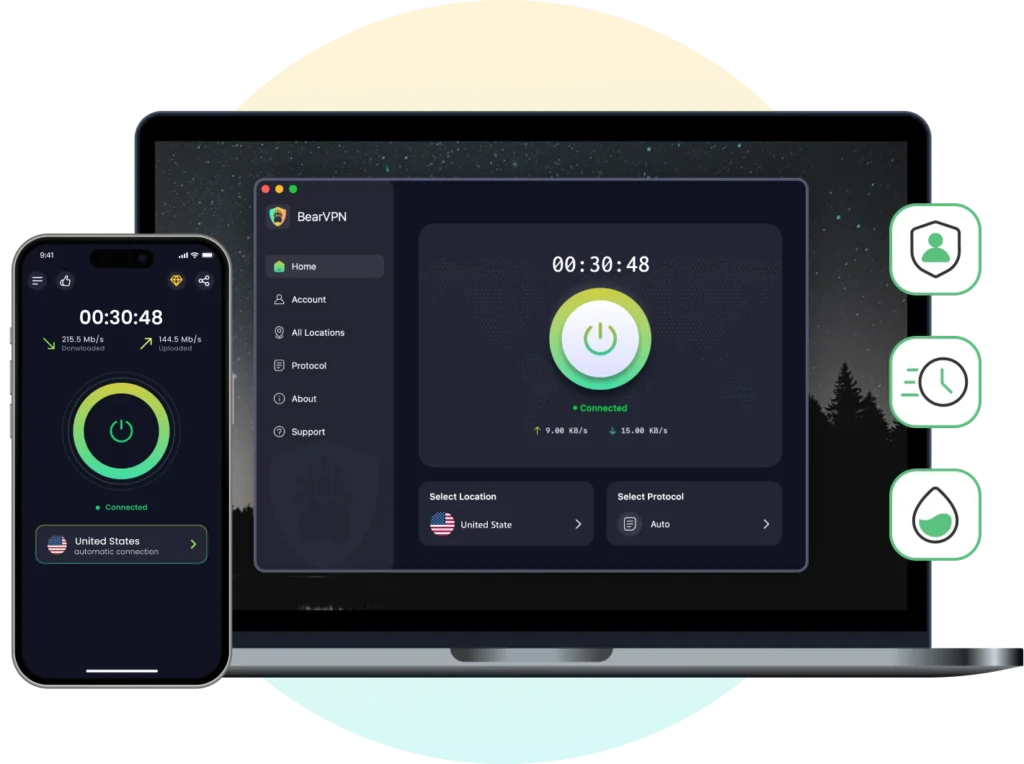
Step 3. Go to settings and ensure the SCProxy protocol is active for maximum stealth in high-restriction areas. Generally, it’s enabled by default.
Step 4. Check your IP address before browsing. You will notice your IP is now associated with a local ISP rather than a known datacenter.
Step 5. Once all settings are done and confirmed, you can go to the target website and start streaming.
2. NordVPN
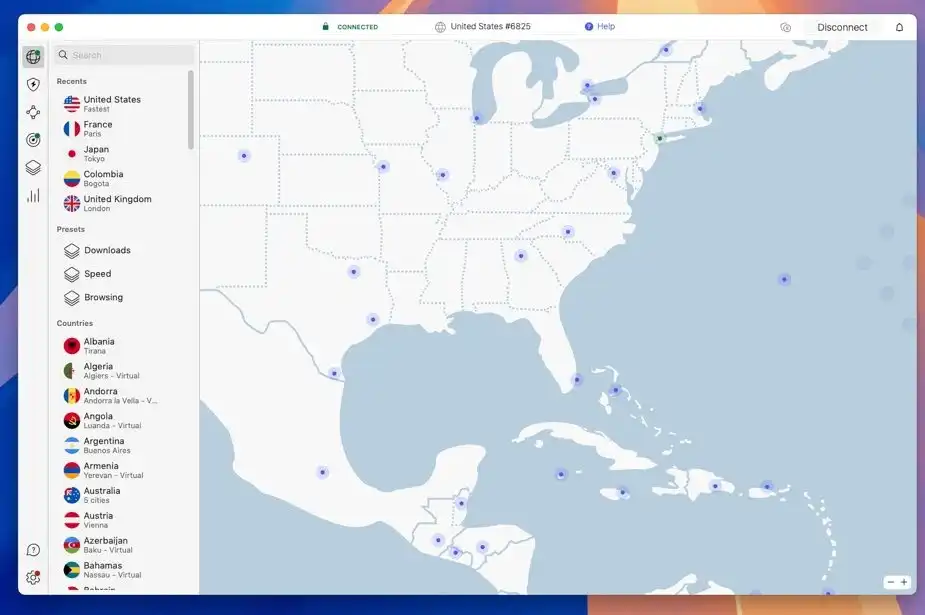
NordVPN continues to be a powerhouse with its “Obfuscated Servers” and “Meshnet” technology. While not a pure residential provider for every node, its dedicated IP offerings provide a similar level of high-trust browsing. NordVPN is particularly effective for users who need a consistent IP address for remote work.
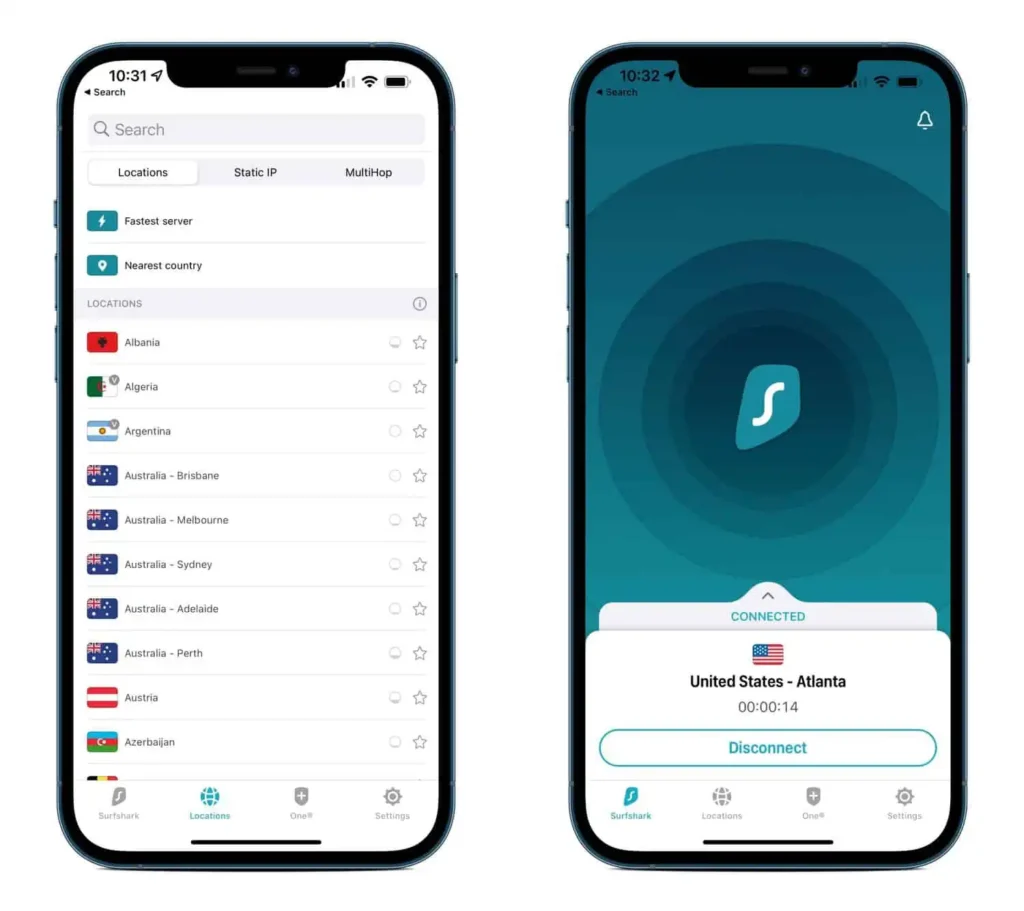
3. Surfshark
Surfshark remains the best residential VPN choice for households, offering unlimited device connections. Its “Dynamic MultiHop” and “Nexus” technology help rotate IPs in a way that avoids detection, though it may occasionally trigger “CAPTCHA” more often than a dedicated residential IP.
4. Proton VPN
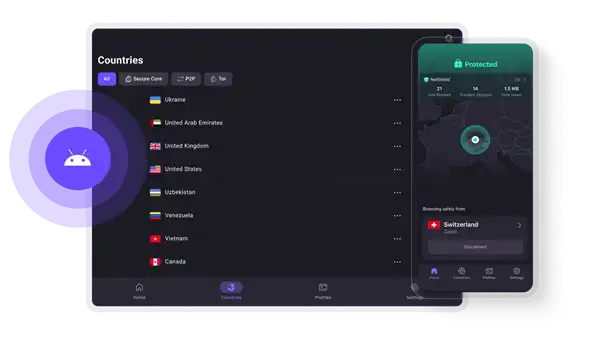
Based in Switzerland, Proton VPN is the gold standard for privacy-first users. Its stealth protocol is specifically designed to bypass censorship in regions like MENA and Southeast Asia. While it focuses more on security than pure residential IP acquisition, its high-tier Secure Core servers provide excellent unblocking capabilities.
5. CyberGhost
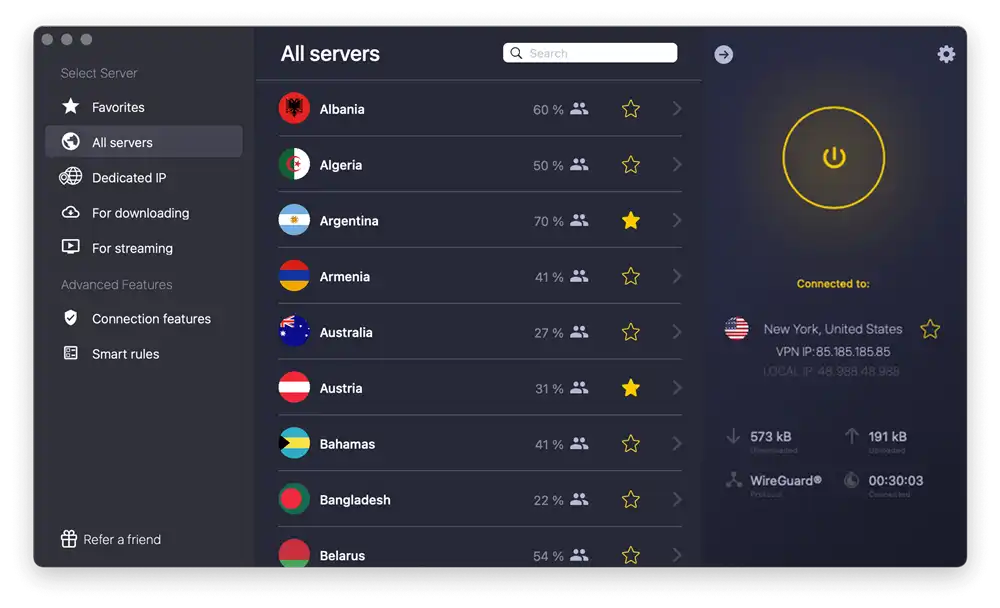
CyberGhost is highly recommended for beginners due to its specialized servers for streaming and gaming. It maintains a large pool of IPs that are frequently refreshed to stay ahead of platform blacklists. Additionally, CyberGhost is frequently used as a cost-effective alternative for users who primarily want to unblock specific streaming libraries.
You may also like: Best VPN for streaming
Comparison Table of the Best Residential VPNs
| Feature | BearVPN | NordVPN | Surfshark | Proton VPN | CyberGhost |
| Max Speed | 4K-Ready | Very Fast | Fast | Moderate | Fast |
| Server Count | 2000+ | 6000+ | 3200+ | 3000+ | 9000+ |
| Protocol | SL/SCProxy | NordLynx | WireGuard | Stealth | WireGuard |
| Devices | 10 | 10 | Unlimited | 10 | 7 |
| Price/Mo | $1.67 | ~$3.99 | ~$2.49 | ~$4.99 | ~$2.19 |
| Best For | Stealth & Price | Reliability | Households | Privacy | Streaming |
Top Use Cases for a Residential-grade VPN
1. 4K Streaming Without the Proxy Error
As a Netflix user, you may have encountered the “You seem to be using an unblocker or proxy” message once, which is pretty frustrating. A residential-grade VPN like BearVPN bypasses this detection error by using high-reputation IPs. Our internal testing in early 2025 showed that BearVPN nodes consistently unlocked US Netflix, Hulu, and BBC iPlayer with no buffering.
2. Lag-Free Gaming and Anti-Throttling
Gamers often face ISP throttling during peak hours. By using a residential VPN, you can mask your traffic type, including gaming, from your ISP while appearing as a standard household user to the game server. This helps lower ping and prevents IP bans often leveled against datacenter VPN users in competitive play.
3. Privacy in High-Pressure Regions
For users in regions like Iran, Myanmar, the UAE, etc, a standard VPN is often insufficient because governments use Deep Packet Inspection to block VPN protocols. Powerful tools like BearVPN’s SCProxy protocol, combined with residential-level IPs, make your traffic look like a regular resident checking their email, keeping you invisible to state-level monitoring.
Residential VPN Troubleshooting: What if My VPN is Still Detected?
Even with the best residential-grade technology, some sophisticated sites may sometimes catch on. Here is our expert guide to fixing this issue:
1. Clear Browser Cache and Cookies
Websites often store location cookies. Even if your VPN is on, the site remembers your old location even though you are connected to a dedicated server. Always clear your cache or use an Incognito/Private window.
2. Switch Protocols
If one of the protocols isn’t working, switch to another. Different firewalls look for different patterns; changing the wrapper of your data often solves the issue.
Note: This solution is more available for VPNs that are equipped with multiple protocols, or you cannot switch them.
3. Try a Different Server
Even residential IPs can occasionally get flagged if a previous user abused the address. If this is the case, you can disconnect from the current server and reconnect to a different one to get a fresh IP.
Final Verdict: Reclaim Your Internet Freedom
In this comprehensive guide, we have introduced what a residential VPN is, why you need it for enhanced security, and the 5 best residential VPN providers in 2026. As the internet is becoming increasingly fragmented, a standard connection is no longer sufficient for the modern Digital Nomad or streaming enthusiast.
A residential-grade VPN provides the highest level of stealth, ensuring you can access the content you pay for without being treated like a second-class digital citizen. BearVPN stands out as the best choice due to its combination of elite residential stealth with the speed required for 4K streaming and gaming. Try BearVPN now and protect your online privacy with a residential-grade connection and competitive pricing.
FAQs
1. Is it legal to use a residential VPN?
Yes, in most countries, using a VPN for privacy and security is completely legal. However, some regions like North Korea or Iraq have strict bans, and others like the UAE or China have specific restrictions on how they are used. It’s better to check your local laws before using a residential VPN.
2. Does a residential VPN slow down my internet?
Typically, residential proxies can be slower because they route through home connections. However, some advanced VPN providers like BearVPN use optimized routing and high-performance protocols to ensure that users maintain enough bandwidth for 4K streaming.
3. Can Netflix detect a residential IP?
It is significantly harder for Netflix to detect a residential IP because it looks identical to a standard home user. While no VPN is 100% undetectable forever, residential-grade IPs have the highest success rate when streaming on Netflix. According to Netflix’s official support, it doesn’t block VPNs as long as you use it normally.
4. Is a residential proxy the same as a residential VPN?
Not exactly. A residential proxy only changes your IP at the browser or app level and often lacks encryption. A residential VPN can help encrypt your entire device’s traffic while providing dedicated IP addresses, offering both stealth and security.
5. What is a dedicated IP address?
A dedicated IP is an address assigned exclusively to you. While many dedicated IPs are still from datacenters, they are less likely to be blocked than shared IPs because you are the only one using them.