In late 2025, the American digital border is no longer an abstract concept—it is a firewall. We have entered the era of the “Splinternet,” where your physical location determines not just which streaming services you can watch, but which software is legal to operate on your phone. The question “Is this app banned?” is no longer a simple yes or no; it involves a complex matrix of federal prohibitions, state-level age restrictions, and economic trade wars.
For the average user, this landscape is chaotic. You might find your favorite video editor removed from the App Store, or wake up to find your antivirus software automatically deleted and replaced by a stranger.
In this guide, we have parsed the latest executive orders, court rulings, and trade tariffs effective as of December 2025 to clarify exactly which apps are gone, which are at risk, and how you can maintain access to your digital tools safely.
The 2025 App Ban Dashboard
| App / Company | Origin | Current Status (Dec 2025) | Primary Reason | User Impact |
| Kaspersky | Russia | BANNED (Active) | National Security | Updates blocked; US customers forcibly migrated to UltraAV. |
| TikTok | China | Restricted / Pending | National Security | De jure ban active; enforcement paused via Executive Order until Dec 16, 2025. |
| CapCut | China | Restricted / Pending | National Security | Subject to same divestiture terms as TikTok; at risk of store removal. |
| Huawei / ZTE | China | BANNED (Active) | National Security | Hardware and associated control apps banned from US sales. |
| Shein | China | Restricted (Economic) | Trade / Tariffs | De Minimis loophole closed May 2025; prices increased significantly. |
| Temu | China | Restricted (Economic) | Trade / Tariffs | De Minimis loophole closed May 2025; prices increased significantly. |
| Lemon8 | China | Restricted / Pending | National Security | ByteDance subsidiary subject to PAFACA divestiture orders. |
The “Hard Bans” – Software You Must Remove Immediately
These restrictions are absolute. The federal government has determined these applications pose an immediate threat to national security or infrastructure, resulting in total sales and operation prohibitions.
1. The Kaspersky Lab Ban: The “Zombie” Software Risk
The most definitive ban of 2024-2025 targets Kaspersky Lab. Following a “Final Determination” by the Bureau of Industry and Security (BIS), the sale of Kaspersky software was prohibited in mid-2024. Crucially, the provision of software updates (including virus signatures) was blocked effective September 29, 2024.
Why this matters: Antivirus software relies on real-time updates to recognize new malware. A Kaspersky installation on a US device today is effectively a “zombie” application—it runs, but it cannot defend against new threats, making it a liability rather than a protection.
The UltraAV Migration:
In September 2024, to comply with the ban, Kaspersky sold its US customer base to UltraAV. Millions of US users experienced a forced migration where Kaspersky was automatically uninstalled and replaced by UltraAV without explicit prior consent during the update process.
- Action Item: If you were migrated to UltraAV and are unsatisfied, you are not legally bound to keep it. We recommend switching to verified alternatives like Bitdefender or Norton.
2. The Covered List: Huawei, ZTE, and Hikvision
Under the Secure Equipment Act, telecommunications equipment from Huawei and ZTE is banned from authorization in the US. This hardware ban extends to the software ecosystem.
- Hikvision & Dahua: These companies dominate the security camera market. While existing cameras may function, the mobile apps used to view feeds remotely often face removal from app stores or lack support for newer iOS/Android versions, rendering the hardware useless for remote monitoring.
The ByteDance Dilemma – TikTok, CapCut, and the “Pending” Ban
The Protecting Americans from Foreign Adversary Controlled Applications Act (PAFACA) targets apps owned by “foreign adversaries,” specifically focusing on ByteDance. While TikTok grabs the headlines, the ban applies to the entire ByteDance portfolio.
1. The Timeline of Uncertainty
The legal ban on TikTok officially began on January 19, 2025. However, enforcement has been a game of political ping-pong:1
- Jan 19, 2025: The ban technically took effect; apps briefly went dark or showed unavailability messages.
- Jan 20, 2025: An Executive Order halted enforcement for 75 days.
- 2025 Extensions: Enforcement was delayed repeatedly throughout the year (April, June, and September).
- Current Status (Dec 2025): We are currently approaching a fourth deadline on December 16, 2025. While a “qualified divestiture” deal involving US investors is reportedly in the framework stages, it has not been finalized.
2. The “Sleeper” Bans: CapCut and Lemon8
Users often forget that CapCut—the world’s most popular mobile video editor—is a ByteDance app. It faces the exact same legal fate as TikTok.
- CapCut: With over 200 million users, a ban here would devastate creators who rely on its templates for Reels and Shorts.
- Lemon8: Promoted heavily as an Instagram alternative, this app is also restricted under PAFACA.
- Lark: This enterprise collaboration tool (similar to Slack) is also banned. US businesses using Lark risk losing access to their internal data and chat logs if the server connection is severed.
Economic “Soft Bans” – The End of Cheap Imports
Not all restrictions are about spyware. The Department of Commerce has effectively ended the era of ultra-cheap Chinese e-commerce through tariff enforcement.
1. Closing the “De Minimis” Loophole
For years, Shein and Temu utilized the de minimis exemption to ship packages valued under $800 into the US duty-free. This loophole was closed effective May 2, 2025.
2. The Impact on Your Wallet
While you can still download Shein and Temu, the user experience has fundamentally changed:
- Price Hikes: Both platforms raised prices starting April 25, 2025, to offset the new tariffs.
- Shipping Delays: Packages are now subject to standard customs scrutiny, eliminating the rapid shipping times users grew accustomed to.
- Privacy Risks: While not banned for national security like Kaspersky, Temu has faced scrutiny regarding data privacy and aggressive permissions, leading some experts to label it a “soft ban” recommendation for privacy-conscious users.
How to Access Banned Apps in the US (Safe Workarounds)
If you are a content creator whose livelihood depends on CapCut, or a user trying to maintain contact with family via restricted apps, the sudden loss of access can be devastating. While the apps may disappear from the US App Store, they often remain functional if you can simulate a connection from a non-banned region.
Warning: Do not sideload “cracked” versions of these apps from random websites. This is the #1 way users get malware. The safest method to access legitimate versions of these apps is by using a Virtual Private Network (VPN).
1. The Solution: BearVPN
For 2025, we recommend BearVPN as the primary tool for navigating the US app bans. Unlike generic VPNs that struggle with app store geofencing, BearVPN has optimized its network specifically for accessing restricted content while maintaining high speeds for video editing and streaming.
Why BearVPN helps:
- Bypasses App Store Geoblocks: By connecting to a server in a region like Canada or the UK, you can access the version of the App Store/Play Store where apps like CapCut or TikTok remain fully legal.
- Protects Privacy: With “Foreign Adversary” laws in effect, ISP tracking of your app usage is a concern. BearVPN uses AES-256 encryption and maintains a strict No-Logs Policy, ensuring your app usage data remains private.
- High-Speed Servers: Video apps like TikTok and CapCut require significant bandwidth. BearVPN offers optimized servers that prevent buffering or lag during uploads.
2. Step-by-Step Guide: How to Use BearVPN to Access Banned Apps
Follow these steps to safely restore access to apps like CapCut or TikTok:
Step 1. Download and Install BearVPN:
Step 2. Create an Account (Optional):
- BearVPN offers a robust free version for mobile users with no registration required, but a premium account unlocks more server locations.
Step 3. Connect to a Safe Region:
- Open the app and select a server in a country where the specific app is not banned (e.g., Canada, United Kingdom, or Mexico).
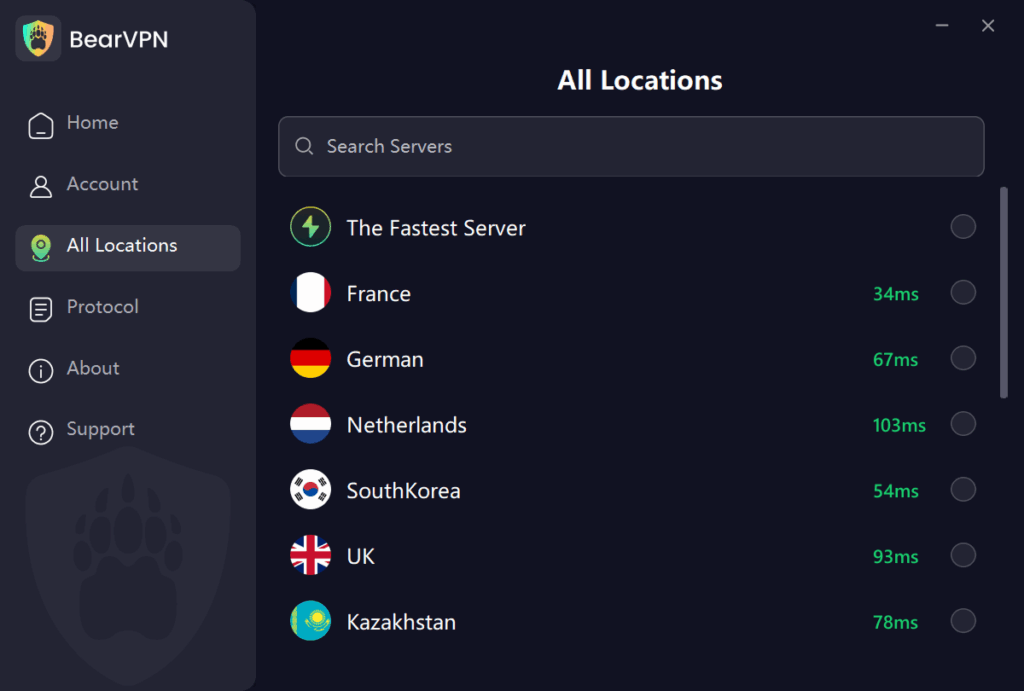
Tip: Choosing a nearby country (like Canada if you are in the US) usually provides the best speed.
Step 4. Access the App:
- Once connected, open the banned app (e.g., CapCut). It should now function normally, receiving updates and allowing uploads.
Note: If you need to install the app fresh, you may need to clear your App Store/Play Store cache while connected to the VPN to see the listing.
State-Level & Demographic Restrictions
In 2025, your age and your state of residence determine your access to the internet.
1. The “Age-Gating” Movement
Over 25 states have introduced or enacted laws requiring age verification for social media use, aiming to protect minors from algorithmic addiction.
- Utah (HB 464) & Florida (HB 3): These strict laws require platforms to verify the age of users. In Utah, a “digital curfew” restricts access for minors between 10:30 PM and 6:30 AM.
- Verification Friction: To comply, platforms may ask for government ID or facial scanning. Many users—regardless of age—are abandoning platforms in these states to avoid handing over sensitive identity documents.
2. Government Device Bans
If you work for the government, the list of banned apps is much longer. Over 34 states and the federal DoD have banned TikTok, WeChat, AliPay, and CamScanner from government-issued devices. This applies strictly to government property, but many public universities have extended this to block access on campus Wi-Fi networks.
Strategic Alternatives & Migration Guides
Don’t wait for the server to go dark. Diversify your digital toolkit with these safe alternatives.
1. Video Platform Alternatives (For Creators)
If TikTok goes offline in December, where should you go?
| App | Best For | Pros | Cons |
| YouTube Shorts | Monetization | Reliable ad revenue sharing; massive search reach. | Harder to go “viral” quickly compared to TikTok. |
| Instagram Reels | Lifestyle/Brand | Seamless integration for existing IG users. | Algorithm favors polished content over raw authenticity. |
| Triller | Music/Edit | Strong music industry ties; US-owned. | Smaller user base; clunky UI compared to ByteDance apps. |
2. Security Alternatives (Replacing Kaspersky)
Avoid the “Zombie App” risk by switching to these top-rated providers for 2025.
- Bitdefender: The top recommendation for 2025. Based in Romania (EU/NATO), it offers excellent detection rates with low system impact.
- Norton 360: A robust US-based alternative. Includes identity theft protection, though it can be more resource-intensive.
- Surfshark Antivirus: A modern, lightweight option that integrates VPN services, ideal for budget-conscious users.
3. Video Editing (Replacing CapCut)
- InShot: The closest mobile rival to CapCut. Great for quick social edits.
- Adobe Premiere Rush: Professional-grade syncing across mobile and desktop, ideal for Creative Cloud users.
FAQ
Can I use a VPN like BearVPN to access TikTok if it’s fully banned?
Yes. If TikTok is removed from US app stores, a VPN allows you to virtually relocate to a country where it is still available, enabling you to download updates and continue using the app. BearVPN is specifically recommended for this due to its high-speed servers and privacy focus.
Is “sideloading” an app safe?
Sideloading involves downloading an app installer (APK) from a website rather than an official store. We strongly advise against this. “Modded” or “Unbanned” versions of TikTok or CapCut found online are prime vectors for malware. Hackers often repackage these popular apps with spyware attached. Always use a VPN to access the official App Store/Play Store instead.
Am I breaking the law by having these apps on my phone?
No. The bans target the distribution (Apple/Google stores) and the companies (ByteDance/Kaspersky). There is no criminal penalty for an individual US citizen simply having the app installed on their personal device. However, for government employees, having these apps on work devices is a violation of policy.
What happens if the December 16, 2025 deadline passes without a deal?
If the deadline expires without a divestiture or another extension, Apple and Google will be legally required to remove TikTok and other ByteDance apps from US stores immediately. The apps may continue to function for a short time but will eventually degrade due to lack of updates.