Key Takeaways – X (Twitter) Bans in 2026
- Global Bans: X faces permanent, temporary, and AI-specific restrictions in countries like Russia, Myanmar, Pakistan, Indonesia, and Malaysia.
- Reasons: Political control, legal non-compliance, election security, and AI content concerns drive bans.
- Impacts: Disrupts digital economies, information flow, and global connectivity.
- Access Solutions: VPNs and Tor help bypass restrictions, though legality varies.
- Dynamic Landscape: Even restored access often comes with strict government oversight.
In the rapidly evolving landscape of global digital communication, X (formerly Twitter) remains one of the most influential platforms for real-time news, political discourse, and cultural exchange. However, the platform’s journey since its acquisition by Elon Musk and its transition to “X” has been marked by significant friction with various governments. From “free speech absolutism” to the controversial rollout of Grok AI, X has found itself at the center of a regulatory storm.
As of early 2026, the question “which countries banned X?” has become increasingly complex. While some nations have implemented total blocks for over a decade, others have recently introduced temporary suspensions or targeted bans on specific AI features. Understanding where X is banned, why these restrictions exist, and how users can maintain their digital freedom is essential for travelers, expatriates, and global citizens alike.
In this guide, we provide an authoritative overview of the current status of X worldwide, the legal reasons behind these bans, and the socio-economic impacts on the affected regions.
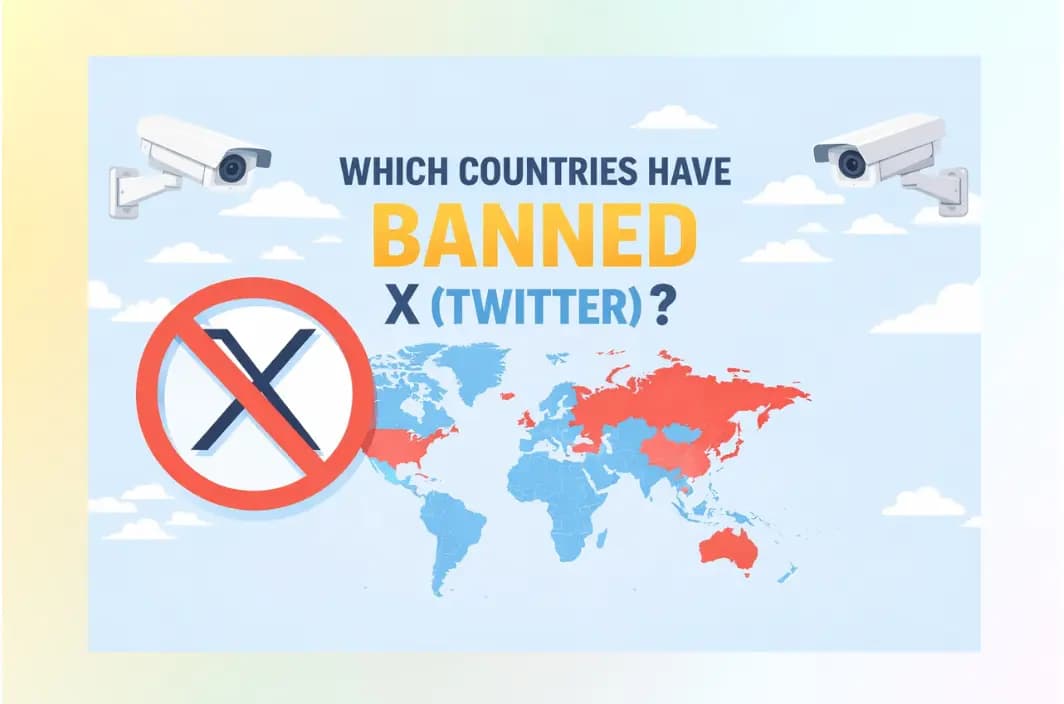
Global Overview: Countries Where X is Banned or Restricted
The restriction of X generally falls into three categories: Permanent Blocks (total censorship), Temporary Suspensions (often during periods of political unrest), and Functional Restrictions (targeting specific features like Grok AI or advertising).
X Access Status Table (Updated January 2026)
| Country | Restriction Type | Primary Timeline | Current Status (2026) |
| Russia | Total Block | Since March 2022 | Permanent |
| Iran | Total Block | Since June 2009 | Permanent |
| North Korea | Total Block | Since April 2016 | Permanent |
| Turkmenistan | Total Block | Early 2010s | Permanent |
| Venezuela | Platform-level access block (X / Twitter) | August 2024 – January 13, 2026 | Restriction lifted |
| Pakistan | National Security Ban | The ban was lifted on 7 May 2025 | Restored but Monitored |
| Indonesia | Feature Restriction | Since January 2026 | Grok AI Banned |
| Brazil | Regulated Access | 2024 (Brief Ban) | Open / Under Monitoring |
| Myanmar | Total Block | Since February 2021 | Active |
Detailed Analysis: Why Did These Countries Ban X?
The reasons for banning a global platform like X are rarely monolithic. They often involve a complex blend of national security concerns, legal non-compliance, and cultural protectionism.
1. Political Control and Preventing Unrest (Myanmar)
Myanmar’s military government has blocked X since the 2021 coup to prevent dissidents and opposition figures from organizing and spreading information that challenges its rule. The ban is driven by a desire to control information flow and curb mobilization against the regime.
2. Conflict Between Sovereign Law and Platform Policies (Russia, Brazil)
Russia (since 2022)
Moscow formally banned or restricted access to X after it refused to remove content the government labelled “illegal” or “fake news” about the Ukraine conflict.
The move reflects a clash between national information control policies and the platform’s content moderation practices, which Russia viewed as incompatible with its legal demands.
Brazil (2024 legal ban)
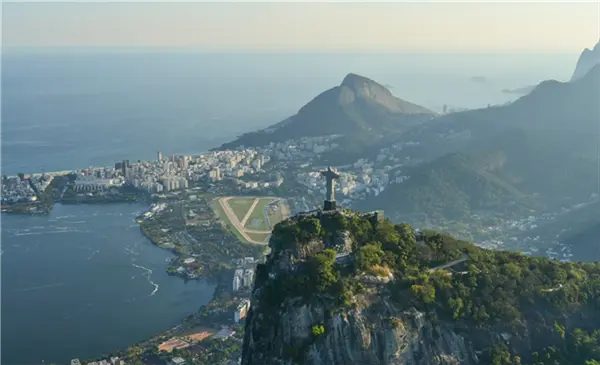
Brazil’s Supreme Federal Court imposed a ban on X when the company failed to appoint a legal representative locally and did not comply with orders to take down accounts spreading disinformation, especially related to political violence and election unrest.
While the ban was later eased after compliance, it shows how national legal exigencies can override platform autonomy.
3. National Security and Election Integrity (Pakistan, Venezuela)
Pakistan (2024 onward)
The government blocked X around parliamentary elections, citing national security concerns and the platform’s role in disseminating politically destabilizing content.
Authorities framed the move as a preventive measure to manage election‑related misinformation and unrest.
Venezuela (2024)
The Maduro government temporarily suspended X during mass protests, accusing it of facilitating anti‑government mobilization and “violent content.”
The suspension continued longer than initially declared, illustrating how political tensions can influence digital censorship.
4. Regulatory & Legal Non‑Compliance (Data and Safety)
In several cases, X has faced restrictions not purely for political content but for failing to meet local regulatory requirements such as legal representation, data protection, or compliance with judicial takedown orders — especially evident in Brazil’s case.
5. New Trend in 2026: AI Safety, Privacy & Image Content
A new wave of restrictions has emerged in 2026, focused on X’s Grok AI tool, not just the social network itself:
- Indonesia temporarily blocked access to Grok AI because authorities found it was being used to generate pornographic and sexually explicit deepfake images, including content involving minors, which local laws strictly prohibit and consider a violation of digital safety and human rights.
- Malaysia similarly restricted Grok AI, citing misuse for generating obscene, non‑consensual, manipulated imagery and failure of safeguards to prevent such harmful content. Authorities are pursuing regulatory action, including legal steps against X and its AI division, due to violations of online safety and privacy laws.
These moves show a shift from banning a platform to banning an AI algorithm due to privacy, safety, and content harms — reflecting broader global concerns over generative AI risks and legal compliance.
The Impacts of X Bans: Why It Matters
When a country bans X, the repercussions extend far beyond the inability to post “tweets.” The impacts are felt across various sectors:
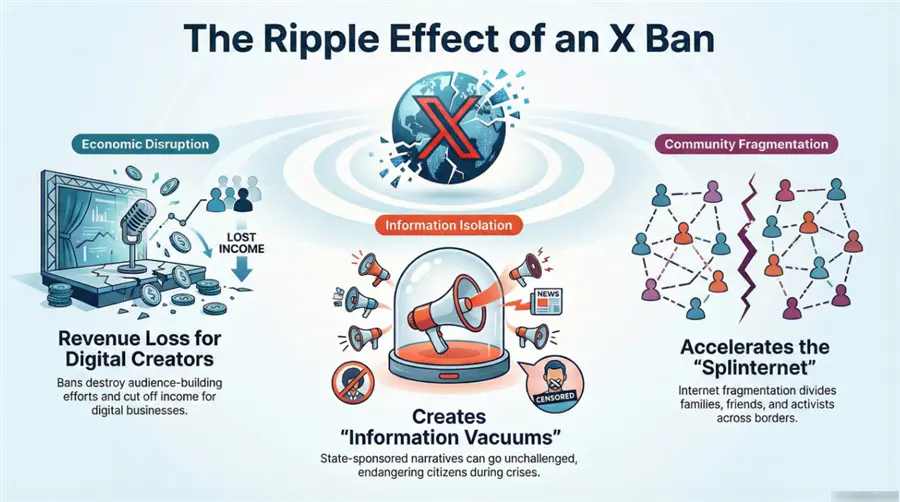
1. Economic Disruption: The Collapse of Digital Marketplaces
For many, X isn’t just a social network; it is a primary storefront and networking hub. When the “Exporting” of digital services is cut off, the economic damage is quantifiable:
- Destruction of the Creator Funnel: Many digital creators use X as the “top of the funnel” to drive traffic to paid platforms, newsletters, or e-commerce sites. A ban instantly severs this lead generation, often resulting in an overnight drop in conversion rates.
- Small Business Paralysis: Micro-SMEs (Small and Medium Enterprises) that lack massive marketing budgets rely on the viral nature of X for organic discovery. Without it, their ability to reach international customers vanishes, effectively “insulating” the local economy in a way that stifles growth.
- Ad-Tech Volatility: Local agencies specializing in social media management and digital advertising face immediate contract cancellations, leading to job losses within the domestic tech sector.
2. Information Isolation: The “Pulse” Goes Silent
X has historically functioned as the world’s “nervous system.” In its absence, the flow of information becomes sluggish and easily manipulated:
- The Loss of Real-Time Crisis Management: During natural disasters or fast-moving political events, official emergency services and citizen journalists use X to provide life-saving updates. Without this “real-time pulse,” a dangerous lag occurs between an event and the public’s awareness of it.
- State Monopoly on Truth: Bans often allow state-controlled media to become the sole source of news. Without the “fact-checking” ecosystem of a global crowd, misinformation can be codified as official narrative, leaving citizens without the tools to verify what they are being told.
- OSINT Stagnation: Open-source intelligence (OSINT) relies heavily on the geolocated data and media shared on X. A ban blinds international observers to human rights issues or localized crises that would otherwise gain global attention.
3. Fragmentation: The Rise of the “Splinternet”
Perhaps the most lasting impact is the structural damage to the concept of a unified global internet. This fragmentation—often called the Splinternet—changes how humanity interacts:
- The End of the Global Town Square: X is one of the few places where a student in Lagos can interact directly with a scientist in Tokyo or a politician in Washington. Bans force users into regional “echo chambers” (like Weibo or VK), ending the cross-pollination of ideas.
- Digital Diplomacy Breakdown: Diplomacy has moved from closed rooms to “Twiplomacy.” When a country leaves the platform, it loses a vital channel for soft power and direct communication with the global public, further isolating its citizenry from international discourse.
- Cultural De-synchronization: Shared global moments—from the Olympics to viral social movements—lose their impact when a significant portion of the world is “offline.” This erosion of shared experience makes it harder to build empathy across borders.
How to Access X (Twitter) in Restricted Regions: Safe Solutions
For those living in or traveling to countries where X is illegal or blocked, digital tools can help restore access. However, it is vital to prioritize security and privacy to avoid detection by state surveillance systems.
1. Using a High-Performance VPN (Recommended: BearVPN)
A Virtual Private Network (VPN) is the most effective way to bypass a ban. By connecting to a server in a country where X is legal (such as the United States or Japan), your traffic is encrypted and your IP address is masked. Why BearVPN for Bypassing Restrictions?
- Advanced Obfuscation: BearVPN includes obfuscation features designed to make VPN traffic appear similar to regular internet traffic, which can help it bypass DPI‑based restriction systems used by some networks.
- Military-Grade Privacy: Employs AES-256 encryption and a strict No-Logs Policy. It ensures your browsing history is never recorded and stays invisible to ISPs and third parties.
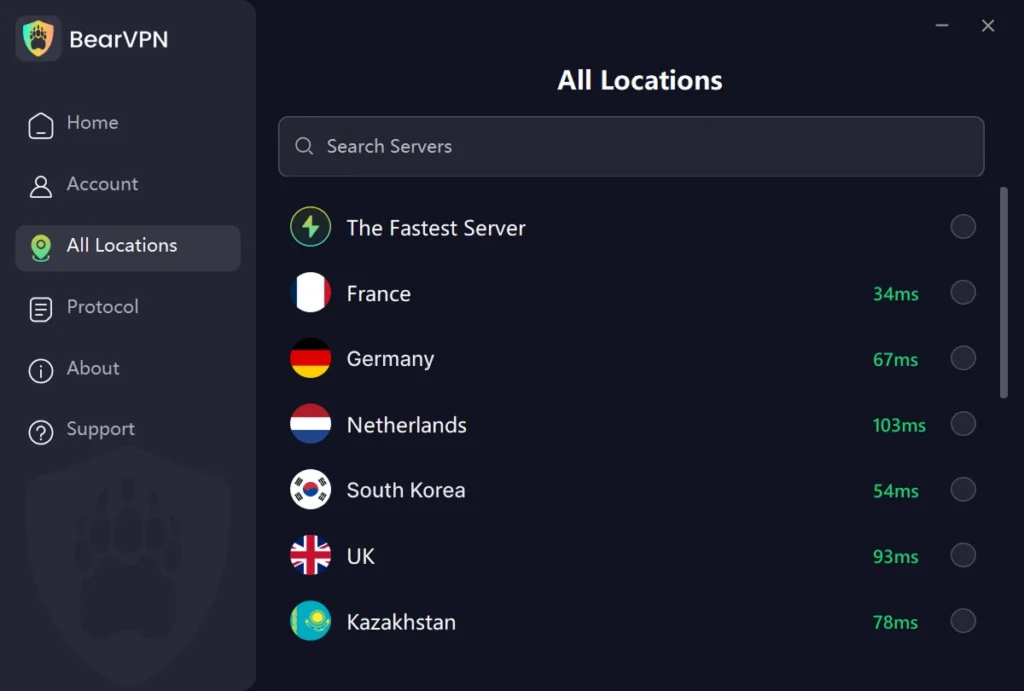
- Global Performance: Access over 2,000 servers across 50+ regions. Intelligent routing and unlimited bandwidth ensure high-speed access to X, video streaming, and gaming without lag.
- Total Accessibility: Features a simple one-click connection and full cross-platform support for Windows, macOS, iOS, and Android.
2. Specialized Proxies and Tor
In extreme cases, the Tor Browser can be used to access X via its “Onion” site. While slower than a VPN, it provides multiple layers of anonymity. However, for daily use and media consumption, a premium VPN remains the superior choice for speed and reliability.
Disclaimer:While VPNs are legal in most countries, using them to access banned content may violate local Terms of Service or specific national regulations. Users should always research local laws before connecting.
Conclusion
The list of countries that have banned X continues to grow as the platform pushes the boundaries of content moderation and AI integration. Whether it is for political control or legitimate regulatory concerns, these bans represent a significant barrier to the global flow of information. For users who refuse to be silenced, tools like BearVPN provide a necessary bridge back to the global conversation.
Frequently Asked Questions on X Bans
Is X (Twitter) banned in Russia?
Yes. Since March 2022, Russia’s communications regulator, Roskomnadzor, has blocked X nationwide. This was part of a broader crackdown on Western social media following the conflict in Ukraine. Access remains restricted in 2026, with the government favoring domestic platforms like VK.
Is X still banned in Pakistan in 2026?
No. After a significant 15-month-long ban that began in February 2024, Pakistan officially restored access to X in May 2025. While the platform is currently accessible without a VPN, the government continues to monitor it closely for content related to “national security” and “blasphemy.”
Is X banned in Brazil in 2026?
Currently, X is accessible in Brazil, but it operates under strict oversight. Following the high-profile legal battle in late 2024 where the platform was briefly suspended, X complied with Supreme Court orders to appoint a local legal representative and pay outstanding fines. In 2026, the relationship remains fragile, with the judiciary maintaining the power to fine the platform for non-compliance with content removal orders.
Does Turkey ban X during political events?
Yes, frequently. Unlike a permanent ban, Turkey often employs “bandwidth throttling” or temporary blocks during periods of social unrest or elections. Most recently, in September 2025, access to X, YouTube, and Instagram was restricted across multiple networks following political rallies in Istanbul. Users in Turkey typically rely on BearVPN to maintain a stable connection during these “digital blackouts.”
Is it illegal to use a VPN to access X in banned countries?
The legality varies significantly by country:
- Iran: Using unauthorized VPNs is technically illegal and can result in “administrative penalties” or fines, though millions of citizens use them daily.
- Russia: The government has banned several VPN providers, but using a high-performance, non-sanctioned tool like BearVPN with obfuscation technology remains the most common way for citizens to stay connected.
- UAE: VPNs are legal for privacy but illegal if used to commit a crime or bypass state-blocked telecommunications services.
Why is X illegal in some countries?
The most common reasons are refusal to moderate content according to local laws, failure to provide user data to law enforcement, and the platform being used as a tool for political organizing that threatens the ruling government.
References & Sources
- Freedom House: Freedom on the Net 2025 – Global Report on Digital Rights.
- Reuters: X complies with Brazil court orders to resume service (October 2024 archive).
- Al Jazeera: Pakistan’s X ban: National security or silencing dissent? (December 2025).
- TechCrunch: Grok AI faces new regulatory hurdles in Southeast Asia (January 2026).