Key Takeaway:
In 2026, OnlyFans bans are no longer just about blocking access—they can be direct (ISP-level censorship), indirect (financial and payment restrictions), or regulatory (age verification requirements).
- For creators and subscribers, understanding the type of restriction in their region is crucial: VPNs and proxies can bypass direct censorship, but financial chokepoints and strict compliance rules require alternative payment methods and virtual presence strategies.
- Navigating these barriers safely ensures creators can continue earning and fans can maintain access without legal or security risks.
The digital landscape is undergoing rapid shifts in 2026. While the “creator economy” continues to flourish, certain platforms face unique hurdles that traditional social media sites like Instagram or X (Twitter) do not. OnlyFans, a platform that became a global phenomenon by allowing creators to monetize content directly from fans, is at the center of this tension.
Because of its primary association with adult content, OnlyFans has become a frequent target for government regulators, religious groups, and financial institutions. As of January 2026, access to the platform depends heavily on where you are in the world. This guide provides a comprehensive update on which countries have banned OnlyFans, the reasons behind these blocks, and how creators and fans are navigating these new digital borders.
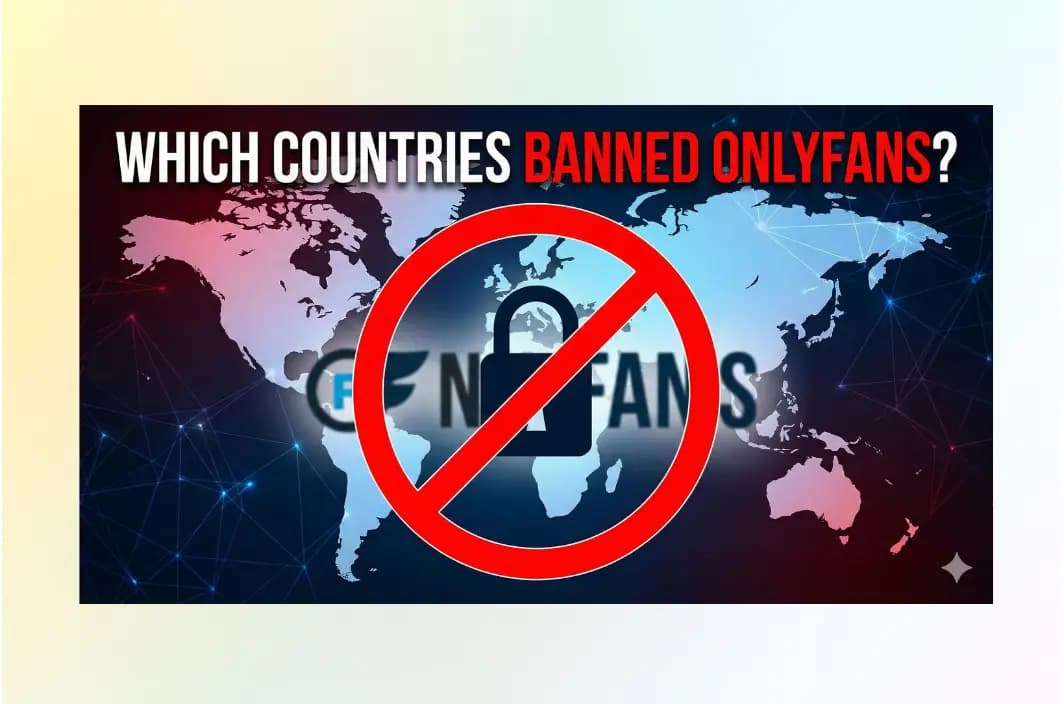
Which Countries Banned OnlyFans in 2026? A Global Guide to Access & Laws
OnlyFans has fundamentally changed how creators interact with their audience. By removing the middleman, it allowed artists, fitness coaches, and—most notably—adult content creators to earn directly from their work. However, this freedom has come with significant pushback.
In 2026, the “ban” on OnlyFans is rarely a simple “off” switch. Instead, it is a complex web of ISP-level blocks, financial de-platforming, and stringent age-verification laws. For creators, a ban can mean an immediate loss of livelihood. For fans, it can mean the loss of access to content they have paid for. Understanding the legal map is the first step toward staying connected.
2026 Global Map of OnlyFans Availability
To understand the current state of OnlyFans, we must look at the different ways access is restricted. A “Hard Ban” means the website is blocked by the government at the internet level. A “Financial Ban” or “Soft Ban” means the site might load, but you cannot pay for anything or withdraw your earnings.
Global Restriction Matrix (Updated Jan 2026)
| Country | Restriction Type | Status in 2026 | Primary Reason |
| North Korea | Hard Ban | Total Block | Near-total digital isolation. |
| Iran | Hard Ban | Total Block | Strict religious and morality laws. |
| Turkey | Hard Ban | Blocked (Since 2023) | Public morality & family values. |
| UAE (Dubai) | Hard Ban | Blocked | Anti-pornography legislation. |
| Russia | Financial / Partial | Payment Blocked | International sanctions & banking cuts. |
| China | Hard Ban | Total Block | “Great Firewall” censorship. |
| Pakistan | Hard Ban | Total Block | Moral and religious censorship. |
| India | Financial / Regulatory | Intermittent Issues | Banking “de-risking” and moral pressure. |
| Thailand | Intermittent | Periodically Blocked | Anti-pornography laws (Section 287). |
| Sweden | Specific / Legal | Custom Content Ban | Nuances in laws against buying sex acts. |
The Two Faces of the OnlyFans Ban
When we talk about OnlyFans being “banned,” it’s important to recognize that this term can mean very different things depending on where you are in the world. In 2026, bans generally fall into 2 main categories: direct government censorship and indirect financial or regulatory restrictions. Understanding which applies to your region is critical for creators and subscribers alike, as the solutions differ accordingly.

1. Direct Government Bans (ISP Level)
This is the most visible and widely recognized form of censorship. In this scenario, governments issue orders to Internet Service Providers (ISPs) to block the OnlyFans domain completely. Users trying to access the site from these countries will often see a “Forbidden” or “Access Denied” page, or the connection will simply fail to load.
Countries commonly enforcing direct bans include:
- Turkey
- Pakistan
- United Arab Emirates
- Saudi Arabia
- Qatar
- Bangladesh
Morality Laws
In many Middle Eastern, South Asian, and some African countries, adult content is considered a threat to social and religious norms. Governments justify blocks as a means of protecting public morality or the family structure. For example, in Turkey, a 2023 petition organized by conservative civic groups successfully pressured authorities to block OnlyFans, claiming it undermined traditional family values.
The mechanics of a direct ban vary slightly by country:
- DNS/Domain-Level Blocking: The ISP prevents the domain name (onlyfans.com) from resolving, so the browser cannot reach the server.
- IP-Level Blocking: Requests to the site’s IP address are filtered or redirected.
- Deep Packet Inspection (DPI): Some countries, like the UAE, use DPI to actively inspect traffic and block adult content even if users try to use VPNs.
This type of ban is immediate and hard to bypass without technical tools like reliable VPNs or alternative proxy services. According to Freedom House’s Freedom on the Net 2025 report, countries that enforce strict morality-based bans often pair ISP restrictions with surveillance, making circumvention risky for users.
2. Indirect Bans: The Financial “Chokepoint”
Indirect bans are subtler but can be even more damaging for creators, because they target the platform’s monetization and payment systems rather than access to the website itself. Even if OnlyFans is technically reachable, creators and subscribers can be effectively locked out if payments cannot be processed.
Banking De-riskingBanks in countries like India, South Africa, and parts of Southeast Asia have classified adult platforms as high-risk. This means:
- Credit/debit card transactions to OnlyFans may be blocked.
- Banks may refuse to open accounts for creators receiving payments from adult platforms.
- Payment processors may require additional compliance checks or documentation, delaying payouts.
The concern is twofold: regulatory compliance and reputational risk. Banks worry that processing adult-content payments could trigger fines under local anti-obscenity laws or be perceived as supporting morally controversial activities. Industry research from IDC and Gartner indicates that “financial de-risking” of adult platforms has accelerated since 2023 due to heightened global regulation and stricter anti-money-laundering policies.
International Sanctions
In some countries, bans are geopolitical rather than moral. Russia and Belarus are prime examples:
- Following sanctions imposed after the 2022 invasion of Ukraine, major payment processors like Visa and Mastercard withdrew services.
- OnlyFans creators in these countries cannot legally receive payouts, rendering participation largely impossible.
- Many Russian creators have relocated to nearby countries like Georgia or Kazakhstan to continue operations.
The combination of financial chokepoints and international sanctions shows that banning a platform doesn’t always require traditional censorship; controlling the money flow can be just as effective. Reports from Statista indicate that global adult content creators lose an average of 20–30% of potential revenue in countries with banking restrictions alone.
Key Takeaway:Direct bans prevent access to the platform entirely, while indirect bans attack the ecosystem that supports creators. Both forms are important to understand because the solutions differ: VPNs or proxies may bypass direct ISP blocks, but they won’t solve payment restrictions, which may require international bank accounts or third-party payment services.
The 2026 Wave: Online Safety Acts and Age Verification
One of the biggest shifts in 2026 isn’t the blocking of OnlyFans, but the regulation of it. Western countries that previously had “open” access are now implementing strict Age Verification (AV) laws.
The UK Online Safety Act
In the United Kingdom, the media regulator Ofcom has been granted significant powers to police “harmful content.” OnlyFans has had to implement some of the most rigorous AV systems in the world to comply. This often involves:
- Uploading a government-issued ID.
- Biometric face scans.
- Third-party verification services (like Yoti).
The US “State-by-State” Ban
In the United States, several states (including Texas, Utah, and Louisiana) have passed laws requiring adult sites to verify the age of every visitor. OnlyFans has often complied, but other sites have chosen to “self-ban” in those states rather than deal with the data liability. This creates a “soft exit” where users in certain US states face much higher barriers to entry than those in others.
Impact on the Creator Economy & Digital Privacy
The consequences of these bans are far-reaching. OnlyFans is not just about adult content; it hosts chefs, musicians, and fitness experts. However, the stigma surrounding the site means all creators suffer when a ban occurs.
1. Loss of Livelihood
For many creators in restricted regions, OnlyFans was their primary source of income. A sudden ISP block can mean an 80-90% drop in revenue overnight. This has forced a “digital migration” where creators must use sophisticated technology to appear as if they are working from a different country.
2. The Rise of Shadow Markets
When a platform is banned, the demand doesn’t disappear; it just goes underground. In countries with Hard Bans, “content reselling” sites flourish. These sites often steal content from OnlyFans and sell it without the creator’s consent, leading to massive copyright infringement and a loss of safety for the performers.
3. Privacy Risks for Users
In 2026, many governments use “metadata” to track what citizens are doing online. In countries where adult content is illegal, simply visiting OnlyFans without protection can lead to a visit from local authorities or, at the very least, a permanent mark on your digital record.
Solutions: Navigating Restrictions Securely in 2026
If you are a creator trying to manage your business or a fan trying to support your favorite artist, several technical solutions are available. However, in the 2026 digital landscape, these tools must be used with a strict focus on security, privacy, and consistency.
Primary Access Tools
- Bypassing Geo-Restrictions with BearVPN
A high-quality VPN (Virtual Private Network) remains the most effective way to bypass both ISP blocks and regional content filters. BearVPN goes beyond basic VPN functionality, making it an ideal choice for accessing restricted platforms like OnlyFans while enhancing online privacy and security.
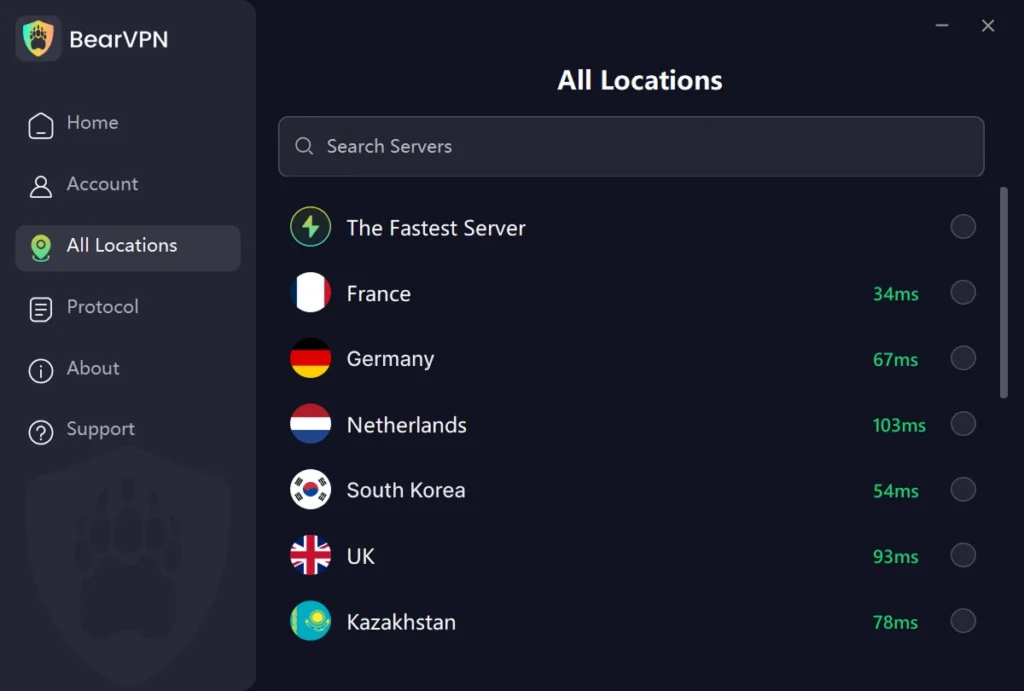
How it works:
- BearVPN uses advanced protocols to hide the fact that you are using a VPN. This is vital in countries where “VPN detection” technology is used to throttle or block encrypted traffic.
- By connecting to a server in a “friendly” country (like the US or UK), you can access OnlyFans as if you were physically there.
- BearVPN encrypts your entire connection, ensuring that your local ISP or government cannot monitor your browsing history or platform interactions.
Key Features:
- Extensive Server Network: Over 2,000 stable, high-speed servers across 50+ regions, allowing you to switch freely anytime.
- Advanced Encryption: Industry-leading protocols protect your data in transit and safeguard online privacy.
- High-Speed Connection: Smart routing ensures smooth streaming, downloads, and gaming without lag.
- Unlimited Bandwidth: No data caps, giving you freedom to browse, stream, or download without restrictions.
- One-Click Connection: Simple, user-friendly interface makes it easy to start protecting your connection without any technical knowledge.
Whether your goal is accessing blocked websites or securing your online activity, BearVPN provides a reliable, fast, and secure solution for creators and fans navigating restricted digital landscapes.
- Residential Proxies
For professional creators, a VPN might not be enough. OnlyFans’ security systems sometimes flag “Data Center” IP addresses used by common VPN providers. Residential proxies provide you with an IP address from an actual home device in another country, making your connection look 100% legitimate and preventing “suspicious activity” account flags.
- Alternative Payment Methods
In “Financial Ban” regions, users and creators are shifting toward Cryptocurrency or Virtual Credit Cards (e.g., StatesCard). These allow for transactions that bypass the local banking system’s “morality filters” and ensure payouts remain accessible.
The Creator’s Toolkit: A Step-by-Step Guide to Virtual Presence
For creators whose livelihood depends on the platform, simple access isn’t enough—you need stability. In 2026, the industry standard is to establish a “Virtual Presence,” ensuring your digital footprint (IP, Timezone, and Device ID) consistently matches a supported region.
Phase 1: Establishing the Technical Foundation
- Anti-Detect Browsers: Use tools like Multilogin or Dolphin{anty} to create a dedicated profile for OnlyFans. This prevents “fingerprint” leaks like your battery level or system fonts from giving away your real location.
- The “One Account, One IP” Rule: Always connect to the same city. If you choose a “London” server on BearVPN today, use it every time you log in to avoid “account sharing” flags.
Phase 2: Operational Security (OpSec)
- Enable the “Kill Switch”: Always ensure your VPN’s Kill Switch is active. If your connection drops for even a second, this feature prevents your real IP address from being exposed to OnlyFans.
- Metadata Scrubbing: Before uploading content, use a metadata remover. Photos taken on smartphones contain EXIF data (GPS coordinates) that can reveal your true location even if your VPN is active.
- Dedicated Hardware: If possible, use a separate “work phone” that never connects to your home Wi-Fi and is only used while the VPN is active.
Phase 3: Managing Finances Abroad
- Virtual Billing Addresses: When setting up payment methods, use virtual cards that provide a billing address in the same country as your VPN server.
- Secure Payouts: For creators in sanctioned or restricted regions, utilizing international digital banks (like Wise or Revolut) or crypto-linked debit cards is the most reliable way to secure your earnings in 2026.
Conclusion
In 2026, OnlyFans bans come in two forms: direct access blocks and financial or regulatory restrictions. Creators and fans must navigate both carefully—VPNs can bypass ISP bans, while alternative payment methods and compliance strategies help overcome financial chokepoints. Staying informed is key to protecting revenue, access, and digital security.
FAQs: OnlyFans Legality & Access
Is OnlyFans illegal in Dubai (UAE)?
Yes. The UAE has a strict policy against pornography and adult content. OnlyFans is blocked at the ISP level. While many residents use VPNs to access the site, it is technically a violation of local telecommunications laws.
Why can’t Russian creators get paid in 2026?
Due to ongoing international sanctions, major payment gateways (Visa, Mastercard, Paxum) have restricted or stopped services to Russian banks. While a Russian creator can technically log in via a VPN, they cannot withdraw their earnings to a Russian bank account.
Does OnlyFans work in India?
Yes, but it is “unstable.” Some Indian banks block direct payments to the site. Many Indian users find that using a VPN and an international virtual card is the only way to ensure a successful subscription.
Can OnlyFans see if I am using a VPN?
OnlyFans has sophisticated security to prevent fraud. If you use a free or low-quality VPN, their system might detect the shared IP and ask for additional verification. Using a premium service like BearVPN or a dedicated residential proxy is the best way to avoid detection.
References & Expert Sources
- Reuters:The Global Crackdown on Adult Content Platforms (Jan 2026 Update).
- The Standard:Why Turkey Banned OnlyFans: A Case Study in Digital Morality.
- The Guardian:Financial De-platforming: The New Frontier of Internet Censorship.
- Ofcom (UK):Guidelines for Age Verification on Subscription Platforms 2025/2026.