TikTok has become one of the most influential platforms in the world, shaping entertainment, culture, politics, and even the global economy. But with global growth comes heightened scrutiny — and in 2024–2025, TikTok’s age-verification system became one of its most controversial features.
You may simply want to watch a video, unlock TikTok Live, or fix your account — yet suddenly TikTok demands your age again. Or worse, it locks you out entirely. Why does this happen? Why do some adults get mistakenly flagged as minors? And what role do new global laws play in forcing TikTok to tighten age checks?
This article answers all of that and more.
What makes this guide different?
Unlike many simplistic tutorials, this article takes a critical, debate-driven approach. It challenges TikTok’s logic, examines global law, evaluates privacy concerns, and explains not just how the system works, but why it behaves the way it does. It also clarifies where a privacy-first VPN (like BearVPN) genuinely helps — and where it absolutely cannot.
If you want a comprehensive, logical, trustworthy, and modern guide to TikTok age verification, this is it.
What TikTok Age Verification Actually Is
Age verification on TikTok isn’t a single process. It’s a bundle of systems, activated for different purposes:
- Birthdate Input — the basic check when creating an account
- Age-Based Feature Restrictions — like Live or monetization
- Content Age-Gating — restricting mature or sensitive content
- AI-Based Age Estimation — analyzing user behavior, photos, or patterns
- Government-ID Verification — required in certain cases
- Region-Controlled Age Laws — triggered by your country’s regulations
At its core, TikTok uses age verification to comply with:
- COPPA-style laws protecting children
- National laws requiring platforms to verify ages
- Internal safety standards
- Public pressure from parents, governments, and civil society
But while the intention may be good, the execution is often problematic. Let’s break this down logically.
Why TikTok Enforces Age Verification and Why It Often Fails
TikTok implements age checks for several reasons: government regulations, algorithmic detection of potentially underage behavior, parental pressure, advertiser demands for brand safety, and the platform’s own need to avoid legal risk. In theory, these measures are meant to protect minors; in practice, they often inconvenience adults and become easy-to-bypass hurdles for teens.
The system frequently fails because TikTok relies on heuristic algorithms, behavioral signals, account metadata, region-specific laws, IP and geolocation data, and inconsistent user-submitted information. This mix creates false positives: adults misidentified as minors, legitimate users blocked, and travelers flagged due to regional rules. Meanwhile, some underage users still slip through basic checks.
Understanding these systemic weaknesses is key — your age verification prompt may have less to do with you and more to do with your region, your activity patterns, or an algorithm misclassification.
Types of TikTok Age Verification (Deep Dive)
This section expands the earlier outline to include deeper explanation, scenarios, and limitations.
1. Basic Birthdate Verification
This occurs when creating an account, editing your birthday, or changing major profile details.
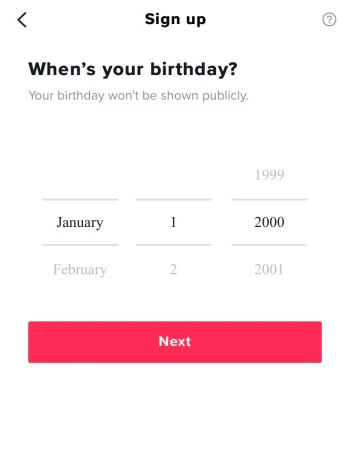
Birthdates rely on user honesty; children often lie, and adults sometimes mistype their birth year.TikTok sometimes flags birthdays as suspicious.
2. Age-Gated Content Filters
Videos tagged as:
- Mature
- Dangerous
- Sexual or suggestive
- Violent
- Mentally triggering…may be hidden behind an age gate.
TikTok uses AI to classify content. Even innocent videos can be misclassified.
3. TikTok Live Age Verification
TikTok Live is one of the strictest features:
- Must be 18+ to host
- Must be 16+ (in some regions) to view certain live broadcasts
- Must meet hours-watched or follower requirements
TikTok sometimes blocks Live even when you’re clearly an adult.
4. High-Risk Account Checks
High-risk account checks are triggered when TikTok detects signals that may resemble underage activity. This can happen if your behavior looks “childlike,” your profile photo appears youthful, or your messages reflect patterns commonly associated with minors. The system may also flag your account if there are multiple login attempts from different cities or if your device or SIM card originates from a country with strict age-verification laws.
These machine-learning models are not perfect, and these triggers can sometimes misclassify legitimate adult users.
5. Government ID Verification
TikTok requests ID when:
- Restoring a locked account
- Appealing an incorrect age flag
- Verifying eligibility for Live or monetization
- Complying with regional laws
A driver’s license, passport, or national ID is usually required.
Privacy concern: Uploading ID to a social platform is uncomfortable — and TikTok’s privacy track record isn’t spotless.
6. Region-Based Age Verification
Certain laws force TikTok to enforce stronger checks. Even if your account is fine, your location or IP address can trigger stricter rules.
This is one of the biggest causes of unexpected verification.
Why You’re Seeing TikTok Age Verification Prompts (Root-Cause Analysis)
TikTok may ask you to verify your age for reasons that go beyond your birthdate. Let’s diagnose them properly.
Wrong or Suspicious Birthdate
A simple typo — for example, entering 2024 instead of 1994 — can immediately cause account lockouts, content restrictions, or forced ID verification. TikTok treats any inconsistent or unusual birthdate information as a potential risk.
Algorithmic Misclassification
TikTok’s AI can misinterpret facial features, mannerisms, writing tone, or even your overall content style. Your appearance, clothing, or the way you type comments may accidentally trigger maturity-related flags. This raises an important question: should an algorithm be allowed to decide your maturity level?
Region-Specific Restrictions
Users living in or traveling through regions with strict digital-safety laws — such as the UK, Malaysia, Australia, parts of the EU, or certain U.S. states like Utah and Arkansas — often encounter more aggressive age-verification checks. This is one of the most overlooked root causes.
Restricted Mode or Family Pairing
Sometimes the restriction doesn’t come from TikTok itself. A parent’s Family Pairing setting, a forgotten PIN, or an accidental toggle of Restricted Mode can trigger sudden age-related limitations even if you’re an adult.
Travel or VPN Conflicts
Frequent IP changes caused by travel, unstable mobile networks, or VPN usage can make TikTok suspect that a minor is using an unsafe connection, that your account may be compromised, or that you’re trying to bypass age checks. As a result, the platform often errs on the side of caution — sometimes too aggressively.
How to Fix TikTok Age Verification Problems — Step-by-Step
Below are expanded solutions that go far beyond the surface-level fixes most blogs provide.
1. Disable Restricted Mode
Restricted Mode can quietly limit comments, videos, mature content, duets, Lives, and even search results. To turn it off:
Step 1. Open Settings & Privacy > Go to Content & Display.
Step 2. Select Restricted Mode andTap Turn Off.
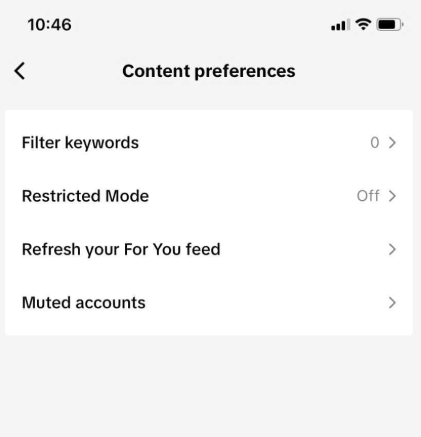
If Family Pairing is active, only the parent or controlling account can disable this mode.
2. Request a Birthday Correction
TikTok does not allow direct birthdate edits, so you must submit a correction request.
Step 1. Go to your Profile >Open Settings & Privacy >Tap Report a Problem.
Step 2. Choose the category related to Account Profile
Step 3. Tap Need More Help? Request a birthdate correction and then upload relevant ID documents.
Observation: TikTok could allow simple self-service editing, but the platform takes a stricter approach to prevent minors from bypassing restrictions.
3. Appeal a Wrong Age Restriction
If you are fully locked out of your account:
Step 1. Go to the age restriction prompt screen. Tap Appeal.
Step 2. Submit required documents.
Step 3. Clearly state your real age.
Step 4. Explain how the error happened.
Step 5. Attach any additional documentation if needed.
4. Fix TikTok Live Verification Issues
Live verification often fails because TikTok cannot verify your region, your profile lacks trust signals, or the app is using old cached data.
Step 1. Update TikTok to the latest version
Step 2. Clear the app cache
Step 3. Restart your device
Step 4. Verify both your email and phone number
Step 5. Add a clear, real profile photo
Step 6. Ensure your birthdate is accurate
5. Clear Location and App Conflicts
TikTok checks your GPS, IP address, SIM region, App Store region, and device timezone. If these signals don’t match, features may be blocked.
Step 1. Match your device timezone to your physical location
Step 2. Ensure your App Store or Google Play region matches your SIM
Step 3. Use a stable IP connection (Wi-Fi or a consistent VPN server)
Step 4. Avoid switching regions too frequently
Global Age-Verification Laws: Why TikTok Is Forced to Act
Here is where the article expands into deeper political, legal, and ethical analysis.
United Kingdom: The Online Safety Act
The UK’s Online Safety Act requires platforms to prevent minors from accessing adult content, verify user ages more aggressively, and comply with strict penalties for violations. As a result, UK-based TikTok users are seeing more age prompts, increased blocks on “sensitive content,” and a rise in ID verification requests. This has sparked debate over whether the law truly protects children or creates a privacy minefield for adults.
Australia: Toward Under-16 Social Media Bans
Australia is moving toward far stricter social media regulations, including potential bans for users under 16, mandatory ID checks, and even online curfews for minors. These policies often affect adults as well, who end up facing additional verification simply because they live in a heavily regulated region.
Malaysia: Rapidly Growing Age-Safety Demands
Malaysia is pushing platforms to strengthen age checks, block harmful or sensitive content, and prevent minors from bypassing restrictions. TikTok must comply with these measures or risk fines or temporary service disruption, which explains the increase in verification prompts for Malaysian users.
The European Union
The EU’s framework — including GDPR, child-specific privacy protections, and the Digital Services Act — requires platforms to implement responsible, transparent age-verification systems. TikTok applies stricter compliance measures across EU member states to meet these obligations.
The United States
In the U.S., age requirements vary widely by state. Some states enforce age limits, require parental consent, or mandate tighter social-media controls. TikTok continuously adjusts its verification system to match these state-level laws, resulting in different user experiences across the country.
VPNs and TikTok Age Verification — Honest, Ethical Explanation
Here is where clarity matters. A VPN cannot fool TikTok into thinking you’re older. But it can solve location-triggered age checks.
✔ What a VPN Can Do
A privacy-focused VPN like BearVPN can:
- Stabilize your location data
- Avoid conflicts between the IP region and the GPS
- Prevent region-based age prompts (in some cases)
- Protect your data when using public wifi
- Reduce the amount of information TikTok sees about your network
- Shield your ISP from seeing TikTok usage
This is legal, ethical, and privacy supportive.
✘ What a VPN Cannot Do
No VPN will:
- Change your birthdate
- Forgive ToS violations
- Replace government ID
- Override country-level laws
- Force TikTok to treat you as 18+
Any website claiming otherwise is dishonest.
Using BearVPN Safely When Age Checks Are Region-Based
BearVPN is a fast, reliable, and privacy-focused VPN tool designed to help users browse the internet securely and access global content without restrictions. It offers over 2,000 high-speed servers across 50+ regions, supports one-tap IP switching, and includes a free version that requires no account. The paid version unlocks faster speeds, more stable routes, and full control over server selection — making it especially useful when apps like TikTok impose region-triggered verification checks.
Here is a responsible, transparent guide to using BearVPN safely:
Step 1. Install BearVPN
Download and install BearVPN on your device. It is available for iOS, Android, Windows, and macOS.
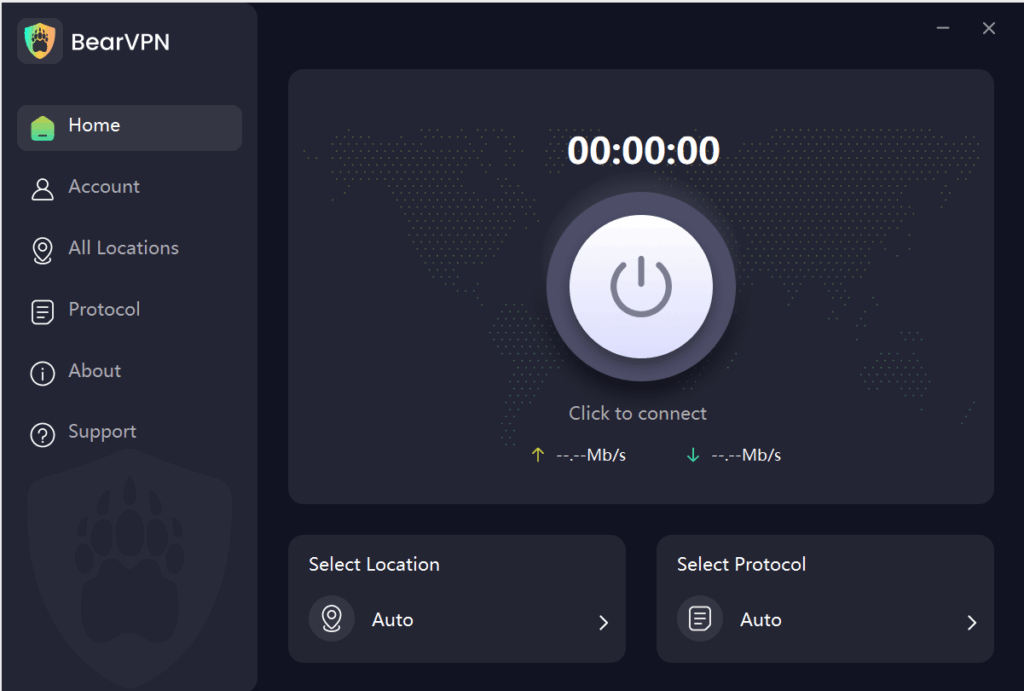
Step 2. Choose a Consistent Server Region
Select one stable region known for smooth TikTok access. Avoid frequent region switching, as this can trigger TikTok’s risk-detection systems.
Step 3. Clear TikTok Cache & Restart
This forces TikTok to recalculate your region and trust signals based on your current IP.
Step 4. Reopen TikTok Normally
If your age-verification prompt was caused by a region mismatch, it often resolves once your signals stabilize.
Step 5. Use Safe Digital Practices
BearVPN protects your connection, but good digital hygiene is still essential. Use two-factor authentication, avoid unsafe third-party “age-bypass tools,” keep your device updated, and maintain strong passwords.
For Parents: Realistic Approaches to TikTok Safety
Age verification is not a substitute for parenting. Even the most advanced systems cannot replace open conversations, teach media literacy, or eliminate every online risk. Kids often bypass age checks due to peer pressure, curiosity, FOMO, or a desire for independence — usually reinforced by limited digital education.
Parents should focus on open dialogue rather than shame or fear-based tactics. Family Pairing can be helpful, but overly restrictive controls often backfire and encourage secretive behavior. It’s also worth noting that many teens learn to use VPNs earlier than adults expect. Instead of trying to ban them outright, teach responsible use, explain privacy basics, and foster trust. A collaborative approach is far more effective than an adversarial one.
Conclusion
TikTok age verification is no longer a simple feature — it has become a complex, constantly evolving system shaped by global laws, machine-learning models, regional politics, safety concerns, and user behavior. To navigate these challenges, start by ensuring your age settings are correct or correcting any mistakes, and keep your device data consistent so the system is less likely to misclassify you. It also helps to understand how regional regulations influence your account, protect your personal information during any verification process, and use privacy tools like BearVPN when region-based restrictions become excessive. Staying informed about broader trends in digital identity will further reduce unexpected prompts.
Age verification is designed to protect minors, but it must be implemented responsibly, ethically, and transparently. With the right awareness, digital habits, and privacy practices, you can use TikTok safely and confidently without unnecessary interruptions.