Fast Answer: Yes, VPNs are 100% legal in the United States. However, “legal” does not mean “unmonitored.”
Whether you are a resident, a digital nomad, or a tourist, you are legally allowed to use a Virtual Private Network (VPN) to secure your connection and access region-locked content. There are no federal bans, and using a VPN is a standard practice for U.S. corporations and government agencies.
You can legally use BearVPN in the U.S. for privacy and streaming. But to truly understand the American digital landscape, we must look beyond the simple “Yes” and explore the complex reality of jurisdiction, surveillance, and constitutional rights.
The Legal Foundation: Why the U.S. Protects Encryption
Unlike Russia or China, where VPNs are restricted to control information, the United States maintains a permissive legal environment for encryption tools. This isn’t just a policy; it’s rooted in the country’s legal DNA.

1. Code is Free Speech
In the United States, software code is considered a form of speech protected by the First Amendment of the Constitution. Legal precedents (such as Bernstein v. DOJ) have established that the government cannot broadly ban encryption technologies without violating free speech rights. This makes a blanket ban on VPNs legally difficult to implement.
2. No Federal or State Bans
Currently, no federal laws prohibit the use of VPNs. Likewise, no individual state has banned them. While legislators occasionally debate the role of encryption in criminal investigations, the economic necessity of VPNs for banking, healthcare (HIPAA compliance), and remote work keeps them legal.
3. Corporate and Government Reliance
The U.S. economy runs on VPNs. Major corporations use them to secure trade secrets, and government agencies—including the FBI and Department of Defense—use them to secure classified communications. The tool itself is recognized as a vital component of cybersecurity.
Is VPN Legal in the USA? The Five Eyes & Surveillance Paradox
While the U.S. government does not censor your internet, it has the most sophisticated capability in the world to monitor it. This creates a unique paradox for VPN users: Freedom from censorship, but not from observation.
The “Five Eyes” Alliance
The United States leads the Five Eyes (FVEY), an intelligence alliance comprising the U.S., U.K., Canada, Australia, and New Zealand. Under international agreements, these nations share signals intelligence (SIGINT) on a massive scale.
For a VPN user, this creates a risk known as “Third-Party Collection.”
- The Loophole: U.S. intelligence agencies (like the NSA) are generally restricted from spying on U.S. citizens without a warrant. However, allied agencies (like the UK’s GCHQ) are not bound by the U.S. Constitution.
- The Swap: Intelligence agencies can intercept data from a U.S. server and share that intelligence back with the U.S. government, effectively bypassing domestic privacy protections.
“Legal to Use” vs. “Legal to Log”
In the U.S., “legal” does not essentially mean “private.”
- No Mandatory Data Retention: Unlike the EU, the U.S. has no law requiring VPNs to store logs. A VPN can legally be “Zero-Log.”
- The Subpoena Power: However, if a VPN provider does keep logs, the government can demand them via National Security Letters (NSLs). Companies can even be issued “Gag Orders,” preventing them from telling users they have been compromised.
Using a VPN is legal, but your privacy depends entirely on your provider’s ability to retain zero data.
Is VPN Legal in the US? Gray Zones & Border Risks
While federal law is clear, there are specific scenarios where using a VPN carries additional complexity.
1. The “Constitution-Free Zone” (Border Crossings)
The 100-mile zone surrounding U.S. borders (including international airports) operates under different rules. Customs and Border Protection (CBP) agents have broad authority to search electronic devices without a warrant.
While having a VPN app on your phone is not illegal, agents may demand you unlock your device. Travelers should be aware that digital privacy rights are significantly weaker at the point of entry.
2. State-Level Age Verification Laws (2025 Update)
Recently, states like Texas, Virginia, and Utah have passed laws requiring age verification (via government ID) to access adult content websites.
- The VPN Reaction: This has triggered a surge in VPN usage, as residents route their traffic through states without these laws to bypass ID checks.
- The Legal Status: While accessing the content is legal for adults, using a VPN to circumvent state-mandated verification is a developing legal gray area. Enforcement currently targets the websites, not the individual VPN users, but it highlights the fragmented nature of U.S. internet law.
What VPNs Can’t Be Used For (The Red Lines)
A VPN provides privacy, not immunity. Committing a crime while using a VPN is still a crime—and in some federal cases, using sophisticated tools to hide your tracks can be considered an aggravating factor in sentencing.
Illegal activities include:
- Downloading or distributing Child Sexual Abuse Material (CSAM).
- Hacking, cyberstalking, or unauthorized system access.
- Buying/Selling illegal goods on dark web marketplaces.
- Financial fraud or identity theft.
Note on Copyright: Downloading copyrighted material (Torrenting) is illegal in the U.S. copyright holders are aggressive and often work with ISPs to track infringers. A VPN hides your activity from the ISP, but the act itself remains a civil offense.
The Solution: Why BearVPN is Built for the U.S. Environment
Choosing a VPN for use in the United States is not just about speed; it is about selecting a provider with the correct legal and technical architecture to withstand the pressures of a surveillance-heavy jurisdiction.
We have analyzed the risks—from ISP throttling and copyright trolls to the complexities of the “Five Eyes” intelligence sharing. BearVPN is engineered specifically to navigate this legal minefield. It does not just “hide” your data; it ensures that your digital footprint effectively ceases to exist the moment it leaves your device.
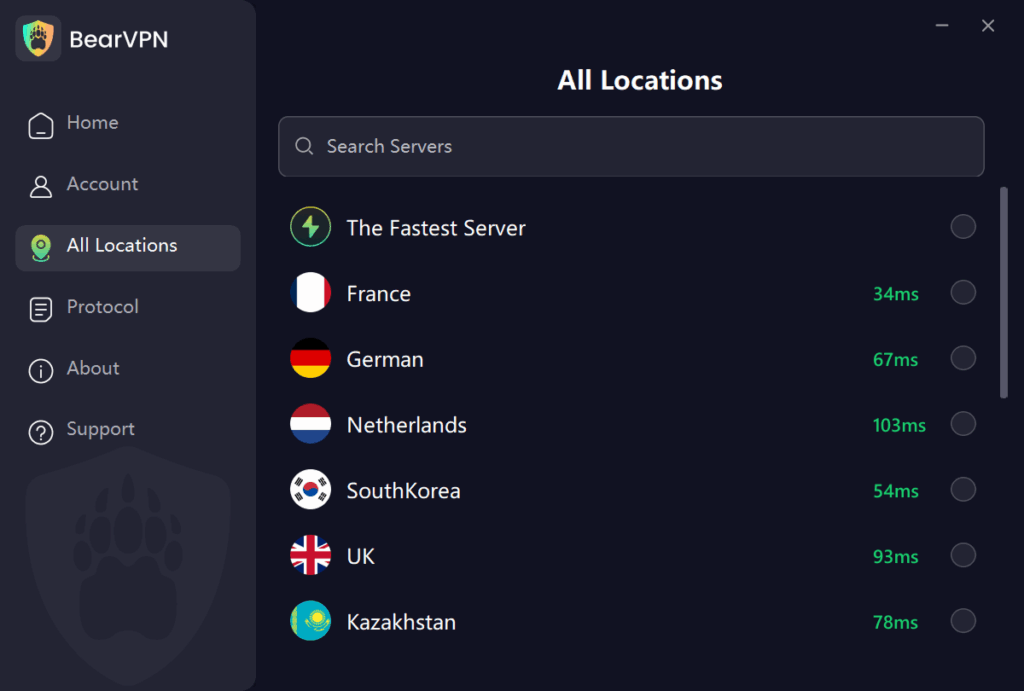
Here is how BearVPN’s architecture aligns with the U.S. legal framework:
1. The “Null Data” Defense (True Zero-Logs)
As discussed in the section on federal subpoenas, the only defense against a U.S. court order is the technical inability to comply.
- The Legal Logic: If a VPN provider stores connection timestamps or bandwidth logs, they can be forced to hand them over.
- The BearVPN Solution: BearVPN operates on a strict No-Logs Policy. We do not track the time you log in, the IP address you use, or the websites you visit. Our servers are designed to run on RAM-only infrastructure. If authorities serve BearVPN with a warrant, we can honestly testify that the data simply does not exist. You cannot subpoena what isn’t there.
2. Encryption as a Constitutional Shield
In the U.S., code is speech, and encryption is your First Amendment right. BearVPN utilizes AES-256 encryption—the same standard used by the U.S. federal government to secure classified information.
- Why It Matters: This makes your traffic indecipherable to your Internet Service Provider (ISP). Under U.S. law (specifically the repeal of FCC privacy rules), ISPs are allowed to sell your browsing history to advertisers. BearVPN renders your data into gibberish, effectively nullifying the ISP’s ability to monetize your private life.
3. Optimized for US Infrastructure and Streaming
A common legal gray area involves accessing content. While accessing geo-blocked content is legal, platforms fight back with “VPN bans.”
- The Technical Edge: BearVPN maintains high-bandwidth servers specifically optimized for the U.S. grid. This ensures low latency for 4K streaming on platforms like Netflix US, Hulu, and HBO Max. We regularly rotate IP addresses to ensure that legitimate users retain access to the content they pay for, bypassing unfair IP blacklists without violating laws.
4. Cross-Platform “Perimeter Security.”
In a connected home, securing a laptop is insufficient if your mobile device or smart TV is leaking data.
- Comprehensive Coverage: BearVPN supports simultaneous connections across Windows, macOS, iOS, Android, and Linux. By securing the entire “perimeter” of your digital life, you prevent data leaks that could de-anonymize you. A single unencrypted packet from a phone on public Wi-Fi can compromise your identity; BearVPN closes these gaps.
5. Global Freedom, US Compliance
For international travelers or digital nomads, the challenge is consistency. You need a tool that works legally in the U.S. but also functions in restrictive environments abroad.
- The Balance: BearVPN adheres to U.S. safety standards while offering the agility needed for global travel. Whether you are shielding your banking data from hackers at a New York airport or accessing U.S. news while traveling in Asia, the protection remains constant.
In an era of data brokers and digital surveillance, privacy is not a default setting—it is a choice. BearVPN provides the necessary tools to exercise that choice legally and securely.
Further Reading: Is VPN Legal in Qatar?
FAQs from International Readers
- Can I use a VPN while traveling in the U.S.?
Yes. VPNs are fully legal for visitors, whether you’re in the U.S. on vacation, for business, or as a student.
- Will I get in trouble for using a VPN to stream Netflix U.S.?
No. You won’t face legal consequences, though the platform may restrict or suspend access if it detects VPN usage that violates its Terms of Service.
- Is BearVPN compliant with U.S. laws and encryption standards?
Absolutely. BearVPN uses AES-256 encryption and adheres to U.S. security best practices. Our no-logs policy ensures your data remains private.
- What about browser VPN extensions?
Browser VPNs are legal too, but not all are secure. Free browser-based VPNs often log user data or lack strong encryption. BearVPN recommends using a full-featured app for comprehensive protection.
Conclusion: Privacy is a Choice
In the United States, using a VPN is more than just legal—it is a prudent step toward digital hygiene in an era of mass surveillance and data monetization. The law protects your right to use encryption, but it is up to you to exercise that right.
Whether you are shielding your data from the “Five Eyes,” preventing ISP tracking, or simply trying to watch your favorite show while traveling, BearVPN provides the legal, secure, and high-speed infrastructure you need.
Don’t just browse. Browse securely. Get started with BearVPN today.