If you’re planning to live, work, or travel in Egypt, “Is VPN legal in Egypt?” is probably one of the first questions you type into a search bar. You don’t want to gamble with local laws, but you also don’t want to leave your online privacy exposed on public Wi-Fi or hotel networks. This guide walks you through what’s known about VPN legality in Egypt and then focuses on the practical side: which VPNs actually make sense to use there, and how BearVPN fits into that picture.
Is VPN Legal in Egypt? (Short Answer)
Before you think about which Egypt VPN to install, you need to know whether VPNs themselves are allowed. The good news is that, based on publicly available information and reports from users, VPN apps are not outright banned in Egypt. Owning, installing, and using a VPN for everyday, legitimate purposes is widely considered legal.
What often creates confusion is what you do with the VPN. Egyptian authorities retain broad powers over internet content and can act against activities they see as threatening national security or violating local law. In practice, that means the legal risk is tied less to the VPN tool itself and more to the nature of the sites and services you access while connected.
What Are the Real-World Risks of Using a VPN in Egypt?
Once you know VPNs aren’t automatically illegal, the next question is whether using one is actually safe in day-to-day life. Egypt has a long history of content filtering and blocking, and that shapes the environment you’re operating in when you turn a VPN on.
You may find that some VPN websites won’t load on local connections, or that certain servers and protocols frequently time out. That doesn’t mean you’re committing a crime by connecting; it usually means internet providers are selectively blocking VPN infrastructure. At the same time, Egypt’s cybercrime and media laws give authorities wide discretion to act against online behavior they consider harmful, including attempts to reach content or services that are explicitly restricted.
In practical terms, you should think of a VPN as a privacy and security tool for legitimate use cases—securing your banking sessions, protecting against snooping on café Wi-Fi, or accessing your company’s systems securely. If you use any VPN to pursue activities that are already illegal under Egyptian law, the VPN won’t protect you from the legal consequences of those actions.
Best VPNs for Egypt at a Glance (Quick Comparison Table)
With the legal context in mind, the next step is choosing a VPN that actually works in Egypt’s network environment. Not every service deals equally well with intermittent blocking, deep packet inspection, and mobile-heavy usage. A handful of providers consistently show up in recommendations for Egypt because they combine strong privacy features with reliable connectivity.
The table below gives you a quick snapshot of several VPNs that are commonly suggested for Egypt. BearVPN is included as a privacy-first, mobile-friendly option, alongside a few larger names you may already recognize. Use this as an at-a-glance starting point before you dive into the detailed reviews.
| VPN Service | Best For | Key Privacy Features | Obfuscation / Stealth | Platforms (Core) |
| BearVPN | Everyday privacy & mobile users in Egypt | No-logs, DNS leak protection, RAM-only core | Traffic obfuscation | iOS, Android, Mac, Win |
| NordVPN | Power users & extra security tools | No-logs, double VPN, threat protection | Obfuscated servers | iOS, Android, Mac, Win |
| Surfshark | Budget & many devices | No-logs, CleanWeb, private DNS | Camouflage / NoBorders | iOS, Android, Mac, Win |
| ExpressVPN | Streaming & travel | No-logs, private DNS, strong encryption | Stealth options | iOS, Android, Mac, Win |
| ProtonVPN | Privacy-focused users | No-logs, Secure Core, open-source apps | Stealth protocol | iOS, Android, Mac, Win |
Top VPNs for Egypt in 2025 – Detailed Reviews
Once you know that VPNs are generally legal in Egypt for legitimate use, the real challenge is selecting a service that suits your habits, budget, and risk tolerance. The summaries below highlight what each VPN is best at, why it can work well in Egypt’s network environment, and where you might run into trade-offs.
BearVPN – Privacy-First Everyday Option for Egypt
Positioning: An easy, privacy-focused VPN for daily use on public and semi-trusted networks.
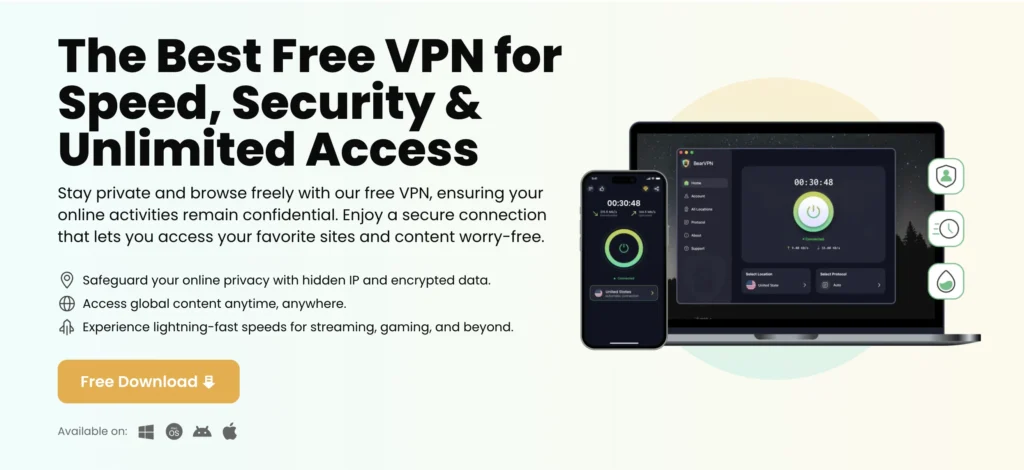
Why it works well in Egypt
- Designed around encrypting everyday traffic on hotel, café, and coworking Wi-Fi.
- Strong emphasis on privacy: strict no-logs approach, DNS leak protection, RAM-only infrastructure.
- Split tunneling/per-app routing lets you protect sensitive apps while leaving low-risk local apps outside the tunnel.
- Simple apps on iOS, Android, Mac, and Windows that don’t require deep technical knowledge.
Key advantages
- Easy one-tap connection with a clean interface.
- Per-app routing helps you avoid conflicts with services that dislike VPNs.
- RAM-only design reduces the amount of long-term data stored on servers.
- Good fit if you mainly want to secure banking, work tools, and private browsing on the go.
Things to keep in mind
- More focused on core privacy and everyday security than on a huge bundle of niche features.
- Best suited if you value simplicity and privacy rather than constant tweaking and experimentation.
NordVPN – Power Users and Extra Security Tools
Positioning: Feature-rich VPN for users who want advanced security options and a large ecosystem.
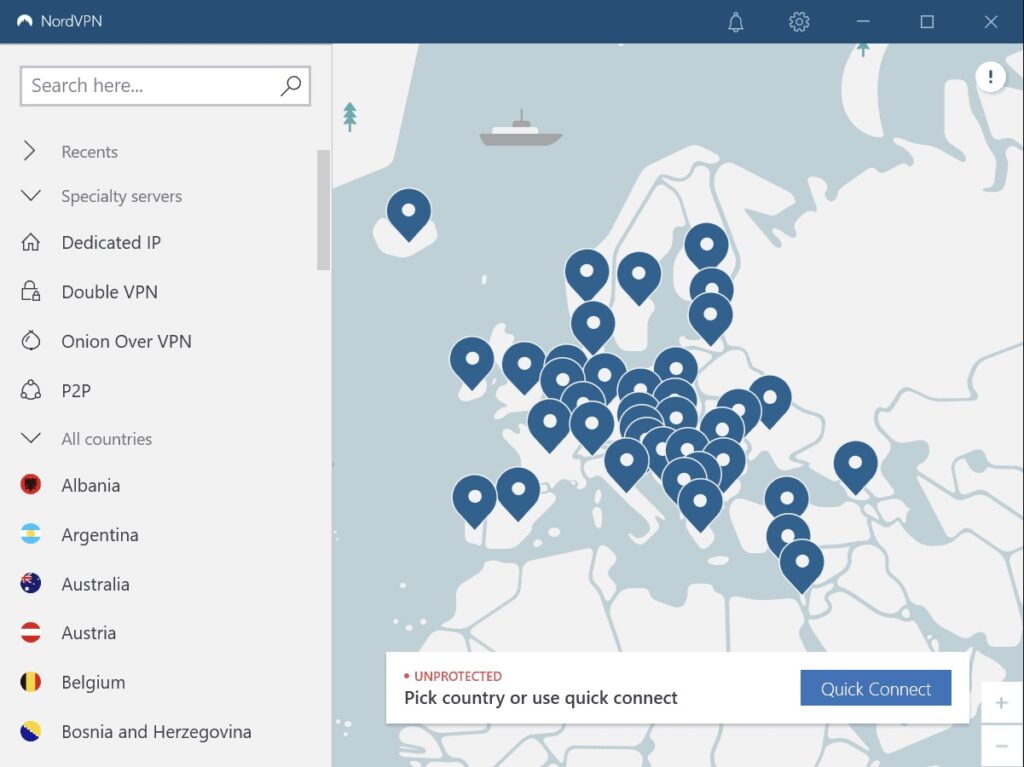
Why it works well in Egypt
- Obfuscated servers are designed to make VPN traffic look more like regular HTTPS, which can help on networks that inspect or throttle VPN protocols.
- A large server network gives you many location options if certain regions perform better with your ISP.
- Extra tools (such as malware and tracker blocking) add another layer of protection when you browse on untrusted networks.
Key advantages
- Strong encryption and a strict no-logs policy.
- Obfuscation modes that are helpful in tightly controlled environments.
- Lots of advanced features for power users who like fine-grained control.
- Wide coverage of platforms and browser extensions.
Things to keep in mind
- Interface has more options and settings, which may feel overwhelming if you prefer something simple.
- Pricing is generally higher than more minimal, lightweight services.
Surfshark – Budget-Friendly with Unlimited Devices
Positioning: Cost-effective VPN for households or individuals with many devices.
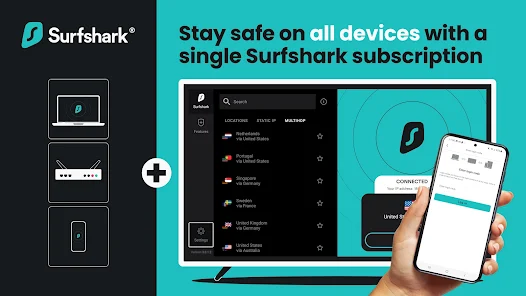
Why it works well in Egypt
- Camouflage Mode and similar features are designed to reduce how “obvious” VPN traffic looks.
- Unlimited device connections let you secure phones, tablets, and laptops under a single subscription.
- Built-in blocking for trackers and malicious sites adds useful protection when you connect from public hotspots.
Key advantages
- Very competitive pricing, especially on longer plans.
- Unlimited devices are ideal if you have many gadgets or share with family.
- Modern apps with a straightforward interface and quick-connect options.
- Extra privacy tools (like tracker blocking) are bundled in.
Things to keep in mind
- You may need to try a few different servers or modes to find the most stable combination with your local ISP.
- Best suited if you are comfortable adjusting a couple of settings to optimize performance.
ExpressVPN – Strong Choice for Travel and Streaming
Positioning: Premium VPN built around speed, reliability, and a polished user experience.
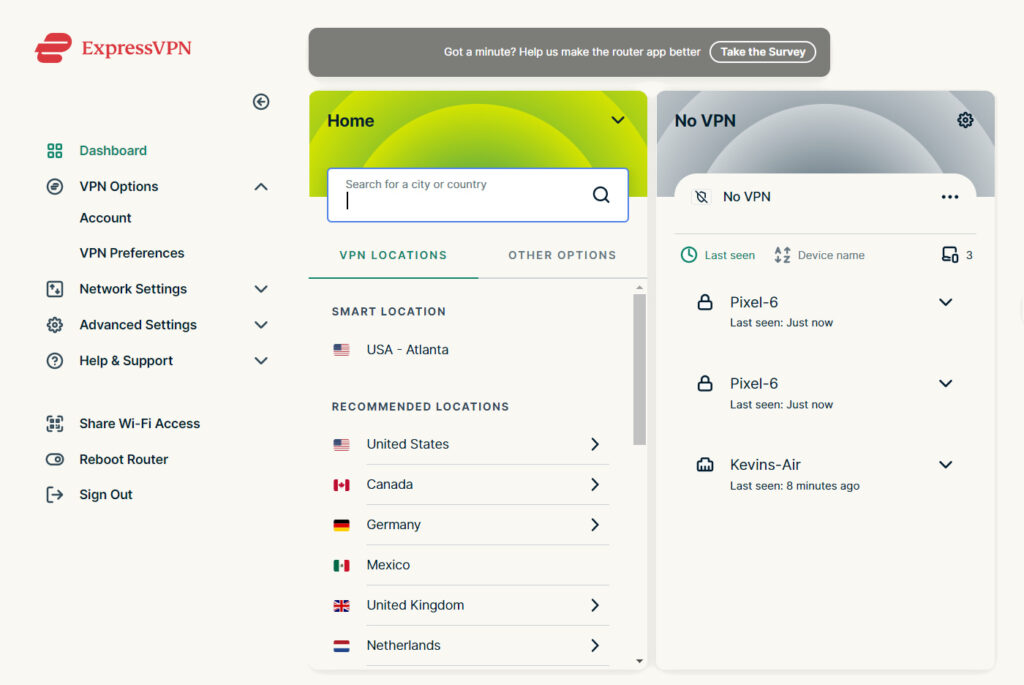
Why it works well in Egypt
- Known for maintaining stable connections on a wide variety of networks, which is useful when you move between mobile data and Wi-Fi.
- Custom protocol and optimized infrastructure help reduce lag and buffering during high-bandwidth tasks.
- Private DNS on every server keeps DNS queries inside the encrypted tunnel.
Key advantages
- Very user-friendly apps that feel consistent across platforms.
- Strong focus on speed and stable connections.
- No-logs policy and reputable security practices.
- Good option if you travel frequently and want predictable performance.
Things to keep in mind
- One of the more expensive options on the market.
- The feature set is geared toward general users rather than deep customization.
ProtonVPN – Privacy and Ease-of-Use Alternatives
Positioning: Privacy-first VPN built by a team known for secure communication tools.
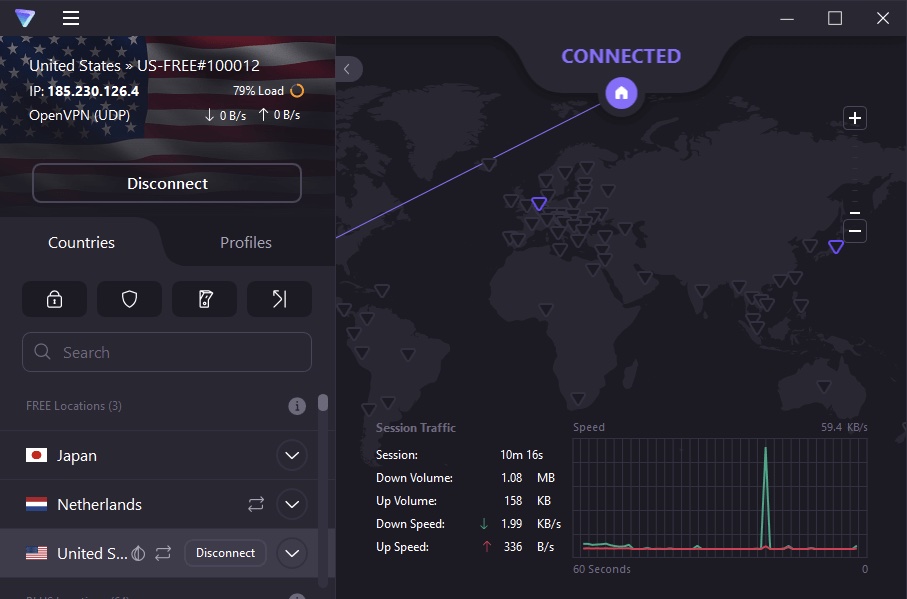
Why it works well in Egypt
- Stealth-oriented protocols and advanced routing options aim to keep VPN connections more resilient when networks get picky.
- Open-source apps and a strong privacy stance appeal if you prioritize transparency.
Key advantages
- Strong legal and technical focus on privacy.
- Advanced options like Secure Core routing for users who want extra protection.
- Clear documentation about security design.
Things to keep in mind
- Some advanced features are available only on higher-tier plans.
- Interface can feel more technical if you only want basic on/off usage.
How to Choose the Right VPN for Egypt (Buyer’s Checklist)
Now that you’ve seen individual VPN profiles, it helps to step back and think about what you personally need from a VPN in Egypt. Not everyone has the same risk tolerance, technical comfort level, or device mix, so the “best” option will vary from person to person.
A sensible way to choose is to compare VPNs against a small, focused checklist. The points below can guide your decision and highlight where BearVPN and other providers align with your priorities.
First, look at privacy fundamentals: no-logs policies, strong encryption, and protection against DNS and IP leaks. If a provider doesn’t clearly explain how it handles logs and what it collects, that’s a red flag. BearVPN, NordVPN, ProtonVPN, and others emphasize no-logs and robust encryption as core pillars.
Second, check for obfuscation or stealth features that can help maintain stable connections when networks inspect and throttle VPN traffic. BearVPN’s traffic-hiding approach, NordVPN’s obfuscated servers, Surfshark’s Camouflage Mode, and ProtonVPN’s stealth protocols all fall into this category, though they work in slightly different ways.
Third, consider how you actually use the internet. If your life is mobile-centric, a VPN that prioritizes simple mobile apps and split tunneling—like BearVPN—can feel more natural than one centered on desktop power users. If you run a home office with multiple laptops, tablets, and phones, Surfshark’s unlimited device support might win.
Finally, don’t ignore support and usability. A VPN that requires constant troubleshooting defeats the purpose. Clean interfaces, clear settings, responsive support, and straightforward setup will make you more likely to keep the VPN turned on when it matters most.
Final Thoughts
When you ask “Is VPN legal in Egypt?”, you’re really asking two separate but connected questions: whether the tool itself is allowed, and whether your planned usage is on safe legal ground. As things stand, VPNs are widely used in Egypt for legitimate privacy and security needs, but the broader legal context around content and online behavior remains strict.
Choosing a solid VPN—whether that’s a privacy-centric, mobile-friendly option like BearVPN, a feature-packed heavyweight like NordVPN, or another reputable provider—gives you more control over your data on public and semi-trusted networks. Combine that with sensible settings, cautious habits, and respect for local law, and you can significantly improve your online safety without turning your internet use into a legal gamble.
FAQs
1. Is it legal to use a VPN in Egypt for banking or remote work?
Current information suggests that using a VPN in Egypt for routine, legitimate purposes—such as accessing your bank, corporate systems, or cloud tools—is generally considered legal. The key is that the underlying activity itself must comply with Egyptian law and with the terms of the services you’re accessing.
2. Can tourists use a VPN in Egypt?
Many visitors use VPNs to protect their devices on hotel Wi-Fi and public networks. If you’re traveling to Egypt, it’s sensible to set up your VPN before you arrive and then use it to safeguard sensitive sessions. As always, you’re responsible for ensuring that your usage aligns with local regulations.
3. Can you get in trouble for using a VPN to reach blocked websites?
This is where the risk increases. While the VPN application itself isn’t banned, trying to access content or services that Egyptian authorities have explicitly restricted may expose you to legal consequences, regardless of whether a VPN is involved. A VPN is not a shield against local law.
4. Are free VPNs safe in Egypt?
Free VPNs often come with trade-offs: limited bandwidth, weak security, aggressive advertising, or even data harvesting. In a country with a sensitive internet environment, trusting your traffic to a provider with unclear incentives can be risky. A reputable paid VPN—with clear privacy practices and transparent ownership—is usually a safer choice.
5. Do I need VPN servers physically located in Egypt?
Not necessarily. Many users prefer to connect to servers in other regions that still offer acceptable speeds. What matters more is stability, security, and compliance with local law than the exact physical location of the server you choose.